Yarra Valley, Freshness and Precision in Victoria
East of Melbourne, the Yarra Valley combines a cool climate, varied landscapes, and a long history. It produces precise wines, from Pinot Noir to Chardonnay, as well as outstanding sparkling wines.
geoVINUM · 2026-11-04
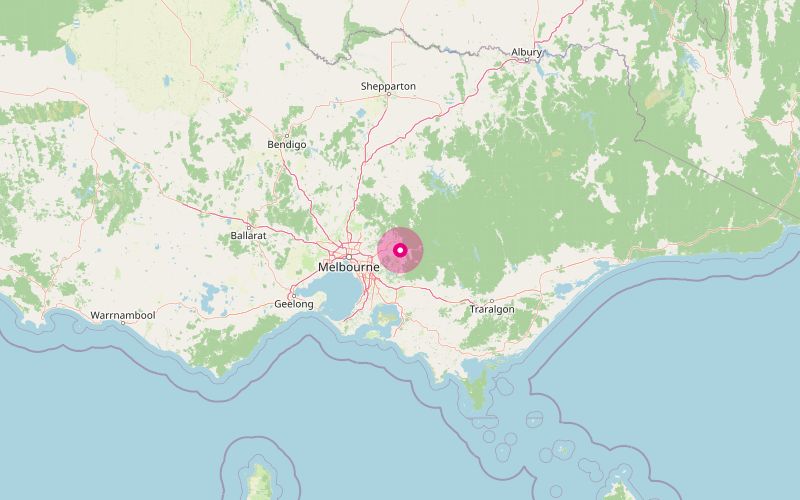
## Yarra Valley at a glance The Yarra Valley is a wine region in Victoria, located east and northeast of Melbourne, around the upper course of the Yarra River. It is one of Australia’s historic wine regions, first planted in the 19th century, then largely rebuilt from the 1960s onward after a long period of decline. The Yarra Valley geographical indication is recognized within the Australian Geographic Indications system, and the region is now regarded as a benchmark for the country’s cool-climate styles.
Production spans all three colors, with an important place for Pinot Noir, Chardonnay, Shiraz, and Cabernet Sauvignon, as well as sparkling wines. The region is large and contrasting, with vineyards spread between the valley floor plains and higher slopes toward the Upper Yarra. Yarra Valley’s international reputation rests less on power than on freshness, precision of ripeness, and the ability to express site differences.
The Yarra Valley is not a small, homogeneous enclave, but a group of sub-areas with distinct viticultural behavior. The lower, warmer zones are better suited to structured reds such as Cabernet Sauvignon, Shiraz, or certain Bordeaux blends. The higher, cooler sectors often produce the finest expressions of Pinot Noir, Chardonnay, and sparkling wine bases.
## Terroir and geology The Yarra Valley’s topography broadly ranges from around 50 to 400 meters in elevation, with a clear contrast between Lower Yarra and Upper Yarra. Valley-floor vineyards have gentler slopes and generally warmer exposures. Higher slopes and terraces, often better ventilated, lengthen the ripening cycle and encourage a tauter expression of early-ripening varieties.
The geology is complex and is one of the region’s defining features. In the Upper Yarra, red or reddish-brown soils derived from volcanic rock, especially basalt derivatives, often dominate and are generally well suited to Pinot Noir and Chardonnay. In other sectors, older soils appear, sometimes gray, sandy-silty, or clay-rich, derived from sedimentary formations and alluvial deposits linked to the Yarra basin.
This soil diversity results in clearly differentiated viticultural responses. Well-drained volcanic soils tend to naturally limit vigor and produce grapes with thinner skins and steady ripening. The deeper soils of the lower valley can support more generous canopies and more complete phenolic ripeness for Bordeaux varieties and Shiraz.
Topography plays a decisive role in managing water, light, and nighttime temperatures. Sloping parcels often benefit from better cold-air drainage, reducing certain spring frost risks. Differences in elevation, exposure, and soil depth largely explain the mosaic of styles seen from one estate to another.
## Climate The Yarra Valley climate is generally classified as temperate to cool, with an indirect maritime influence and a strong altitude effect. The relative proximity of the ocean and air circulation coming from the south moderate thermal extremes, even if conditions vary noticeably from one sector to another. Summer days can be warm, but nights often remain cool enough to preserve acidity and slow sugar accumulation.
The region has a fairly long growing season by Australian standards. This duration favors gradual aromatic ripening, the retention of moderate pH, and better tannin definition, especially in the highest sectors. This is one of the foundations of the local style for Chardonnay, Pinot Noir, and base wines intended for sparkling production.
Rainfall is not negligible, especially compared with several inland regions of the country. This relative humidity requires careful vineyard management, particularly to control fungal disease pressure depending on the vintage. The natural ventilation of certain slopes and the choice of rootstocks, planting densities, and trellising systems are important technical levers.
The effects of climate change are perceptible, as throughout southeastern Australia. Harvest dates have tended to move earlier over several decades, but the diversity of elevations and exposures still offers valuable room for adaptation. This flexibility partly explains why the Yarra Valley remains one of Australia’s most convincing regions for wines centered on balance rather than overripeness.
## Grape varieties Pinot Noir and Chardonnay occupy a central place in the contemporary image of the Yarra Valley. Pinot Noir is expressed here in styles ranging from crunchy red fruit to more spicy and earthy profiles depending on site, yield, and élevage. Chardonnay, long marked by more demonstrative winemaking, has evolved toward more restrained styles, with greater tension, controlled reduction, and better-integrated oak.
Shiraz is another major grape of the region, often underestimated outside Australia. In the Yarra Valley, it generally produces wines that are more peppery, floral, and vibrant than in the continent’s warm regions, with more moderate alcohol levels and finer tannins. Cabernet Sauvignon, sometimes accompanied by Merlot, Cabernet Franc, Malbec, or Petit Verdot, remains especially relevant in the warmer, lower-lying sectors.
Secondary varieties notably include Sauvignon Blanc, Pinot Gris, and, more occasionally, Viognier or Gamay. Traditional-method sparkling wines rely mainly on Chardonnay and Pinot Noir, sometimes with a proportion of Pinot Meunier depending on the producer. Australia does not operate with appellation rulebooks comparable to European AOCs, so blending rules are determined mainly by general labeling standards and each house’s choices.
The mention of a grape variety on the label follows a simple principle in Australia. To display a variety, a vintage, or a geographical indication, the wine must contain a very high majority proportion of it according to national labeling rules, which generally provides reliable information for the consumer. This regulatory flexibility allows the Yarra Valley to explore varied styles while retaining strong commercial clarity.
## Wine styles Yarra Valley Pinot Noirs are among Australia’s finest reds. The best examples emphasize cherry, raspberry, sweet spices, sometimes an underbrush or dried-leaf note, with a structure that is more linear than massive. Élevage is often carried out in French oak barrels, with a measured proportion of new wood, and some estates use a share of whole bunches to gain aromatic lift and texture.
Chardonnays are also at the forefront. The modern style combines white fruit or citrus, bright acidity, substance without heaviness, and more discreet élevage than in the past, in barrique, foudre, or neutral vessels depending on cellar signatures. Malolactic fermentation is adjusted case by case to preserve sufficient tension without drying out the palate.
Local Shiraz offers a profile distinct from the sunny Australian archetype. It is often characterized by black pepper, violet, fresh blackberry, and a more slender frame, with élevage seeking definition more than concentration. Cabernets and Bordeaux blends, for their part, show blackcurrant, cedar, sometimes a touch of noble leafiness, and can age gracefully when fruit and tannins are well balanced.
The Yarra Valley is also an important region for traditional-method sparkling wines. Base wines, made from relatively early harvests, retain acidity suited to focused, persistent wines, often marked by citrus, apple, and brioche notes after lees aging. The best still reds and whites can evolve favorably for several years, or longer for flagship cuvées, even if the region is not defined primarily by very long-aging profiles.
## Producers to watch - Yering Station: a historic valley estate, revived in the 20th century, strong in Chardonnay, Pinot Noir, and Bordeaux-style cuvées. - Mount Mary: a leading reference for Bordeaux-inspired red blends, with precise work on Cabernet Sauvignon and its companions. - Yarra Yering: an iconic producer, recognized for its complex reds, especially those based on Shiraz and Bordeaux varieties, as well as its ageworthy whites. - Oakridge Wines: an excellent interpreter of site differences, particularly convincing with single-vineyard Chardonnays and Pinot Noirs. - Giant Steps: a highly regarded estate for its cool-climate expressions, with a fine reading of terroirs in Chardonnay and Pinot Noir. - De Bortoli Yarra Valley Estate: an important regional player, reliable across a broad range, notably in Chardonnay, Pinot Noir, and sparkling wines.
## Food and wine pairings A Yarra Valley Pinot Noir pairs very well with seared duck breast, roasted beets, or poultry with mushrooms. Its supple texture and acidity also make it a good partner for grilled salmon or lightly seared tuna.
A taut, lightly oaked Chardonnay works with warm oysters, white fish with lemon butter, or roast chicken with herbs. Slightly broader versions can move toward porcini risotto or seared scallops.
A fresh, peppery Shiraz pairs with a lamb chop, grilled Toulouse sausage, or miso-roasted eggplant. The wine’s vibrancy helps maintain clarity with slightly smoky or spicy dishes.
A Cabernet Sauvignon or Bordeaux blend from the valley suits beef fillet, rack of lamb, or aged cheddar. Traditional-method sparkling wines, meanwhile, find a natural place at the table with tempura, gougères, or fried fish.
## FAQ ### Where exactly is the Yarra Valley located? The Yarra Valley is in the state of Victoria, east and northeast of Melbourne. The region follows the upper Yarra River basin and stretches from valley-floor plains to higher slopes toward the Upper Yarra.
### Is the Yarra Valley mainly a Pinot Noir region? Pinot Noir is one of the region’s most distinctive grape varieties, but it does not define the valley on its own. Chardonnay, Shiraz, Cabernet Sauvignon, and sparkling wines also play an important role.
### What is the style of Yarra Valley Chardonnays? The best examples seek precision more than opulence. They often show bright acidity, restrained fruit, integrated élevage, and an expression marked by freshness.
### Does the region produce great ageworthy red wines? Yes, especially with Cabernet Sauvignon and certain Bordeaux blends from the best-suited sectors. Several estates have demonstrated over several decades that these wines can evolve in a complex and harmonious way.
### What is the difference between Lower Yarra and Upper Yarra? Lower Yarra is generally lower-lying and warmer, which favors fuller ripeness for structured red varieties. Upper Yarra, at higher elevation and cooler, is particularly suited to Pinot Noir, Chardonnay, and sparkling wines.