Württemberg, Germany’s Red-Wine Bastion on the Neckar
A historic region in southwestern Germany, Württemberg stands out for the prominence of red wines, from Trollinger to Lemberger, on the slopes of the Neckar.
geoVINUM · 2026-11-04
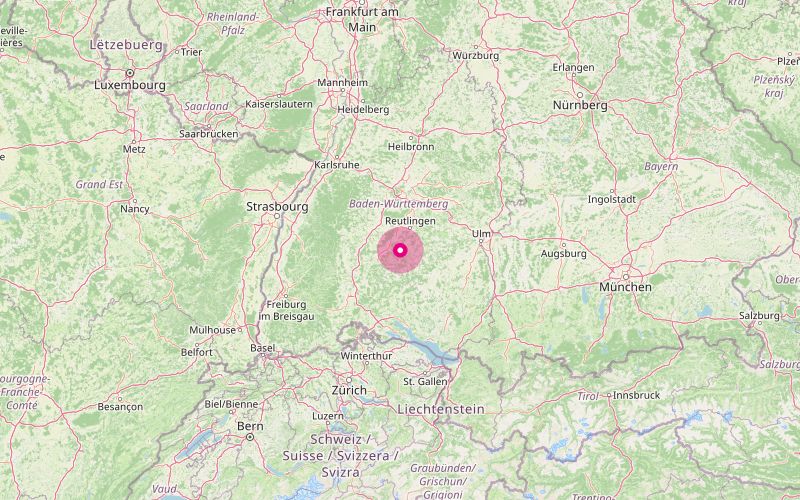
## Württemberg at a glance Württemberg is one of Germany’s thirteen quality wine regions, located in the state of Baden-Württemberg, around Stuttgart and along the middle course of the Neckar. Its status as a recognized wine region is part of the modern organization of the German vineyard established by the 1971 wine law, even though vine growing has been attested here since Roman times and documented in the Middle Ages. The vineyard covers a little over 11,000 hectares, making it one of the country’s significant regions by surface area. It stands out for an unusually high proportion of red wines by German standards, even though whites, especially Riesling, still play a central role.
The region mainly follows the Neckar valley and several tributaries, with extensions toward the Rems, the Enz, the Kocher, and the Jagst. It includes many areas of steep slopes, but also more open sectors where mechanization is possible. Local identity was shaped by strong domestic consumption, which long favored cooperatives and local wines. For several decades now, a growing number of estates have highlighted named sites, low yields, and a more precise reading of terroirs.
## Terroir and geology The heart of the vineyard lies on slopes overlooking the Neckar and its secondary valleys, with exposures often favorable to the south, southwest, and southeast. The best sites combine drainage, sufficient water reserves, and good heat accumulation, a decisive point in a northern region where reds must reach full ripeness. Altitudes remain moderate, but the topography creates clear differences between valley floors, terraces, and higher slopes. This mosaic explains the diversity of profiles, from supple, fruit-driven wines to more structured cuvées.
The geology of Württemberg is dominated by formations from the Germanic Triassic, notably Keuper, Muschelkalk, and, more sporadically, Buntsandstein. The marls and clays of Keuper are particularly important for reds, as they retain water well and promote steady ripening while giving substance to the wines. Muschelkalk, rich in limestone, often brings more tension, salinity, and aromatic precision, especially in whites and certain Lemberger. Sandstones, silts, and colluvial soils complete the picture and can yield more accessible expressions, more directly marked by fruit.
In the most renowned sectors, the structure of the landscape has a direct impact on viticulture. The dry-stone terraces, numerous around the Neckar and some of its tributaries, store heat and release it during the night. They also make it possible to cultivate slopes that would otherwise be of little use, at the cost of significant manual labor. This hillside viticulture remains a distinctive feature of quality Württemberg.
## Climate Württemberg benefits from a temperate continental climate, relatively mild by German standards thanks to sheltered valleys and the moderating effects of the local relief. Summers are generally warm, with sufficient heat accumulation to ripen the red grape varieties that hold a more important place here than in most other German regions. Autumns can be long, favoring gradual harvests and finer parcel selection. Winters are cold, but major extremes are often softened in the best valley sectors.
Rainfall is moderate to average depending on the sub-zones, with marked differences between well-ventilated slopes and more humid valley bottoms. Airflow plays an important role in limiting pressure from fungal diseases, especially in steep sectors. The risk of spring frost exists, as everywhere in a continental climate, but hillside planting and air circulation can sometimes reduce its impact. In recent warm vintages, the challenge is no longer just ripeness, but also preserving acidity and balance.
Climate change has reinforced some of the region’s historical strengths, particularly for Lemberger, Spätburgunder, and ambitious parcel selections. It has also changed the perception of grape varieties long considered simple or strictly local, such as Trollinger, which can now ripen better and gain concentration without losing drinkability. At the same time, growers are adjusting vineyard management, cover-crop practices, and harvest dates in order to preserve freshness. This evolution is contributing to greater precision in the regional style.
## Grape varieties Württemberg is one of the few German wine regions where red grape varieties have traditionally dominated planted area. Trollinger holds a major historical place here and remains a strong cultural marker, with wines generally light to medium-bodied, low in tannin, and showing red fruits and sweet spice. Lemberger, the local name for Blaufränkisch, is now the region’s most ambitious red grape in qualitative terms, capable of producing darker, more structured, ageworthy wines. Spätburgunder completes this trio with expressions ranging from supple fruit to deeper, more taut versions aged in wood.
Among the other reds, Schwarzriesling, which corresponds to Pinot Meunier, is well established and produces supple, often delicate wines that are sometimes underestimated. Samtrot, a mutation of Schwarzriesling, is also found, sought after for its tender and approachable profile, along with more modest plantings of Dornfelder and other modern varieties. Historically, these grapes fed everyday drinking wines, but the best parcels produce far more serious versions. The qualitative hierarchy depends less on the variety alone than on the site, yields, and harvest date.
On the white side, Riesling remains the benchmark and is one of Württemberg’s great wines, especially on limestone and cool marls. It may show more breadth and less sharpness than in Mosel, but it retains firm acidity, notes of citrus, apple, sometimes stone fruit pit, and a saline dimension on good terroirs. Kerner, a crossing created in Württemberg in the 20th century, retains regional importance; it often offers aromatic, supple, reliable wines. Müller-Thurgau, Grauburgunder, Weißburgunder, Silvaner, and Chardonnay are also present, with results varying according to site and producer ambition.
Blending rules are not at the core of regional identity, since many benchmark cuvées are marketed as single-varietal wines. Red blends nevertheless exist, especially around Lemberger and Spätburgunder, sometimes with complementary grapes intended to adjust color or texture. In the German quality pyramid, indications of origin and ripeness level remain important, as does the emphasis on individual parcels in the most demanding category. Terroir-focused producers today favor understated winemaking in order to let the site speak.
## Wine styles The most typical style of Württemberg remains the dry, fruit-driven red intended for the table and relatively early consumption. Trollinger embodies this tradition with lightly extracted, juicy wines, often served slightly chilled, that pair well with regional cuisine. Lemberger represents the vineyard’s other face: darker, spicier, more tannic, it can reach real depth in the best exposures. Spätburgunder, depending on the producer, ranges between immediate finesse and a more serious expression with measured barrel aging.
Dry whites, especially Riesling, are among the most consistent successes. They combine ripe fruit, clear acidity, and a fuller texture than in cooler German regions, without necessarily sacrificing length. Aging takes place in stainless steel tanks, large neutral vessels, or, at some estates, discreet wood for parcel selections. Kerner and the white Pinots offer more aromatic or softer alternatives that work well at the table.
The region also produces off-dry or sweet wines, even if its contemporary image rests above all on dry wines. Within the German quality categories, one finds Kabinett, Spätlese, and sometimes Auslese depending on the grape varieties and vintage conditions. Quality sparkling wines, often made from local varieties or Pinots, occupy a growing place in estate portfolios. Aging potential ranges from two to four years for simple fruit-driven reds up to ten years and more for the best terroir Lemberger, Spätburgunder, and Riesling.
The most useful mentions for the reader are those that signal a hierarchy of origin or parcel selection. The most highly regarded estates often work with a fine-grained reading of named sites and major historic slopes. Barrique aging exists, but the best wines generally avoid excessive oak influence, which would mask fruit and tension. The most convincing regional style combines ripeness, drinkability, and clarity of structure.
## Producers to follow - Weingut Aldinger: a benchmark estate in Fellbach, recognized for its Rieslings and hillside reds, with a precise reading of the great terroirs of the Remstal. - Weingut Graf Neipperg: a historic player in Württemberg, particularly esteemed for its Lemberger and parcel selections around Schwaigern. - Weingut Schnaitmann: an influential estate in the Remstal, committed to demanding viticulture and known for the balance of its reds and whites. - Weingut Dautel: a property renowned for the quality of its Lemberger, Spätburgunder, and Rieslings, with a clean, structured style. - Collegium Wirtemberg: an entity resulting from a quality-driven merger, important for understanding the historical weight of cooperatives and their move upmarket. - Weingut Wöhrwag: a Stuttgart estate appreciated for its wines from steep slopes, notably in Riesling and Lemberger.
## Food and wine pairings Dry Trollinger pairs well with Swabian charcuterie, a platter of smoked hams, or grilled sausages, as its light fruit and low tannic structure do not overpower the dish. A well-sourced Lemberger suits roast beef, feathered game, or braised veal cheeks, thanks to its tighter frame and spicy notes. A Württemberg Spätburgunder works with roast duck, sautéed mushrooms, or free-range poultry in a light sauce.
The local dry Riesling pairs with trout, pike-perch, white asparagus with hollandaise sauce, or potato salads seasoned with herbs. A dry or off-dry Kerner can accompany moderately spiced cuisine, such as a mildly spiced chicken curry or Asian dishes with fresh herbs. The softer or sweeter versions work well with blue cheeses or desserts made with white-fleshed fruits. In all cases, the wine’s structural freshness remains the key support of the pairing.
## FAQ ### Is Württemberg mainly a red wine region? Yes, by German standards, Württemberg stands out for a historically high share of red grape varieties. That does not mean whites are secondary here, since Riesling produces very serious and highly distinctive wines.
### What is Württemberg’s emblematic grape variety? Trollinger is the most emblematic grape on a cultural and historical level. In qualitative terms, however, many observers consider Lemberger the red grape best suited to expressing the region’s finest terroirs.
### Is Lemberger the same grape variety as Blaufränkisch? Yes, Lemberger is the name used in Germany for the grape known in Austria as Blaufränkisch. In Württemberg it produces wines that are more structured, spicier, and often more ageworthy than Trollinger.
### Does Württemberg Riesling resemble Mosel Riesling? Not exactly, because Württemberg’s climate and soils often give Rieslings that are broader and fleshier. They retain fine acidity, but the aromatic expression and texture are generally broader than in Mosel.
### Do Württemberg wines age well? Simple cuvées are often best in their youth, when fruit remains central. By contrast, the best hillside Lemberger, Spätburgunder, and Riesling, from low yields and good vintages, can evolve favorably over many years.