Willamette Valley, the benchmark for Pinot Noir in Oregon
Oregon’s great winegrowing valley, Willamette Valley has established itself through its cool-climate Pinot Noir, increasingly accomplished Chardonnay, and a remarkable mosaic of soils.
geoVINUM · 2026-11-04
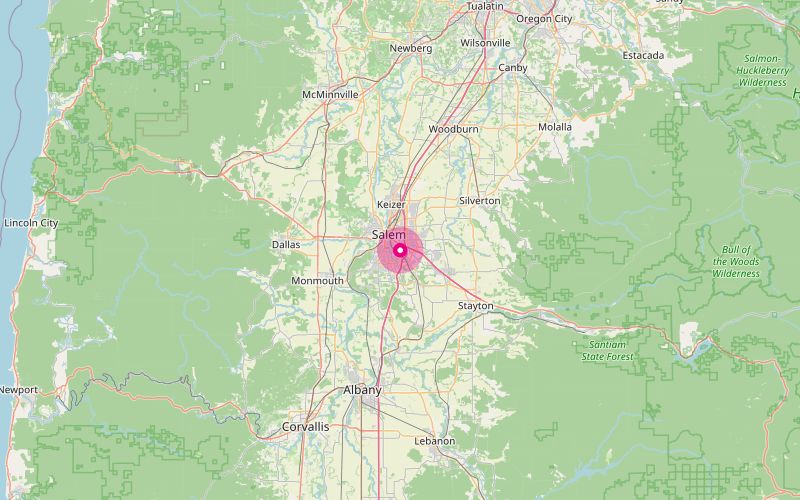
## Willamette Valley in brief Willamette Valley is the great wine appellation of northern Oregon, southwest of Portland, between the Coast Range to the west and the Cascade Mountains to the east. The Willamette Valley AVA was recognized in 1983 and covers a vast ensemble of small valleys, hills, and plains that encompasses most of the state’s quality wine production. The region is primarily associated with Pinot Noir, but it also produces cool-climate whites, first and foremost Pinot Gris and, increasingly, Chardonnay. Within this AVA, several more precise sub-appellations now structure the reading of the terroir, notably Dundee Hills, Eola-Amity Hills, Yamhill-Carlton, Ribbon Ridge, Chehalem Mountains, McMinnville, Van Duzer Corridor, and Laurelwood District.
## Terroir and geology The landscape of Willamette Valley is less that of a uniform plain than a succession of low hills and secondary valleys, with vineyards often planted on well-drained slopes. The best exposures seek light without excessive heat, which favors slow, even ripening. Altitude remains moderate, but variation in slope, aspect, and airflow creates genuine diversity in mesoclimates.
Local geology is classically summarized by three major soil families, even if the reality is more nuanced. The red volcanic Jory soils, very present in Dundee Hills, derive from weathered ancient basalts; they are well-draining and are often associated with fragrant, refined, and structured wines. Marine sedimentary soils, long referred to as Willakenzie, dominate in several areas of the Coast Range foothills and frequently yield Pinot Noirs that are spicier, earthier, and firmer in youth.
A third important component comes from windblown loess deposits, notably Laurelwood, which covers certain sectors of the Chehalem Mountains and the northern valley. Added to this are the major traces of the Missoula Floods at the end of the last ice age, which deposited silts and alluvium across much of the valley floor. This geological history explains the heterogeneity of textures, water-holding capacity, and vine vigor, with noticeable effects on grape concentration and the shape of the tannins.
The notion of terroir in Willamette Valley therefore cannot be reduced to a simple parallel with Burgundy. The materials are different, the thermal ranges as well, and oceanic influence operates through ventilation corridors that are more or less open. What brings the region closer to the great cool-climate vineyards is less an imitation of style than a search for parcel-level precision, ripeness without heaviness, and site transparency.
## Climate The climate of Willamette Valley is cool temperate, with a clear maritime influence despite the partial barrier of the Coast Range. Winters are wet and moderate, while summers are generally dry, bright, and rarely scorching for extended periods. This dry season is a decisive asset for quality viticulture, as it limits disease pressure during ripening.
The region should not be described as continental in the strict sense. Pacific air masses play a central role, especially in sectors most exposed to flows coming from the west, such as Eola-Amity Hills or Van Duzer Corridor. These incursions of cooler air slow sugar accumulation, preserve acidity, and sometimes thicken grape skins, resulting in wines that are tenser and more structured.
Vintage remains an important factor here. Cooler years emphasize red fruit, floral notes, pepper, and acidic energy; warmer years produce darker, more generous profiles that are sometimes more approachable early on. The success of producers lies precisely in their ability to adapt harvest dates, the proportion of whole clusters, extraction, and élevage to this variable climatic framework.
The main risk lies less in high heat than in rainfall during harvest, spring frosts on certain sites, and, more recently, extreme heat spikes linked to climate change. These events are a reminder that the valley’s identity remains founded on balance. Freshness is a qualitative advantage here, but it requires rigorous parcel selection and attentive vineyard management.
## Grape varieties Pinot Noir is the signature grape variety of Willamette Valley and the one that built its international reputation. It overwhelmingly dominates plantings in the most renowned sectors, with a range of massal and clonal selections that allows for highly varied interpretations depending on the estate. Its affinity with cool climates, relative earliness, and ability to translate soil differences make it the region’s clearest vector of expression.
Pinot Gris was long Oregon’s main white grape by volume and retains an important place in the valley. Here it gives wines that are tenser and less opulent than in many warmer areas, with profiles of pear, apple, white flowers, and sometimes a smoky or spicy touch. Chardonnay has progressed considerably over the past fifteen years and now constitutes the other major qualitative pole, in styles ranging from taut and lightly oaked to fuller and barrel-aged with discernment.
Among the secondary varieties are Riesling, Gewürztraminer, Sauvignon Blanc, Melon de Bourgogne, as well as small plantings of Gamay, Pinot Blanc, and Pinot Meunier. Chardonnay and Pinot Noir also go into the production of serious sparkling wines, often according to the traditional method. Planting and labeling rules fall under the American framework: a varietal wine must generally contain at least 75% of the named grape at the federal level, and use of an AVA requires at least 85% of the grapes to come from that area.
## Wine styles The emblematic style remains dry, cool-climate red Pinot Noir. The best examples offer medium body, fine to moderate tannins, well-integrated acidity, and a palette ranging from morello cherry, raspberry, and pomegranate to notes of dried rose, spice, forest floor, and sometimes black tea. The term “Burgundian style” is often used, but it should be handled with caution: Willamette Pinots have their own balance, often marked by more immediate fruit and a supple texture, without giving up complexity.
Winemaking choices play a major role. Some producers work with a significant proportion of whole clusters to gain tannic relief, aromatic freshness, and aging potential; others favor total destemming and gentle extraction to preserve fruit purity. Élevage generally takes place in French oak barrels, with varying proportions of new wood but most often kept under control in contemporary high-end cuvées.
The valley’s Chardonnays now rank among the most convincing whites on the American West Coast. They may seek tension, salinity, and discreet oak, or embrace a more textured, buttery, and hazelnut-driven register without excessive ripeness. Pinot Gris is still often vinified dry, in a fresh style, with medium body and clear aromatics, although some lees-aged or partially barrel-aged versions gain depth.
The qualitative hierarchy is increasingly expressed through vineyard, parcel, and sub-AVA designations. Single-vineyard mentions are common among ambitious producers and make it possible to distinguish more precise signatures than the regional appellation alone. In terms of aging, entry-level Pinot Noir is often best enjoyed young, while the best site-specific cuvées can evolve favorably for a decade or more, depending on the vintage and structure.
## Producers to follow - The Eyrie Vineyards: a pioneering estate of modern Oregon, essential for understanding the birth of Willamette Valley Pinot Noir and the refined approach of low-intervention winemaking. - Domaine Drouhin Oregon: a rigorous Burgundian reading of Dundee Hills terroirs, with precise Pinot Noirs and Chardonnays of great poise. - Cristom Vineyards: a benchmark of Eola-Amity Hills, recognized for its vineyard Pinot Noirs, thoughtful use of whole clusters, and careful viticulture. - Beaux Frères: an influential Ribbon Ridge estate, known for wines that are dense, deep, and capable of long aging. - Bergström Wines: a major valley producer, consistently strong in both Pinot Noir and Chardonnay, with close attention paid to site expression. - Evening Land Vineyards: an important player in the renewal of Chardonnay and parcel-by-parcel interpretations, especially in the coolest and windiest sectors.
## Food and wine pairings Willamette Valley Pinot Noir pairs very well with roast duck breast and tart cherries. The wine’s fine tannic structure complements the meat without weighing it down, while its red-fruit profile extends the sauce.
Roast poultry with herbs, served with sautéed mushrooms, works well with the valley’s more classic Pinot Noirs. The notes of forest floor, sweet spice, and the wine’s freshness find natural harmony here.
Lightly smoked grilled salmon pairs well with a lightly oaked Pinot Noir or with a taut Chardonnay. The fish’s rich texture calls for clear acidity rather than tannic power.
Cool-climate Chardonnay suits pan-seared scallops, especially if barrel aging remains restrained. The combination highlights the wine’s texture without masking the delicacy of the dish.
Dry Pinot Gris pairs usefully with moderately spiced Asian cuisine, for example stir-fried pork with ginger or steamed shrimp dumplings. Its discreet fruit and freshness temper the aromatics without creating hardness.
A more structured vineyard Pinot Noir can accompany roast rack of veal or a heritage pork chop with morels. In that case, less sweet sauces are preferable in order to preserve the wine’s tension.
## FAQ ### Why is Willamette Valley mainly known for Pinot Noir? Pinot Noir finds a climate cool enough here to ripen slowly while retaining its acidity and aromatic finesse. The diversity of soils and exposures also allows for nuanced expressions, from delicate fruit to more earthy and spicy profiles.
### Does Willamette Valley really resemble Burgundy? The comparison contains some truth in climatic terms and in the qualitative ambition surrounding Pinot Noir and Chardonnay. It becomes misleading if it erases the differences in geology, light, airflow, and style specific to Oregon.
### What are the most important sub-appellations? Dundee Hills, Eola-Amity Hills, Yamhill-Carlton, Ribbon Ridge, and Chehalem Mountains are among the most established names. McMinnville, Van Duzer Corridor, and Laurelwood District also bring increasingly legible identities.
### Are the region’s white wines worth attention? Yes, especially Chardonnay, which has reached a clearly higher qualitative level and now rivals the best cool-climate whites of the West Coast. Pinot Gris also remains relevant for digestible, precise, food-friendly wines.
### Can Willamette Valley Pinot Noir age? Simple regional cuvées are often better in their youth or over a horizon of a few years. The best vineyard wines, from rigorous producers and balanced vintages, gain in complexity over ten years or more.