Western Cape, the Matrix of South African Winegrowing
A broad geographical indication in the Western Cape, Western Cape allows inter-regional blends and encapsulates the climatic, geological, and stylistic diversity of South African winegrowing.
geoVINUM · 2026-11-04
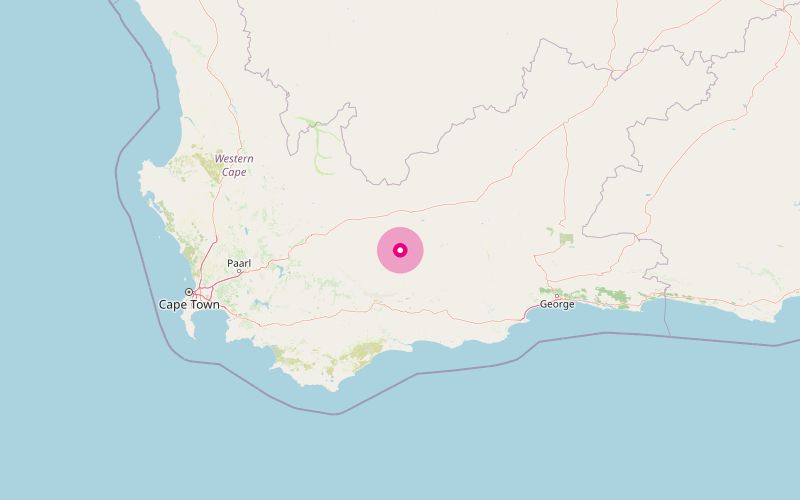
## Western Cape in brief Western Cape is a large-scale geographical indication located in the Western Cape province, at the southwestern tip of South Africa. In the South African Wine of Origin hierarchy, it functions as a regional appellation encompassing numerous districts and wards, and therefore allows blends drawn from several origins within the Western Cape. The designation covers all colors, with a strong presence of dry whites, still reds, and sparkling wines, as well as rosés and sweet wines depending on the sourcing areas. It refers less to a single style than to a broad framework of origin, useful for producers seeking consistency, blending complexity, or an accessible signature on a large scale.
The Western Cape is the historic heartland of South African viticulture, established from the 17th century around the Cape and then spreading toward Stellenbosch, Paarl, Franschhoek, Constantia, Worcester, Robertson, Swartland, and the Olifants River. Recognition of wine origins is now governed by the Wine of Origin system, introduced in 1973, and Western Cape fits within this logic of geographical traceability. In practice, the designation is mainly used when a wine extends beyond the boundaries of a specific district while remaining entirely sourced from the province. Its economic importance is major, as the vast majority of South Africa’s vineyard area lies in this province.
This territorial scale makes the figures variable depending on the vintage and statistical source, especially since one must distinguish between the province, the region in the Wine of Origin sense, and national production. It is nevertheless established that the Western Cape concentrates most of the country’s planted area and almost all of its marketed volumes. For the reader, the key is therefore to understand Western Cape as a framework origin: at once vast, administratively coherent, and highly diverse from an agronomic standpoint. It is a synthetic designation, not a small homogeneous zone.
## Terroir and geology The terroir of Western Cape is first and foremost that of a complex landscape where mountains, inland valleys, plateaus, and coastal plains interlock over short distances. The ranges of the Cape Fold Belt fragment the winegrowing area and multiply exposures, altitudes, and wind corridors. This topography makes it possible to juxtapose very cool sites close to the ocean with significantly warmer sectors farther inland. For blending, this mosaic is a decisive asset.
Its geology is particularly varied, with ancient granitic bedrock, schists, sandstones from the Table Mountain Group, shale-derived soils, clays of varying depth, and alluvium in the plains and valley floors. Decomposed granites, common in several sectors of the Cape, often produce well-draining soils, useful for controlling vigor and encouraging concentration. Schists and shales retain more water depending on their structure, which can support the vine in dry areas. Sandstones, often poorer, are well suited to moderate yields and taut profiles.
Western Cape soils are most often poor to moderately fertile, which favors quality viticulture provided water supply is carefully managed. In coastal zones, slopes and altitude help slow ripening and preserve acidity. In warmer zones, deep clays can play a buffering role during summer. This diversity explains why grape varieties as different as sauvignon blanc, chenin blanc, syrah, cabernet sauvignon, or pinotage can all find suitable terroirs here.
It should also be remembered that Western Cape is not, strictly speaking, a pedological entity identifiable in the way a small European cru might be. It is an overarching origin that brings together contrasting terroirs, from Constantia to Robertson, from Stellenbosch to Swartland or Breedekloof. The coherence of the name therefore comes more from history, wine administration, and the regional Mediterranean climate than from a single soil type. For the taster, this means reading the grape variety, the producer, and, if it appears on the label, the more precise origin together.
## Climate The climate of Western Cape is broadly Mediterranean, with wetter winters and mostly dry summers. This general formula nevertheless requires nuance, since the intensity of heat, water availability, and diurnal range vary greatly depending on distance from the sea, altitude, and the openness of the valleys. The influences of the Atlantic to the southwest and the Indian Ocean to the south and southeast play an essential moderating role. They limit thermal extremes in many coastal areas and extend the ripening season.
Wind is a major factor in the Cape wine landscape. The famous South-Easter, a southeasterly wind often sustained during the warm season, can cool vineyards, locally reduce the pressure of certain fungal diseases, and thicken grape skins through moderate mechanical stress. Its effect is not uniform, as valley exposure and the sheltering effect of the terrain create highly differentiated microclimates. In some cases, it helps preserve more vibrant aromatic profiles, especially in whites.
Rainfall often decreases as one moves away from direct maritime influences, making water a determining factor in several inland sectors. Irrigation is therefore present in part of the Western Cape vineyard, even if the best parcels often seek controlled water stress rather than abundant supply. Dry years have highlighted the vineyard’s vulnerability to water stress and rising temperatures. In response, choices of rootstocks, vine training, harvest date, and sometimes grape varieties become decisive levers.
For wine style, this combination of sunshine, wind, sometimes cool nights, and fairly regular ripening allows for a broad palette. The most temperate zones produce precise, saline, or herbaceous whites, and more slender reds. Warmer sectors favor full phenolic ripeness, broader textures, and riper black- or yellow-fruit profiles. Western Cape, as a broad designation, often results from the balance between these extremes.
## Grape varieties The most structurally important white grape variety on the scale of the Western Cape is chenin blanc, historically very widespread and capable of producing simple wines, more ambitious site-specific cuvées, blending components, or sweet wines depending on the area. Colombard remains important for entry-level volumes and certain distilled wines, even if its editorial profile is less highly valued. Sauvignon blanc holds a central place in cooler, windier zones, where it expresses lemony, herbaceous, or maritime profiles. Chardonnay, sémillon, and viognier complete the range, with varying ambitions depending on the producer.
On the red side, cabernet sauvignon, syrah, and pinotage dominate the quality landscape with very different expressions depending on grape origin. Merlot often plays a blending role, while cinsault is enjoying renewed interest for softer, more digestible styles. Cabernet franc, mourvèdre, petit verdot, and grenache also appear in certain cuvées, especially when producers seek complexity or a more Mediterranean profile. Western Cape specifically allows this flexibility in sourcing and blending.
Pinotage deserves special mention, as it remains a South African marker even if its quality varies greatly depending on site and winemaking choices. In the best versions, it combines black fruit, spice, clear tannic structure, and sometimes a smoky or earthy touch. In simpler versions, it can serve for accessible, early-drinking reds. The Western Cape designation appears frequently on blended or volume pinotages, but also on certain serious cuvées that bring together several terroirs.
From a regulatory standpoint, South African labeling rules require that 100% of the grapes come from the claimed origin if that origin appears on the label. A grape variety or vintage mentioned must generally meet an 85% threshold, according to Wine of Origin practice. In practical terms, Western Cape therefore allows free blending of components from different districts within the Western Cape, giving winemakers wide latitude to smooth out vintage variation. This is one of the reasons for its commercial success.
## Wine styles Whites under the Western Cape designation cover a very broad spectrum. Entry-level cuvées often seek clean fruit, drinkability, and sound acidity, with neutral or very discreet élevage. At a more ambitious level, blends of chenin blanc, chardonnay, or sauvignon may incorporate barrel fermentations, bâtonnage, lees aging, and moderate proportions of new oak. The result ranges from straightforward, lemony wines to more textured profiles, sometimes honeyed or lightly spiced.
Reds range from supple, fruity wines intended for quick consumption to ageworthy blends dominated by cabernet sauvignon, syrah, or pinotage. Barrel aging is common in the premium segment, with a proportion of new oak that varies depending on the intended style. The best wines combine ripe fruit, sufficient freshness, and polished tannins, without seeking excessive extraction. When blending is well handled, the Western Cape designation can offer very strong value for money.
Rosés exist in pale, dry styles or in more intensely fruity versions, often based on syrah, cinsault, mourvèdre, or pinotage. Sparkling wines are also present, especially when grapes from cool zones enter the blend; the benchmark quality category in South Africa remains Cap Classique, even if not every Western Cape bottle claims it. Sweet wines and botrytized wines also exist in the province, but the Western Cape designation is not the one that best highlights the most prestigious origins in this segment. It serves rather as a general indication when the blend extends beyond a more restricted origin.
Aging potential therefore depends less on the Western Cape designation alone than on the producer, grape varieties, vintage, and positioning of the cuvée. Simple whites are meant to be drunk young, while lees-aged chenins or well-built chardonnays can evolve over several years. Serious blended reds, especially those based on cabernet sauvignon and syrah, often hold for five to ten years, sometimes more. The designation should not be underestimated: it can carry technically very accomplished wines.
## Producers to watch - Kanonkop: historic reference from Stellenbosch, famous for its pinotages and Bordeaux blends, sometimes marketed under broader origins depending on the cuvée. - Mullineux & Leeu Family Wines: a major force in the Swartland revival, very strong on syrah and chenin blanc, with a nuanced reading of Cape soils. - Klein Constantia: an emblematic Constantia estate, recognized for its precise sauvignons and its benchmark sweet wine, Vin de Constance. - Hamilton Russell Vineyards: a key producer in the Hemel-en-Aarde Valley, important for understanding the cool, maritime dimension of South African chardonnay and pinot noir. - Boekenhoutskloof: an influential house active across several Cape origins, renowned for its syrahs, blends, and rigorous winemaking. - Sadie Family Wines: a major figure in the contemporary South African vineyard, particularly important for the promotion of old vines and Swartland terroirs.
## Food pairings - Western Cape chenin blanc with a mild monkfish or cod curry, where the wine’s volume cushions the spices without weighing down the whole. - Taut sauvignon blanc with oysters, plain mussels, or grilled fish, to highlight saline and citrus notes. - Partially barrel-aged chardonnay with roast poultry, grilled corn, or squash gratin, thanks to its broader texture. - Cape syrah with braised lamb, boerewors, or wood-fired grilled meat, a natural match for peppery and smoky notes. - Cabernet-based Bordeaux blend with rib steak, feathered game, or roasted mushrooms, when the wine shows firm tannins and integrated oak aging. - Pinotage with glazed pork ribs, a beef burger, or smoked eggplant, as its dark fruit and structure stand up well to grilled flavors.
## FAQ ### Is Western Cape a precise appellation or a very broad origin? Western Cape is a very broad origin within the South African Wine of Origin framework. It encompasses many smaller areas within the Western Cape and is often used for inter-regional blends.
### Can great wines be produced under the Western Cape designation? Yes, even if the most prestigious cuvées often claim a more precise origin such as Stellenbosch or Constantia. Western Cape can nevertheless produce very serious wines when the blend seeks balance rather than the identity of a single place.
### What is the most important grape variety in Western Cape? Chenin blanc is one of the most structurally important grape varieties on the scale of the Western Cape. On the red side, cabernet sauvignon, syrah, and pinotage play a central role depending on the sub-regions and the styles sought.
### What climate dominates the region? The general framework is Mediterranean, with rather dry summers and wetter winters. The oceans, winds, and topography strongly modulate this pattern and create marked contrasts between coastal zones and inland valleys.
### What does the Western Cape designation guarantee on a label? It guarantees that the grapes come from the Western Cape if that origin is claimed. However, it does not by itself define the wine’s precise style, because the area covered is too vast and too diverse.