Washington State, the other major power of American wine
East of the Cascades, Washington State combines sunshine, irrigation, and cool nights. It produces ripe yet balanced reds and precise whites across a wide range of terroirs.
geoVINUM · 2026-11-04
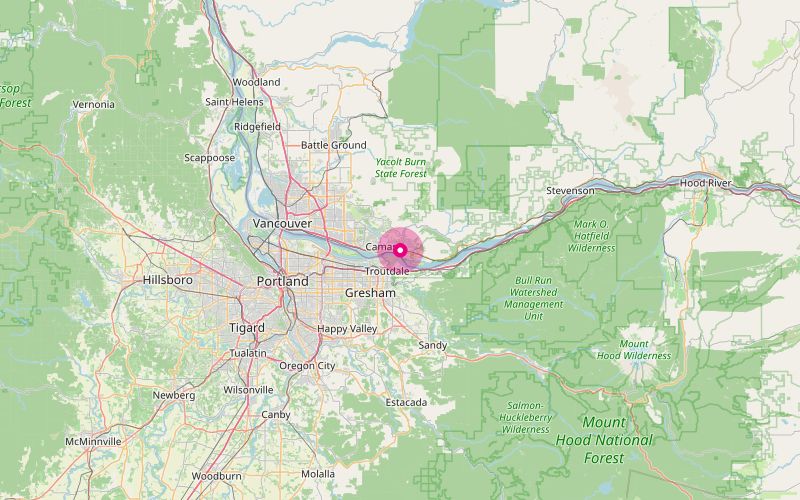
## Washington at a glance Washington State is the second-largest wine-producing state in the United States by volume after California, and the leading one in the Pacific Northwest. Commercial viticulture took off there in the 20th century, and Columbia Valley was recognized as an AVA in 1984, providing a decisive framework for the modern expansion of the vineyard. Production is overwhelmingly concentrated east of the Cascade Mountains, in a series of continental AVAs dominated by still red and white wines. Cabernet Sauvignon, Merlot, Syrah, Chardonnay, and Riesling hold a central place there, with a reputation built on ripe fruit, preserved freshness, and notable consistency across vintages.
The state's vineyard area now covers several tens of thousands of hectares, spread across large irrigated valleys, windy slopes, and alluvial terraces. Washington is also a major player in varietal wines on the American market, thanks to relatively reliable raw material and land costs that long remained more moderate than in California. The quality hierarchy is organized around the vast Columbia Valley and its sub-appellations, including Yakima Valley, Walla Walla Valley, Red Mountain, Horse Heaven Hills, Wahluke Slope, and Ancient Lakes. The general wine style combines clear solar ripeness with better-preserved acidity than one might expect from such a dry region.
## Terroir and geology The heart of Washington wine country lies in the Columbia Basin, sheltered from rainfall by the Cascade Mountains. This orographic barrier blocks much of the moist influence coming from the Pacific and creates semi-arid conditions to the east, making irrigation essential in most vineyards. The Columbia River and its tributaries therefore play a major agricultural role, both as a water resource and as a local temperature moderator. This geography explains the concentration of vineyards in areas where access to water is controlled and where exposures help temper thermal extremes.
The regional geological foundation is dominated by the basalts of the Columbia River Basalt Group, formed by immense ancient volcanic outpourings. Above this bedrock lie layers of loess, sand, silt, and gravel, reworked by wind, rivers, and above all by the cataclysmic floods at the end of the last glaciation, often referred to as the Missoula Floods. These floods shaped much of the landscape in the eastern part of the state, leaving terraces, dry channels, and heterogeneous deposits that are especially visible in certain AVAs. The result is a mosaic of well-drained soils, often poor in organic matter, favorable to moderate vegetative growth under controlled irrigation.
Differences between sub-regions are significant. Red Mountain stands out for its warm, windy, gravelly slopes, highly sought after for structured, tannic, dense reds. Walla Walla Valley combines varied soils, including wind-blown silts and rounded pebbles, with a strong reputation for Syrah, Cabernet Sauvignon, and Bordeaux-style blends. Ancient Lakes of Columbia Valley, cooler in profile, is particularly well suited to taut whites, notably Riesling, Pinot Gris, and Chardonnay, while Wahluke Slope and Horse Heaven Hills offer broader, very sunny, highly consistent sites, suitable for large-scale viticulture but also for highly precise cuvées.
The frequent absence of serious fungal disease is another terroir trait in the broad sense, because it stems directly from the environment. Dry conditions reduce pressure from mildew and rot, making it easier to obtain healthy grapes at full ripeness. By contrast, managing water, wind, and frost becomes central in vineyard practice. In several areas, the choice of rootstock, trellising, and crop load aims as much to regulate vigor as to protect the grapes from sometimes intense sunlight.
## Climate The climate across most of Washington's vineyard area is continental with a cold-desert tendency, featuring hot, very dry, bright summers. The growing season benefits from long days at high latitude, which encourages sugar accumulation and phenolic ripening, while cooler nights help preserve acidity and certain aromatic compounds. This combination partly explains the wines' profile: clear fruit, generous texture, and generally sufficient freshness to avoid heaviness. Annual rainfall is low in the eastern part of the state, far below what is observed west of the Cascades.
The main climatic risk remains winter cold, which can damage or destroy buds and sometimes perennial wood. Certain freeze events have left a lasting mark on the state's wine history, prompting growers to select better-ventilated sites, adapt pruning systems, and sometimes retrain vines after severe episodes. Spring frost is also monitored in low-lying areas, although dry air and certain slope effects can limit damage in the best locations. Winds, which vary depending on the AVA, have an ambivalent effect: they reduce disease pressure but can slow vegetative growth and thicken grape skins.
Irrigation is therefore not only common but structuring for the local winegrowing model. It secures yields, adjusts water stress, and allows a finer balance between leaf area and crop load. In many quality vineyards, irrigation is not synonymous with dilution, but rather a precision tool for steering ripeness in a naturally dry environment. This water management is one of Washington's great comparative advantages, provided water availability and environmental trade-offs remain sustainable over the long term.
## Grape varieties Washington's ampelographic landscape is dominated by international varieties, with a marked leaning toward Bordeaux and Rhône grapes on the red side, and aromatic or semi-aromatic varieties on the white side. Cabernet Sauvignon has established itself as one of the region's pillars, often vinified on its own or integrated into blends with Merlot, Cabernet Franc, Malbec, and Petit Verdot. Merlot expanded rapidly from the 1980s and 1990s onward, producing supple wines but ones capable of real depth on the best sites. Syrah has found convincing ground for expression in several AVAs, offering ripe, peppery, sometimes smoky profiles, somewhere between a Rhône register and an American reading of the variety.
Among the secondary or rising reds are Grenache, Mourvèdre, Sangiovese, Tempranillo, Barbera, and, more rarely, Lemberger. This diversity reflects the region's constant experimentation and the possibility, in a large wine state, of finding climatic niches suited to a wide range of ripening needs. Because the American market strongly values varietal labeling, many producers highlight single-variety wines, but blends remain essential at the high end. Federal labeling rules apply: to name a grape variety on the label, a wine must contain at least 75% of it.
On the white side, Chardonnay and Riesling form a major duo. Chardonnay covers a broad stylistic spectrum, from tank-raised or older-wood versions to richer interpretations with malolactic fermentation and new barrels. Riesling, historically important in Washington, yields both dry and off-dry wines, in a register of lemon, apple, white flowers, and sometimes discreet petroleum notes with age. Sauvignon Blanc, Pinot Gris, Chenin Blanc, Gewürztraminer, Sémillon, and Viognier complete the white plantings, with particularly interesting results in the coolest or windiest zones.
## Wine styles Washington's most emblematic red style is built on forthright ripe black fruit, generous texture, and tannins that are generally more polished than in warm California, thanks to nighttime freshness. Cabernet Sauvignon and Bordeaux blends often combine cassis, blackberry, cedar, blond tobacco, and sweet spices, with oak aging common but increasingly well integrated. Good-level Merlot offers softer fruit and a velvety palate, while the best Syrah combines blackberry, black olive, pepper, smoked meat, and violet. Ageing potential is real for ambitious cuvées, especially in the best AVAs and balanced vintages.
The whites stand out for their combination of aromatic precision and palate volume. Dry Rieslings or those with slight residual sweetness are among the state's most consistent successes, with generally bright acidity and a clear fruit expression. Chardonnays range from tension, apple, and citrus in lightly oaked versions to creamier, brioche-like, or hazelnut profiles when aging and malo are fully embraced. Sauvignon Blanc, Pinot Gris, and Viognier can produce highly expressive wines without entirely losing the axis of freshness that defines the region.
Washington also produces rosés, sparkling wines in smaller quantities, and a few sweet or botrytized wines, but these categories remain secondary compared with still reds and whites. Some houses craft prestige cuvées from identified parcels, seeking a finer reading of the AVA or vineyard rather than a mere demonstration of concentration. AVA indications on the label matter for locating style, especially since Columbia Valley is vast and its sub-regions express real nuances. For an AVA to be indicated, at least 85% of the grapes must generally come from that area.
## Producers to watch - Chateau Ste. Michelle — A major historic player in Washington, particularly influential for Riesling, Chardonnay, and the state's quality structuring. - Leonetti Cellar — A founding estate of Walla Walla, recognized for ageworthy reds, notably Cabernet Sauvignon, Merlot, and Bordeaux blends. - Quilceda Creek — A benchmark for Washington Cabernet Sauvignon, with a demanding parcel-based approach and strong ageing potential. - Cayuse Vineyards — An emblematic producer of Walla Walla, renowned for characterful Syrah and reds, often marked by a strongly asserted site identity. - K Vintners — An influential house for Syrah and Rhône-style blends, with powerful expressions that are increasingly nuanced according to terroir. - Long Shadows Vintners — A high-level collaborative project, pairing Washington fruit with the signatures of international winemakers across several acclaimed cuvées.
## Food and wine pairings A Red Mountain Cabernet Sauvignon pairs well with grilled rib steak, reduced jus, and baby potatoes. The wine's density matches the caramelization of the meat, while the tannins find natural support in the protein texture. Moderate oak aging also echoes the smoky notes of the cooking.
A Walla Walla Valley Syrah works very well with herb-roasted lamb, confit eggplant, or braised shoulder. The grape's peppery and sometimes smoky register extends the flavors of the meat without hardening them. The wine's relative freshness keeps the pairing from becoming heavy.
A Columbia Valley Merlot pairs with duck breast, sautéed mushrooms, or roast veal with morels. Its softer texture and ripe black fruit suit dishes where roundness rather than tension is the goal. It is often one of the region's most versatile reds at the table.
A dry or off-dry Washington Riesling is an excellent partner for moderately spiced cuisine, such as Thai chicken curry or stir-fried noodles with shrimp. The wine's liveliness and, depending on the style, slight residual sweetness absorb chili heat well and highlight fresh herbs. The pairing also works with mildly pungent blue cheeses.
A Chardonnay aged partly in barrel pairs with roasted salmon, poultry in cream sauce, or mushroom risotto. The richness of the dish extends the wine's texture, while the acidity keeps the whole balanced. Less oaked versions work very well with white fish and lemon-based sauces.
## FAQ ### Is Washington an appellation or a wine region? Washington State is first and foremost a large administrative and commercial wine region, integrated into the American AVA system. The recognized appellations are the AVAs, such as Columbia Valley, Yakima Valley, Walla Walla Valley, or Red Mountain, which are located within the state or partially overlap it.
### Why is the vineyard mostly east of the Cascades? The Cascade Mountains create a rain-shadow effect that strongly dries out the eastern part of the state. This area receives much less rain, offers more summer heat, and allows regular viticulture thanks to irrigation.
### What are the most important grape varieties in Washington? Cabernet Sauvignon, Merlot, and Syrah dominate among the reds, while Chardonnay and Riesling hold a major place among the whites. Sauvignon Blanc, Cabernet Franc, Malbec, Petit Verdot, Pinot Gris, and Viognier complete a highly diverse range of plantings.
### Are Washington wines powerful? Yes, many reds show fine concentration and clear ripeness, but they are not systematically heavy. Cool nights, the relative elevation of certain sites, and irrigation management help preserve acidity and therefore balance.
### Do Washington wines age well? Ambitious Cabernet Sauvignon cuvées, Bordeaux blends, and certain Syrah have good ageing potential. The best examples gain complexity over a decade or more, evolving toward notes of cedar, spice, tobacco, and truffle depending on the variety and élevage.