Walla Walla Valley, a Great Red-Wine Terroir of the Northwest
Between Washington and Oregon, Walla Walla Valley has established itself through its structured reds, dominated by Cabernet Sauvignon, Merlot, and Syrah.
geoVINUM · 2026-11-04
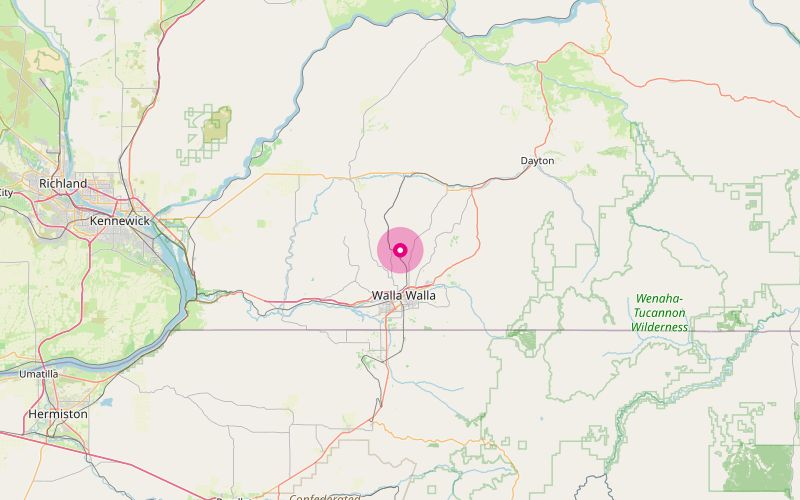
## Walla Walla Valley at a glance Walla Walla Valley is an American Viticultural Area straddling southeastern Washington State and northeastern Oregon, in the Pacific Northwest of the United States. The AVA was recognized in 1984, making it one of Washington’s historic appellations, even if its international reputation truly took shape from the 1990s onward. Production is largely dominated by red wines, with particular weight given to Cabernet Sauvignon, Merlot, Syrah, and Bordeaux- or Rhône-style blends. Within the AVA, The Rocks District of Milton-Freewater, recognized in 2015, forms a distinct sub-appellation in Oregon, known for its spicy, highly distinctive reds.
The valley is organized around the city of Walla Walla, which plays a commercial, tourism, and winegrowing role alike. The vineyard stretches across a set of hillsides, terraces, and alluvial plains, at varying elevations that allow growers to modulate grape ripeness and freshness. The wine landscape is not a single homogeneous block: it brings together cooler sectors, warmer exposures, and highly differentiated soils. This diversity explains the broad range of styles, from generous, sun-filled reds to wines that are more taut, more floral, or more mineral.
Walla Walla Valley belongs to the orbit of Columbia Valley, but it has a more specific identity than the regional scale might suggest. The best wines here seek less simple power than fruit definition, textural quality, and balance between ripeness, acidity, and tannin. The region has also developed a highly legible wine culture, based on family estates, single-parcel cuvées, and an increasingly refined approach to terroirs. In the American context, Walla Walla is now seen as a center for gastronomic red wines with aging potential.
## Terroir and geology The terroir of Walla Walla Valley rests on a geological mosaic more complex than The Rocks District’s reputation alone might suggest. A large part of the vineyard is planted on wind-blown loess deposits, often deep, sometimes mixed with gravel, sand, and silt. These surface layers frequently cover strata resulting from the cataclysmic floods at the end of the last ice age, as well as older substrates associated with the basalts of the Columbia River Basalt Group. This combination creates soil profiles capable of storing water, moderating vigor, and producing even ripening.
Hillside and terrace sectors generally offer good drainage and exposures useful for ripening late red varieties. Loess plays a central role here, as it encourages root penetration while providing a certain water reserve in a dry environment. Depending on horizon depth, the proportion of stones, and altitude, wines gain either flesh and roundness or tannic tension and length. This variability explains the growing interest in selections by block, by named site, or by named vineyard.
The Rocks District of Milton-Freewater is a special case within the AVA. Here, vines grow on extremely stony alluvial soils dominated by rounded basalt cobbles, visually reminiscent of some of Europe’s famous pebble terraces, without reproducing their exact functioning. The shallow depth of the fine soil horizons, the high proportion of stones, and the heat stored by the cobbles encourage full ripeness while giving the wines a singular aromatic profile. Syrahs from this area are often marked by notes of smoked meat, black olive, pepper, and dry garrigue, a register that has become a regional signature.
The terroir of Walla Walla also owes much to altitude and exposure. The highest or windiest parcels preserve more acidity and help avoid excessive richness in warm vintages. Lower, warmer zones are especially well suited to Bordeaux varieties, which reach good phenolic ripeness there. This internal hierarchy of sites has become essential in the quality discourse of the most ambitious producers.
## Climate Walla Walla Valley has a dry continental climate, far more arid than the general image of the American Northwest might suggest. The vineyard lies east of the Cascade Range, in a rain-shadow zone where precipitation remains low and irrigation plays an important role in many parcels. Summers are hot, very sunny, and generally dry, which favors regular ripening of red varieties. Autumns, often stable, allow for relatively serene harvests, subject to vintage variation.
The temperature swing between day and night is a key element in the wines’ balance. Days build sugar and substance, while cooler nights help preserve acidity and slow aromatic degradation. This contrast helps produce concentrated reds that are rarely heavy on the best sites. It also explains the quality of the floral and spicy profiles seen in Syrah, Cabernet Franc, or certain expressions of Merlot.
Climatic risks should not, however, be underestimated. Winter freezes can be severe and threaten buds or wood, as in other continental regions of the interior United States. Episodes of extreme heat, prolonged drought, and, at times, smoke linked to regional fires are now among the parameters closely monitored by winegrowers. Vintage success therefore depends on precise arbitration between irrigation, harvest date, and parcel selection.
## Grape varieties Cabernet Sauvignon is among the major grape varieties of Walla Walla Valley and often serves as the backbone of the most structured cuvées. It develops aromas of blackcurrant, blackberry, cedar, graphite, and sometimes dried sage, with firm but generally ripe tannins. Merlot also holds an important historic place and here gives wines that are softer, fleshier, sometimes centered on black plum, cocoa, and sweet spices. Cabernet Franc, planted on a smaller scale, is sought after for its role in blends and for a few varietal bottlings of fine precision.
Syrah is the other big local name and likely the most identity-defining grape in The Rocks District. It can take two directions: a more floral and peppery style on loess and higher-altitude sites, or a more sanguine, smoky, and savory style on basalt cobble soils. In both cases, it has established itself as a strong marker of the AVA. Other Rhône varieties, such as Grenache, Mourvèdre, Viognier, or Roussanne, exist on more modest scales.
Among secondary varieties, one also finds Malbec, Petit Verdot, and sometimes Sangiovese, depending on producers’ orientations. American rules allow considerable freedom in blending and presentation, provided current labeling thresholds for varieties and appellations are respected. In practice, Walla Walla estates readily work with Bordeaux blends, single-parcel Syrah cuvées, or wines highlighting a specific vineyard. This regulatory flexibility has encouraged experimentation without preventing the emergence of a coherent regional taste.
## Wine styles Reds clearly dominate and form the heart of Walla Walla Valley’s reputation. Cabernet Sauvignon- and Merlot-based blends often offer generous substance, dense tannins, ripe black fruit, and fairly pronounced oak aging in top-end cuvées. When oak is well handled, it brings structure, cedar, tobacco, and relief without masking the fruit. The best wines combine richness, precision, and sufficient freshness to evolve favorably over several years.
Syrah presents a particularly distinctive palette. Outside The Rocks District, it may show violet, black pepper, blackberry, and a satin texture that sometimes recalls certain northern models without imitating them. In The Rocks District, the register becomes more earthy, smokier, and more saline, with notes of olive, game, dried meat, and dry herbs. These are wines of character, often better understood at the table than in isolated tasting.
White wines occupy a more discreet place, but some producers make good Chardonnay, Viognier, Sauvignon Blanc, or Rhône blends. The style tends to favor fruit ripeness over sharp tension, although cooler sites allow for straighter expressions. Rosés also exist, generally in a dry, food-oriented register. They nevertheless remain secondary to the AVA’s identity.
Aging in oak barrels, often French, remains common for ambitious cuvées. Depending on the house, the use of new oak may be pronounced, especially in Bordeaux-style bottlings, but a more recent trend seeks greater site transparency than élevage impact. In terms of aging potential, the best Cabernet Sauvignon-, Cabernet Franc-, or Syrah-based bottles can evolve favorably over a decade or more. More accessible cuvées are designed to offer pleasure earlier, without giving up real structure.
## Producers to watch - Cayuse Vineyards : a foundational estate in the recognition of The Rocks District, particularly famous for its Syrahs with a smoky, sanguine, and spicy profile. - Leonetti Cellar : one of Walla Walla’s historic producers, renowned for its Cabernet Sauvignon- and Merlot-based reds, among the most influential in the state. - Woodward Canyon Winery : a pioneering house of the region, appreciated for its structured Cabernets and its early role in Washington’s move upmarket. - L’Ecole No 41 : a very consistent producer, active across several styles, recognized for its Cabernet Sauvignon, Merlot, and vineyard-designated cuvées. - Gramercy Cellars : an estate esteemed for its precise interpretations of Syrah and Cabernet Franc, with a fresher, more refined reading of terroir. - Reynvaan Family Vineyards : a benchmark of The Rocks District, particularly followed for site-specific Syrahs with an intense, mineral profile.
## Food and wine pairings A Walla Walla Valley Cabernet Sauvignon works very well with grilled rib steak, roasted potatoes, and a reduced jus. The wine’s tannic structure absorbs the meat’s richness, while its cedar and blackcurrant notes extend the grilled flavors.
A Syrah from The Rocks District pairs accurately with a rack of lamb with herbs, served with smoked eggplant. The wine’s peppery, sanguine, and smoky notes resonate with the pink meat and the dish’s lightly charred accents.
A Merlot from the valley pairs usefully with duck breast, a black cherry sauce, and a reduced jus. The wine’s ripe fruit and supple texture match the meat’s tender character without overwhelming the plate.
A more evolved Bordeaux blend finds a solid partner in braised chuck, glazed carrots, and creamy polenta. The wine’s élevage, density, and tertiary notes support the slow cooking and concentrated flavors well.
A more floral Syrah, from a loess or high-altitude site, can accompany artisanal sausages, lentils, and a black olive condiment. The pairing works through aromatic continuity rather than contrast.
## FAQ ### Where exactly is Walla Walla Valley located? Walla Walla Valley lies in southeastern Washington State and extends into northeastern Oregon. The city of Walla Walla is the historic and commercial center of the wine region.
### Does Walla Walla Valley produce mainly reds or whites? The AVA’s reputation rests very largely on red wines. Whites do exist, sometimes at a good level, but they remain a minority in both the image and production of the region.
### What is The Rocks District of Milton-Freewater? It is a sub-appellation located in Oregon, within the broader Walla Walla Valley area. It is known for its very stony basalt cobble soils and for Syrahs with a smoky, spicy, and highly singular profile.
### What are the most important grape varieties? Cabernet Sauvignon, Merlot, and Syrah dominate the qualitative and commercial hierarchy. Cabernet Franc, Malbec, Petit Verdot, and several Rhône varieties usefully complement the vineyard plantings.
### Do Walla Walla Valley wines age well? The best red cuvées have real aging potential thanks to their concentration, tannic structure, and sufficient acidity. Cabernet Sauvignon-based blends and great Syrahs can gain complexity over ten years or more depending on the producer and the vintage.