Walker Bay, the Cape’s maritime precision
Between Hemel-en-Aarde and Bot River, Walker Bay has established itself as a major hub for South Africa’s cool-climate wines, especially Chardonnay and Pinot Noir.
geoVINUM · 2026-11-04
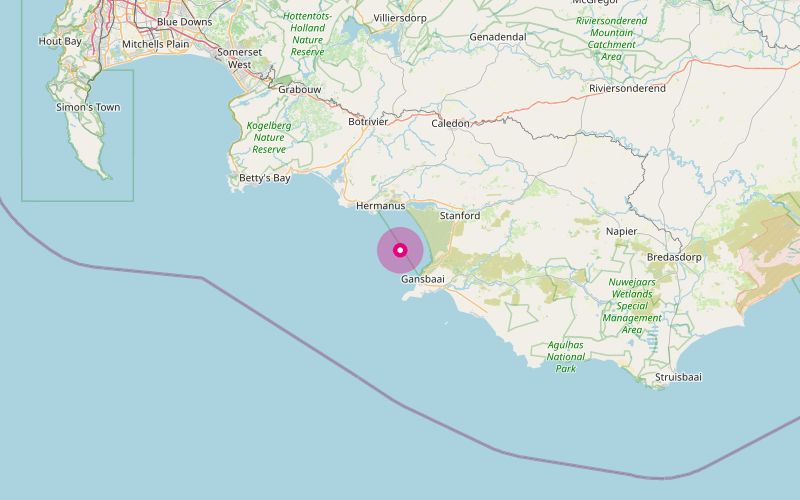
## Walker Bay at a glance Walker Bay is a South African appellation of origin located in the Overberg district, southeast of Cape Town, around Hermanus, Bot River, and the bay from which it takes its name. It falls under the Wine of Origin system and was recognized in 2001 as a ward, a geographic level below the district but above the estate. Production spans all three colors, with a particularly strong reputation for Chardonnay whites and Pinot Noir reds, as well as Bordeaux- and Rhône-style blends in the warmer sectors. The area includes several distinct sub-zones, including the wards Hemel-en-Aarde Valley, Upper Hemel-en-Aarde Valley, and Hemel-en-Aarde Ridge, which have contributed greatly to its renown.
## Terroir and geology Walker Bay is not defined by a single winegrowing landscape; it is a collection of hills, valleys open to the ocean, and more sheltered plateaus, where altitude and distance from the sea quickly alter growing conditions. The best-known vineyards lie on well-drained slopes, often between gentle relief and varied exposures, with a frequent preference for aspects that can temper the afternoon sun. This mosaic explains the diversity of profiles seen between the sectors near Hermanus, which are more directly maritime, and inland Bot River, which is generally a little warmer.
The geology is equally composite. A large share of the vineyards sits on schists and clays derived from Bokkeveld Shale, often associated with good water retention and wines of measured structure and fine grain. Sandstones from the Table Mountain group are also found; poorer and freer-draining, they can encourage slow ripening and tenser expressions. Depending on the site, ferruginous clay, stony loam, and more decomposed soils also play a role in the vine-water balance, with a direct impact on vigor, berry size, and the texture of the wines.
In Hemel-en-Aarde, the combination of schists, clays, and altitude has largely shaped the local style of Chardonnay and Pinot Noir. The soils there often offer enough depth to avoid abrupt water stress while maintaining moderate constraint favorable to concentration. In Bot River, soil profiles and slightly higher temperatures lead some producers more toward Syrah, Chenin Blanc, or medium- to full-bodied red blends.
## Climate Walker Bay’s defining trait is its cool to temperate maritime climate. The nearby ocean—more precisely, the influence of the cold waters of the Benguela Current along South Africa’s Atlantic coast—helps moderate temperatures and lengthen the growing season. Sea breezes reduce thermal extremes, preserve acidity, and limit, to a certain extent, heat spikes during ripening.
This freshness does not erase internal contrasts. The areas closest to the coast and the elevated sectors of Hemel-en-Aarde experience cooler nights and slower ripening, which favors more restrained aromatic profiles and better acid definition. Bot River and certain more enclosed plots benefit from a slightly warmer climate, conducive to fleshier reds and riper whites. Vintage therefore plays an important role, but the regional hallmark remains a form of natural tension rather than power.
Rainfall is concentrated mainly in winter, following a Mediterranean pattern typical of the Western Cape. Summers are generally dry, with sometimes strong winds that limit fungal pressure but can slow vegetative growth. This combination of abundant light, maritime freshness, and relative seasonal dryness explains the consistent precision of phenolic ripeness in the best sites.
## Grape varieties Walker Bay’s emblematic duo is clearly Chardonnay and Pinot Noir. They first established themselves in Hemel-en-Aarde, where cool-climate conditions allow the grapes to reach sufficient ripeness without excessive loss of acidity. These two varieties have served as the region’s international showcase, particularly in single-vineyard wines or site-specific cuvées that claim a finer reading of terroir.
Sauvignon Blanc, Sémillon, and Chenin Blanc also have a real place here, even if they are less visible than Chardonnay. Sauvignon can produce lemony, saline, and moderately herbaceous styles, while Chenin finds, depending on the site, a balance between ripe fruit and nervosity. Among reds, Syrah performs especially well in slightly warmer sectors, with peppery, floral profiles little marked by overripeness.
Bordeaux varieties such as Merlot, Cabernet Sauvignon, Cabernet Franc, and Petit Verdot are also found, especially in Bot River red blends or in warmer temperate zones of the appellation. South Africa’s Wine of Origin legislation primarily governs geographic origin and varietal labeling; at the scale of Walker Bay, it does not impose blending rules comparable to those of many European AOPs. This flexibility has allowed producers to test different grape varieties and cellar approaches, with a clear qualitative convergence toward varieties suited to the cool climate.
## Wine styles Walker Bay whites, especially those based on Chardonnay, stand out for their understated ripeness, notes of citrus, apple, sometimes pear and stone fruit, with nuances of wet stone, chalk, or sea spray depending on the site and élevage. The use of oak is common but rarely systematic in the best examples: partially new barrels, larger vessels, full or partial malolactic fermentation, lees aging, and measured bâtonnage serve texture more than aromatics. The best wines can age steadily for several years, gaining breadth, complexity, and notes of hazelnut and flint.
Pinot Noir is the appellation’s other major face. At its best, it offers aromas of red cherry, raspberry, rose, sweet spices, and emerging undergrowth, with fine tannins and a clear acid backbone. Barrel aging is common, often with a moderate proportion of new oak in order to preserve the delicacy of the fruit. Serious cuvées have real medium-term cellaring potential, and some single-parcel selections gain depth over eight to ten years, sometimes longer.
Reds made from Syrah or Bordeaux-style blends offer a different register. Syrah here tends toward black pepper, violet, olive, and fresh black fruit rather than opulence, while Bordeaux-style blends develop firmer structure and more marked élevage. These wines show that Walker Bay is not limited to a purely Burgundian model, even if that has long dominated the commercial narrative.
Traditional-method sparkling wines and a few rosés also exist, without forming the core of the region’s identity. Overall, Walker Bay’s style favors freshness, varietal clarity, and moderate extraction. It is less a region of showmanship than one of precision, where élevage tends to support the fruit rather than cover it.
## Producers to watch - Hamilton Russell Vineyards: a pioneering Hemel-en-Aarde estate, known for its Chardonnay-Pinot Noir duo in a taut, structured style. - Bouchard Finlayson: a historic player in the valley, recognized for its precise Pinot Noir and cool-climate whites. - Creation Wines: a major producer in Hemel-en-Aarde Ridge, with a broad range and a clear, educational reading of the zone’s different styles. - Newton Johnson Vineyards: a benchmark for single-vineyard Chardonnay and Pinot Noir cuvées, often among the most detailed in the appellation. - Ataraxia: a high-altitude estate renowned for wines that are linear, saline, and measured, especially in Chardonnay and Pinot Noir. - Botanica Wines: a small operation noted for chiseled whites and elegant reds, clearly illustrating Walker Bay’s artisanal potential.
## Food and wine pairings - Hemel-en-Aarde Chardonnay and sole meunière: the acidity and discreet oak support the butter without weighing the dish down. - Walker Bay Pinot Noir and pink duck breast: the wine’s fresh backbone balances the fat and complements the slightly sanguine flavors. - Cool-climate Sauvignon Blanc and gratinéed oysters or simply briny oysters: the wine’s tension extends the dish’s salinity. - Bot River Syrah and herb-roasted lamb: the peppery, floral profile works well with thyme, rosemary, and roasting juices. - Dry Chenin Blanc and mild fish curry: the wine’s fruit softens the spices, while its acidity keeps the pairing clean. - Walker Bay Bordeaux blend and grilled rib steak: the tannic structure and maritime freshness suit red meats without excessive alcoholic warmth.
## FAQ ### Where exactly is Walker Bay located? Walker Bay is in the Western Cape, within the Overberg district, on the southern coast of South Africa. The winegrowing area is organized around Hermanus, the Hemel-en-Aarde valley, and Bot River.
### Is Walker Bay an appellation or a region? In South African terminology, Walker Bay is a ward within the Wine of Origin system. In English, it can be described as an appellation of origin within the broader regional ensemble of the Western Cape.
### What are the most important grape varieties? Chardonnay and Pinot Noir are the most emblematic varieties, especially in the coolest sectors. Syrah, Sauvignon Blanc, Chenin Blanc, and several Bordeaux varieties also play a notable role depending on the site.
### Why is Hemel-en-Aarde so often mentioned together with Walker Bay? Hemel-en-Aarde is Walker Bay’s most famous group of valleys and uplands for cool-climate wines. Its specific wards helped define the regional style and establish the area’s international reputation.
### Do Walker Bay wines age well? The best Chardonnay and Pinot Noir show convincing aging capacity, especially when they come from cool sites and are raised with restraint. Syrah reds and blends can also evolve favorably, but their potential depends heavily on the producer and the vintage.