Waipara, Canterbury’s Precise, Dry-Farmed Slope
North of Christchurch, Waipara concentrates a cool-climate yet relatively dry winegrowing area. The region has established itself through riesling, pinot noir, and an increasingly convincing chardonnay.
geoVINUM · 2026-11-04
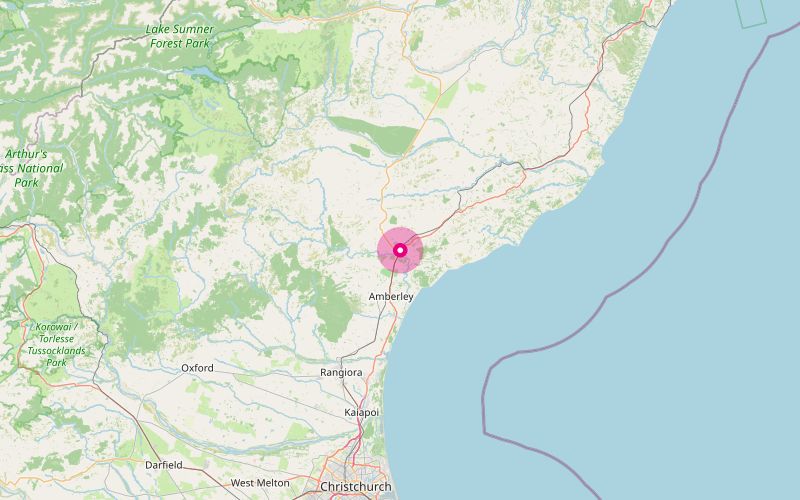
## Waipara at a glance Waipara is the main wine sub-region of North Canterbury, on New Zealand’s South Island, about an hour north of Christchurch. The most accurate administrative name today for the geographical indication is North Canterbury, recognized in 2017 under New Zealand’s Geographical Indications system, even though Waipara Valley remains the expression most widely used in trade and wine discourse. The region mainly produces still white and red wines, with a firmly established reputation for riesling, pinot noir, and, increasingly, chardonnay. On a national scale, it remains modest in size, which explains a relatively limited but often strongly distinctive offering.
Waipara developed later than Marlborough or Central Otago, but its growth was rapid from the 1980s and 1990s onward. This rise was built on a rare combination in southern New Zealand: a cool climate, yet drier and warmer than its latitude might suggest. The valley thus found a distinct positioning, less expansive than the major export regions and more focused on site-driven wines. This human scale encourages a precise reading of terroirs and viticultural choices.
The vineyard is concentrated around the Waipara River valley and on nearby slopes or terraces, with varying exposures depending on the estate. Plantings are mostly devoted to international grape varieties, without a rigid blending framework comparable to European appellations. New Zealand’s varietal and stylistic freedom is fully expressed here, but with growing coherence around a few flagship grapes. Waipara is therefore more than a regional fashion: it is now a clearly legible origin, especially for lovers of taut whites and refined reds.
## Terroir and geology Waipara’s wine landscape is shaped by a sheltered inland valley, bordered by hills that play a decisive role in moderating the climate. Vineyards occupy alluvial terraces, gentle slopes, and, in some sectors, sites where limestone influence becomes more pronounced. This topographic diversity translates into distinct ripening rhythms and wine profiles depending on altitude, exposure, and soil depth. Parcel-level reading is therefore more important here than is often imagined for a young New World region.
The soils frequently combine alluvium, silt, gravel, clay, and more limestone-rich deposits in certain sectors. Waipara should not be reduced to a uniformly “chalky” vineyard: limestone is present and important, but it forms part of a broader soil mosaic. Gravelly parcels generally favor good drainage and a certain earliness, while clay provides greater water reserves and more structure to the wines. This heterogeneity partly explains both the fine texture of its pinot noirs and the aromatic brightness of its rieslings.
The presence of limestone nevertheless remains an important marker in the identity of several benchmark estates. On these sites, white wines can gain in tension, length, and aromatic restraint, especially when yields remain controlled. Chardonnays find an interesting support here to combine ripeness and acidity, while pinot noirs can develop more chalky tannins and a more earthy expression. It is less a uniform signature than a potential for distinction according to the parcel.
The relief also creates conditions for cold-air drainage that can, in some locations, limit the risks associated with spring frost. The best sites are not only the sunniest ones: they are also those where air circulation and water balance allow steady ripening. In a region where acidic precision matters greatly, site quality remains decisive. This terroir logic explains the strong identity of certain long-established producers.
## Climate Waipara enjoys a cool to moderately warm climate, yet one that is relatively dry on the scale of the eastern South Island. The surrounding hills offer partial protection from the coldest and windiest maritime influences, creating milder conditions than on the open coastal plain. The valley therefore sees more summer warmth and a growing season often more favorable to full phenolic ripeness. This locally perceptible difference underpins Waipara’s originality within Canterbury.
Summers are generally sunny, with fairly warm days and cool nights that help preserve acidity. This diurnal range is valuable for aromatic varieties such as riesling and for delicate reds such as pinot noir. It allows ripe grapes to be achieved without losing the tension that structures the wines. The aim is not power, but clarity of fruit and definition of balance.
The valley’s relative dryness is another major asset, even if irrigation may be used depending on site and vintage. Moderate rainfall reduces fungal pressure and facilitates careful viticulture, especially for growers working with minimal inputs. Risk is not absent, however: spring frosts, wind events, and spells of more marked heat can strongly affect yields. As elsewhere in New Zealand, vintage variability matters more than an overly uniform discourse about climate might suggest.
Autumn plays a decisive role in the hierarchy of vintages. When it remains dry and bright, Waipara can produce remarkably complete wines, with clear aromatic ripeness and well-integrated acidity. If conditions deteriorate earlier, styles can become more angular, even rather severe in some whites. That is why the best producers fine-tune harvest dates for each parcel and each variety.
## Grape varieties Riesling remains one of Waipara’s emblematic grape varieties and probably the one that most clearly expresses the region’s potential. Here it yields wines ranging from dry to sweet, with profiles of lemon, lime, white flowers, sometimes talc or petroleum notes with age. High natural acidity is its main axis, but the best examples know how to avoid mere austerity. Waipara ranks among New Zealand’s benchmark origins for this grape.
Pinot noir is the valley’s other qualitative pillar. In the right sites, it offers medium-bodied wines with fine tannins and aromas of cherry, raspberry, dried herbs, sometimes undergrowth and sweet spices. The style is generally less massive than in more continental regions and less immediately expansive than in some pinots from warmer climates. Its interest lies in the balance between fruit, freshness, and texture.
Chardonnay is taking an increasingly convincing place in the regional hierarchy. Depending on winemaking choices, it can range from a taut, citrus-driven style to more textured expressions, fermented or aged in barrel, with notes of stone, pit fruit, light brioche, and yellow fruit. Waipara has the necessary conditions for precise chardonnays that are both ripe and vibrant. It is probably the grape whose reputation continues to rise the most.
Sauvignon blanc, pinot gris, and gewurztraminer are also present, as well as, more occasionally, chenin blanc or other more confidential varieties of interest. Sauvignon blanc often shows a less explosive profile here than in Marlborough, with more texture and sometimes a more discreet herbaceous expression. Pinot gris can be vinified in a dry, broad, or slightly off-dry register. There are no strict blending rules imposed by an appellation in the European sense; producers enjoy great freedom, including for sweetness levels and élevage styles.
## Wine styles Waipara’s whites form the core of its identity. Dry rieslings often show a lemony, saline, or stony line, with a slender palate and a very straight finish. Off-dry or sweet versions generally retain strong acidic tension, which avoids any heaviness. With age, the best develop notes of wax, fine hydrocarbons, and dried herbs.
The chardonnays stand out for precision more than opulence. Oak élevage is common for ambitious cuvées, often with a search for integration rather than an overt aromatic stamp. Depending on the estate, one finds barrel fermentation, measured bâtonnage, and sometimes partial malolactic use. The best wines can age gracefully, gaining complexity over five to ten years, sometimes longer.
The reds rest primarily on pinot noir, generally vinified to preserve tannic finesse and expression of site. The proportion of whole bunch varies according to producer and vintage, as does the length of barrel aging. Styles range from immediate, crunchy fruit to more structured cuvées capable of evolving for several years toward notes of earth, spice, and dry leaves. The aging potential is real, without seeking demonstrative concentration.
Waipara also produces expressive aromatic wines, notably from pinot gris and gewurztraminer, as well as a few sparkling wines and botrytized or late-harvest cuvées when the vintage allows. These categories remain more marginal, but they illustrate the versatility of the local climate. Regulatory mentions are those of the general New Zealand framework, which is more oriented toward grape variety, vintage, and declared origin than toward an internal appellation hierarchy. For the taster, the producer’s reputation and the precision of the lieu-dit often matter more than the administrative category alone.
## Producers to watch - Pegasus Bay: a flagship estate of the valley, renowned for its rieslings, chardonnays, and pinot noirs, with a highly accomplished reading of local potential. - Bell Hill: a small benchmark property, famous for its site-driven wines with a strong limestone imprint, notably in chardonnay and pinot noir. - Pyramid Valley: a major player in the contemporary identity of North Canterbury, with a demanding parcel-based approach and often highly singular wines. - Greystone: a recognized producer for its rieslings, pinot noirs, and chardonnays, with attentive viticulture and precise styles. - Black Estate: an influential estate committed to organic farming, appreciated for its textured wines and nuanced reading of Waipara’s terroirs. - Mountford Estate: a respected property known for its pinot noirs and characterful whites, stemming from one of the valley’s historic quality nuclei.
## Food and wine pairings - Dry Waipara riesling and lemon-gratinated oysters: the wine’s acidity and salinity answer the iodine without overwhelming the dish’s delicacy. - Off-dry riesling and Thai cuisine with shrimp, ginger, and moderate chili: the slight residual sugar tempers the heat and extends the aromatic notes. - Waipara chardonnay and roast poultry with morels: the wine’s texture and discreet élevage accompany the meat without weighing it down. - Waipara pinot noir and roast duck, beetroot, reduced jus: the wine’s earthy register and freshness pair well with this classic duo. - Pinot gris and lightly spiced glazed pork: the grape’s mid-palate volume matches the dish’s sweet-salty character. - Gewurztraminer and moderately powerful blue cheeses: the wine’s aromatic intensity creates a convincing contrast with salt and fat.
## FAQ ### Is Waipara an official appellation? Not exactly in the classic European sense. The officially recognized geographical indication is North Canterbury, while Waipara Valley remains the best-known customary name for the main sub-region.
### What are Waipara’s best grape varieties? Riesling and pinot noir are the clearest historical benchmarks. Chardonnay now ranks among the valley’s most convincing successes.
### How does Waipara differ from Marlborough? Waipara is generally smaller, more inland, and less oriented toward an expansive varietal style. The wines often seem more textured, more nuanced, and more marked by site than by immediate aromatics.
### Can Waipara wines age? Yes, especially the best rieslings, chardonnays, and pinot noirs. Their aging capacity rests on acidity, balance of ripeness, and, in some cases, real terroir depth.
### What style of riesling is found in Waipara? The region produces a broad range, from dry to sweet. The common thread is sustained acidity that keeps the wines vibrant, legible, and often very capable of development over time.