Vosne-Romanée, the cradle of great Burgundian pinot noir
At the heart of the Côte de Nuits, Vosne-Romanée combines benchmark terroirs with a pinot noir style that brings together texture, precision, and depth.
geoVINUM · 2026-11-04
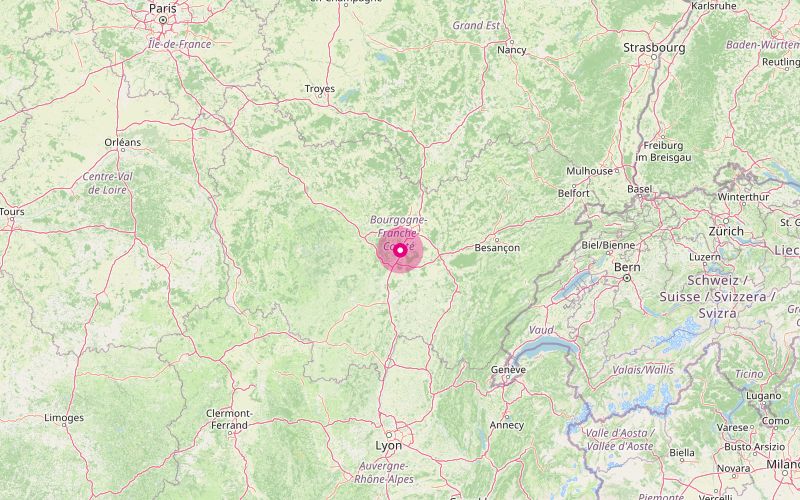
## Vosne-Romanée at a glance Vosne-Romanée is a communal appellation in the Côte de Nuits, in Côte-d’Or, between Flagey-Echézeaux to the north and Nuits-Saint-Georges to the south. The controlled designation of origin was recognized in 1936 and covers red wines made almost exclusively from Pinot Noir, with a marginal production of white authorized under the Burgundy framework. The communal vineyard extends over a little more than 150 hectares, to which are added several grands crus located within the commune and in Flagey-Echézeaux. Vosne-Romanée’s reputation rests on the exceptional concentration of prestigious climats and on a wine identity built as much on finesse of texture as on aromatic intensity.
## Terroir and geology The vineyard area of Vosne-Romanée occupies the east- to southeast-facing slope of the Côte de Nuits, on moderate inclines generally situated between the lower hillside and the middle section of the vineyard escarpment. This position ensures good drainage and consistent exposure, without excessive vigor, which encourages slow, even ripening of Pinot Noir. The village is part of Burgundy’s great geological matrix, composed of Jurassic limestones and marls deriving mainly from the Bathonian and Oxfordian.
The hierarchy of terroirs is based on fine nuances of soil depth, clay proportion, stoniness, and water movement. On the upper and middle parts of the slope, soils are often thinner, stonier, and more calcareous, producing wines with firm structure and marked tension. Lower down, soils gain in clay and depth, which can bring more volume, while requiring stricter control of yields. Vosne-Romanée stands out precisely for the ability of certain climats to combine flesh and energy without heaviness.
The subsoil is not uniform from one climat to another, and this is one of the decisive points in understanding the appellation. The grands crus sectors, grouped between Vosne-Romanée and Flagey-Echézeaux, rest on particularly balanced combinations of active limestone, brown or red clays, and fine scree. Romanée-Conti, La Tâche, Richebourg, Romanée-Saint-Vivant, La Romanée, La Grande Rue, and the Échezeaux form a unique but not homogeneous ensemble; each expresses a specific modulation of depth, salinity, and tannic density. The communal premiers crus extend this complexity and show just how concrete the Burgundian notion of climat is here.
Among the most sought-after premiers crus are Les Suchots, Aux Malconsorts, Les Brûlées, Cros Parantoux, Les Chaumes, Les Petits Monts, En Orveaux, and Clos des Réas. Les Suchots often yields complete, broad wines, sometimes regarded as a bridge between the brilliance of the grands crus and the relative accessibility of the premiers crus. Aux Malconsorts and Cros Parantoux produce more incisive, profound, and linear wines, with very marked palate tension. Les Chaumes and certain lower-slope sectors offer more suppleness, without losing the spicy signature for which the village is renowned.
## Climate The climate is semi-continental with moderate oceanic influence, as throughout the Côte d’Or. Winters are cool, springs are exposed to frost risk, and summers are generally temperate, with episodes of heat becoming increasingly frequent. Rainfall remains moderate, but its distribution during the season plays a major role in disease pressure and in the pace of ripening.
The east- or southeast-facing exposure allows the vines to receive the morning sun, which limits the persistence of moisture on the vegetation and the grapes. This early light encourages a gradual rise in temperatures during the day, while avoiding overly harsh sun exposure in the late afternoon. In balanced vintages, this configuration helps preserve acidity and the aromatic definition of Pinot Noir. In warmer vintages, the harvest date becomes an essential lever for preserving fruit precision and the quality of the tannin grain.
Climate change is now accentuating contrasts between vintages and imposing finer choices in both vineyard and cellar. Canopy management, soil work, preservation of organic matter, and the maintenance of deep rooting are becoming central. In Vosne-Romanée, where reputation rests on the balance between intensity and grace, overripeness is watched especially closely. The best producers seek less power than the integrity of the terroir and the readability of the climats.
## Grape varieties Pinot Noir overwhelmingly dominates the appellation and forms the qualitative basis of its identity. Within the regulatory framework for Burgundy’s communal red appellations, it may be supplemented on an accessory basis by Chardonnay, Pinot Blanc, and Pinot Gris, in strictly regulated proportions. In practice, Vosne-Romanée reds are vinified as cuvées of virtually exclusive, if not entirely exclusive, Pinot Noir.
For the rare white wines that may fall under the communal appellation, Chardonnay is the principal grape variety, with the possibility of a supporting proportion of Pinot Blanc. This production remains anecdotal and does not form part of Vosne-Romanée’s market image. The essential subject therefore remains the expression of Pinot Noir across a mosaic of climats with high patrimonial value. The quality of this grape variety here lies in its ability to translate differences in soil and position with uncommon clarity.
Viticultural practices strongly influence the final style. Old vines, massal selections, yield control, and a precise harvest date are decisive in obtaining ripe skins without tipping into excessive alcohol levels. Some estates use a proportion of whole clusters depending on the vintage and the parcel source, in order to bring relief, freshness, and spicy complexity. Others favor complete destemming to preserve purity of fruit and tactile finesse.
## Wine styles Vosne-Romanée produces reds whose color is generally ruby to garnet, more or less deep depending on vine age, vintage, and extraction. The nose often combines black cherry, ripe raspberry, red plum, faded rose, violet, sweet spices, fine pepper, sandalwood, incense, or undergrowth with age. This palette is not an absolute rule, but it corresponds to an aromatic family frequently observed in good examples from the village. The most consistent signature remains the combination of an expansive bouquet and a palate that is at once velvety and structured.
At the communal level, the wines often offer a supple attack, a savory mid-palate, and fine tannins, with a characteristic spicy length. The premiers crus gain in depth, textural density, and aging potential, without losing the silky sensation that is a local hallmark. The grands crus from the commune reach another level of complexity and persistence, but it would be reductive to make them the sole measure of quality. Many village wines and premiers crus from Vosne-Romanée already offer a very complete reading of the local style.
Aging is traditionally carried out in Burgundian oak barrels, with a proportion of new wood that varies according to the appellation level, the substance of the vintage, and the estate’s philosophy. Overly assertive oak can mask the floral details and saline vibration of certain climats; well-judged élevage, by contrast, supports the structure without freezing the wine in place. The most precise producers seek discreet integration of the vessel, avoiding dominant toasty markers. The aging period may range from around 12 to 20 months depending on the cuvées.
The aging potential is high in the best wines. A well-born Vosne-Romanée village can evolve favorably for around ten years, sometimes more depending on the producer and the vintage. Serious premiers crus commonly go beyond that and benefit from time for the tannin grain to meld and for tertiary notes to emerge. The grands crus, finally, can span several decades, but their reading depends greatly on the climat, the estate style, and storage conditions.
## Producers to follow - Domaine de la Romanée-Conti — The commune’s absolute reference point, with a very pure reading of the grands crus and a textural precision rarely matched. - Domaine Méo-Camuzet — A dense, controlled style, particularly instructive for understanding the scale of Vosne-Romanée’s climats. - Domaine Sylvain Cathiard — Highly defined wines, measured intensity, and generally well-integrated élevage, from village level to premiers crus. - Domaine Emmanuel Rouget — A major address for grasping the depth and relief of certain emblematic terroirs, especially around Cros Parantoux. - Domaine Mugneret-Gibourg — A refined interpretation of Vosne-Romanée, marked by clarity of fruit and quality of palate texture. - Domaine Jean Grivot — A rigorous reading of the climats, with ageworthy wines combining structure, ripeness, and precision.
## Food and wine pairings A village-level Vosne-Romanée pairs accurately with roast pigeon, served pink, with a short jus and a few roasted beets. The wine engages with the finesse of the flesh and extends the earthy notes without dominating the dish.
A premier cru such as Les Suchots or Les Brûlées works very well with venison fillet, a lightly reduced sauce, and a mushroom garnish. The wine’s density answers the depth of the game, while its acidity maintains balance.
With Bresse chicken with morels, the pairing relies less on power than on texture. The wine’s velvety character meets the creamy sauce, and its fine spice prevents any sensation of heaviness.
With a porcini risotto or a sauté of girolles, an evolved Vosne-Romanée shows its relevance. Aromas of undergrowth and dried leaves find a natural echo in the dish’s forest register.
As for cheeses, it is best to favor mild pressed cheeses or washed-rind cheeses with moderate aging. A truffled Brillat-Savarin or a well-kept farmhouse Reblochon can make beautiful pairings, provided the wine is served at the right temperature and without excessive obvious oak.
## FAQ ### Is Vosne-Romanée an appellation or a village? Both terms are linked. Vosne-Romanée is first of all a commune in the Côte de Nuits, and its name also designates the communal appellation that covers wines produced within this vineyard area according to AOC rules.
### Which grands crus are located in Vosne-Romanée? The commune includes Romanée-Conti, La Romanée, La Tâche, Richebourg, Romanée-Saint-Vivant, and La Grande Rue, as well as part of Échezeaux and Grands Échezeaux in the sector shared with Flagey-Echézeaux. This ensemble partly explains the vineyard’s symbolic and economic density.
### What is the typical profile of a Vosne-Romanée? The classic style combines precise red to black fruit, floral and spicy notes, then a textured palate, dense without hardness, with fine tannins. It is not a showy red; its strength often lies in its persistence and in its sense of detail.
### Should you wait before opening a bottle? Yes, most often. Even village cuvées often gain in harmony after a few years in the cellar, while premiers crus and grands crus require more patience to unfold their full complexity.
### Why is Vosne-Romanée so sought-after? The commune brings together an exceptional concentration of top-rank climats and a long history of benchmark estates. Above all, it produces wines capable of marrying intensity, finesse of grain, and aging capacity, which remains a rare combination in the wine world.