Victoria, a mosaic of Australia’s great wine regions
From high-altitude freshness to the hot plains of the Murray, Victoria brings together some of Australia’s most distinctive styles, from sparkling wines to fortified muscats.
geoVINUM · 2026-11-04
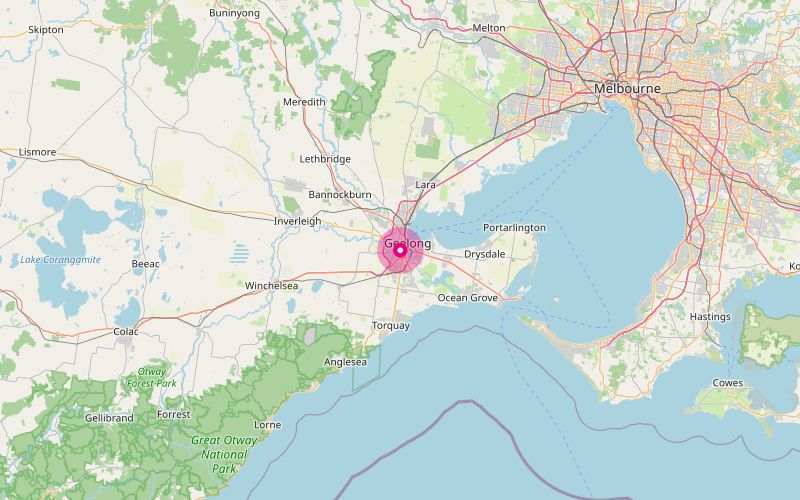
## Victoria at a glance Victoria is a state in southeastern Australia and, under Australian wine law, a recognized geographical indication encompassing all of its production areas. The GI Victoria was registered in the 1990s as part of the modern structuring of Australian geographical indications, and it covers vineyards scattered across cool coastlines, inland valleys, and the foothills of the Great Dividing Range. White, red, sparkling, sweet, and fortified wines are produced here, with a level of diversity rarely found within a single state. Victoria accounts for a significant share of the Australian vineyard, but its identity rests less on overall volume than on the coexistence of cool-climate regions, moderate continental zones, and warm areas suited to fortified wines.
The name Victoria may appear on its own on the label, but it also serves as an administrative and commercial framework for more specific geographical indications such as Yarra Valley, Mornington Peninsula, Rutherglen, Heathcote, Bendigo, Goulburn Valley, Pyrenees, Grampians, or King Valley. This hierarchy matters, because the state’s qualitative reputation is above all tied to its sub-regions. In practice, Victoria brings together some of Australia’s leading homes of pinot noir and chardonnay, historic strongholds of shiraz, and the origin of several of the country’s most renowned fortified muscats. Few Australian states offer such continuity between 19th-century wine heritage and a contemporary scene focused on site expression.
## Terroir and geology The term Victoria refers to a mosaic of terroirs rather than a homogeneous whole. The Great Dividing Range largely shapes the wine landscape by creating altitudes, exposures, and temperature swings that favor cool or temperate-climate styles. Further north, toward the Murray basin, the relief fades and the plains become warmer, drier, and more dependent on irrigation. This contrast between hillside sectors and river plains explains much of the diversity of the wines.
The soils are just as varied. In Yarra Valley, one notably finds silts, clays, and soils derived from ancient rocks, with a frequent distinction between the deeper valley-floor lands and the leaner, higher-elevation soils of the Upper Yarra. Heathcote is particularly associated with red soils rich in iron oxide, often described as derived from ancient Cambrian formations, which favor structured, spicy shiraz. In Bendigo, lean, well-drained soils, often gravelly or sandy over ancient subsoils, are well suited to vine growing in a relatively dry climate.
Mornington Peninsula rests on a base of coastal hills with marked maritime influences, with soils that may combine clays, loams, and lighter deposits depending on the area. In the Grampians and the Pyrenees, the relief, stony soils, and varied exposures support reds that are both ripe and vibrant. Rutherglen, in the northeast, stands out for its warmer soils and a long tradition of fortified wines made from muscat à petits grains rouges and muscadelle. Victoria’s appeal lies precisely in this juxtaposition of wine landscapes, each suited to a small number of especially coherent styles.
## Climate Victoria’s climate cannot be summed up by a single category. The regions closest to the southern coast, or those situated at altitude, fall within a temperate to cool climate, with long ripening seasons and good acid retention. This is the case for Mornington Peninsula, Yarra Valley in its higher parts, and, depending on the vintage, several sectors of King Valley. These conditions favor grape varieties with shorter to medium growing cycles, as well as sparkling wine base wines.
In inland regions such as Heathcote, Bendigo, or the Pyrenees, the climate becomes more continental, with hot summers, intense light, and sometimes cooler nights thanks to altitude or topography. The vine more easily reaches full phenolic ripeness there, which particularly benefits shiraz and certain Bordeaux blends. Further north, toward Rutherglen and Murray Darling, heat is more pronounced and dryness more structural. In these sectors, irrigation plays an important role and styles tend more toward richness, concentration, or fortified wines.
Vintage variability remains decisive. Heat episodes can accelerate ripening and reduce acidity, while cooler areas may, depending on the year, face disease pressure or slower ripening. This climatic diversity explains why Victoria does not have a single profile, but rather a series of credible regional specializations. For the enthusiast as for the professional, reading the precise origin within the state is therefore essential.
## Grape varieties The two emblematic grape varieties of Victoria’s cool regions are pinot noir and chardonnay. They dominate the qualitative image of Yarra Valley and Mornington Peninsula, where they produce both still wines and bases for traditional-method sparkling wines. Chardonnay there ranges from taut styles with little oak influence to more textured expressions aged in barrel or larger vessels. Pinot noir, for its part, varies from floral and delicate to denser profiles, depending on altitude, exposure, and extraction choices.
Shiraz nevertheless remains one of the state’s great common threads. It expresses itself with authority in Heathcote, the Grampians, the Pyrenees, and Bendigo, but in different forms: more peppery and vibrant in cooler sectors, fuller and sunnier in warm continental zones. Cabernet sauvignon, merlot, and sometimes cabernet franc occupy a notable place in several inland regions. Sauvignon blanc, pinot gris, and riesling also appear in certain cool or high-altitude areas, with results that vary according to site.
Rutherglen is inseparable from two historic varieties for fortified wines. Muscat à petits grains rouges gives the famous local style commonly called Rutherglen Muscat, while muscadelle is used to produce Rutherglen Topaque, formerly designated by the term tokay in Australia. King Valley has also built a serious reputation for Italian varieties, notably prosecco, sangiovese, nebbiolo, barbera, and arneis, even if their weight across the state remains lower than that of the major grapes. Blending rules follow the general Australian framework: when a grape variety is indicated on the label, the wine must contain at least the proportion legally required by national regulations.
## Wine styles Victoria’s dry white wines range from very fresh, sharply defined profiles to broader interpretations. Chardonnays from the best cool-climate zones often show clear acidity, aromas of citrus, apple, white peach, or hazelnut, with measured and increasingly precise barrel aging. Sauvignon blancs, pinot gris, and rieslings round out the offering, but it is clearly the chardonnay-pinot noir duo that carries the state’s strongest international reputation.
The reds cover an exceptionally broad spectrum. The pinot noirs of Yarra Valley and Mornington Peninsula often seek a balance between fruit, tannic finesse, and discreet oak use, with real aging potential in the best sites. The shiraz of Heathcote, Grampians, or Pyrenees stand out for their structure and their notes of pepper, olive, plum, or licorice, and can evolve favorably over several years, sometimes longer for ambitious cuvées. Cabernets and Bordeaux blends from moderately warm regions show more cassis, cedar, and dried-leaf profiles.
Victoria is also a major player in Australian sparkling wine, especially from chardonnay and pinot noir grown in cool sectors. The best examples favor tension, a fine mousse, and well-integrated lees aging. At the other end of the spectrum, Rutherglen produces some of Australia’s great fortified wines. The aging categories of Rutherglen Muscat and Rutherglen Topaque are based on indications of style and average age, ranging from younger versions to very old expressions that are intensely concentrated, oxidative, and persistent. These wines rank among the most singular styles in Australia’s wine heritage.
## Producers to watch - Yering Station: a historic Yarra Valley estate, a useful reference for understanding the qualitative revival of Victoria’s cool-climate wines. - Mount Mary: a flagship Yarra Valley producer, recognized for its Bordeaux-inspired reds and precise chardonnays. - Giant Steps: a central name in the contemporary Yarra Valley, with clear work on parcels and site differences. - Kooyong: a reliable Mornington Peninsula benchmark for pinot noir and chardonnay, with a restrained, terroir-driven style. - Jasper Hill: an iconic Heathcote estate, associated with characterful, deep shiraz with long aging potential. - Chambers Rosewood Vineyards: the absolute reference in Rutherglen for very long-aged muscats and topaques.
## Food and wine pairings - Yarra Valley or Mornington Peninsula chardonnay with roasted sea bass, lemon butter, and fennel. - Cool-climate pinot noir with pink duck breast, roasted beets, and reduced jus. - Heathcote shiraz with grilled rib steak, black pepper, and sautéed potatoes. - Cabernet or Bordeaux blend from an inland region with herb-roasted lamb and root vegetables. - Victoria sparkling wine with oysters, zucchini blossom fritters, or tuna sashimi. - Rutherglen Muscat or Topaque with a walnut tart, sticky date pudding, or a blue-veined cheese.
## FAQ ### Is Victoria an appellation in the European sense of the term? Not exactly. In Australia, Victoria is a geographical indication within a more flexible system than that of European PDOs, focused mainly on grape origin and labeling.
### Which are the most renowned regions within Victoria? Yarra Valley, Mornington Peninsula, Heathcote, and Rutherglen are among the best-known names internationally. The Grampians, the Pyrenees, Bendigo, and King Valley also play an important role depending on the styles sought.
### What is Victoria’s most emblematic grape variety? There is no single one. Pinot noir and chardonnay dominate the image of the cool regions, while shiraz shapes the identity of several inland regions, and fortified muscat gives Rutherglen its singularity.
### Are Victoria wines made for aging? The best examples are. The great chardonnays, pinot noirs, and shiraz from recognized sites evolve well over several years, while Rutherglen’s muscats and topaques are among the most durable Australian wines.
### What does the term Rutherglen Muscat mean? It is a fortified wine made from muscat à petits grains rouges in the Rutherglen region. Its style is based on richness, concentration, oxidative aging, and a category system that reflects the wine’s average age and intensity.