Verdicchio dei Castelli di Jesi, a Great White of the Marche
In the heart of the Marche, Verdicchio dei Castelli di Jesi produces dry, vibrant, nuanced whites capable of aging gracefully, depending on altitude, soils, and élevage.
geoVINUM · 2026-11-04
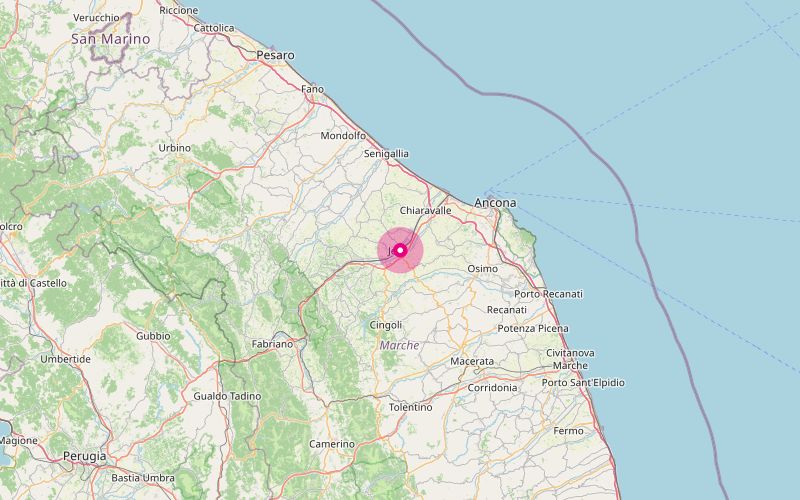
## Verdicchio dei Castelli di Jesi in Brief Verdicchio dei Castelli di Jesi is a major appellation in the Marche, in central Italy, located around Jesi in the province of Ancona, on the Adriatic side. The historic area covers a string of hillside communes often referred to as the “castles” of Jesi, which gives the appellation its name. The denomination was recognized as a DOC in 1968, and then a higher category, Verdicchio dei Castelli di Jesi Classico Superiore, obtained DOCG status in 2010.
The appellation primarily produces dry white wines based on Verdicchio, but its regulations also allow for spumante, passito, and riserva versions depending on the designation. The qualitative core lies in the Classico zone, which corresponds to the historic center of production, and in the best-ventilated sectors of the inland hills. Volumes vary depending on vintage and source, but Verdicchio dei Castelli di Jesi ranks among the most important and most structured white appellations in central Italy.
The general style rests on a rare combination of ripeness and tension. The best wines combine restrained substance, firm acidity, a finish often marked by almond, and an aging capacity that exceeds the sometimes simple image the region carried through the 20th century. This ability to age explains the appellation’s place in professional tastings and in WSET programs devoted to benchmark Italian white wines.
## Terroir and Geology The vineyard area stretches across hills between the hinterland of Ancona and the Esino valley, with generally moderate elevations, most often between about 100 and 400 meters. Topography is decisive, as it shapes exposure, ventilation, and harvest date. The coolest slopes and higher sectors often deliver more taut profiles, while lower or more sheltered sites yield softer, fruitier wines.
The Classico zone includes several of the most highly regarded communes, among them Jesi, Montecarotto, Cupramontana, Staffolo, San Paolo di Jesi, Castelplanio, and Serra de’ Conti. These hills partly face the Adriatic Sea but remain far enough inland to retain an inland character. The landscape alternates between vineyards, olive groves, cereals, and woodland, which helps limit uniformity of expression.
The soils are mainly sedimentary in origin, with a predominance of clay-limestone, often mixed with marl, silt, and sand depending on the parcel. This geological matrix provides useful water reserves in dry summers while retaining enough structure to prevent overly rapid ripening. In some sectors, the limestone and marl components favor wines that are more saline and more austere in youth.
Verdicchio responds very clearly to soil nuances. On marl and calcareous clays, it gains density, length, and herbal or aniseed expression; on sandier fractions, it tends toward more immediate fragrance and lightness. This diversity explains why the appellation cannot be reduced to a single taste, but rather to a coherent family of styles built around the same grape variety.
## Climate The climate is Mediterranean in its broad outline, but clearly shaped by distance from the sea, altitude, and air currents coming from the Adriatic. Summers are warm and bright, without consistently reaching the extremes found in some more southerly parts of Italy. Cooler nights on the slopes play an important role in preserving acidity and slowing aromatic degradation.
Ventilation is a central quality factor. Sea breezes can penetrate inland and help keep the crop healthy, especially in humid years or after stormy episodes. This natural aeration reduces part of the fungal pressure and makes it possible to wait for more complete phenolic ripeness without losing all of the grape’s acidic backbone.
Rainfall is concentrated mainly outside summer, but its distribution varies by vintage. In hot, dry years, clay soils play a buffering role, while in cooler years parcel selection becomes decisive in avoiding overly dilute profiles. Reading the vintage therefore remains essential, even in an appellation where consistency has improved markedly.
Climate change has already altered the balance of some sites. Harvests are often earlier than they once were, and producers seek to preserve Verdicchio’s tension through choices of picking date, canopy management, and selection of higher-altitude parcels. This evolution increases the value of well-ventilated areas and less scorching exposures.
## Grape Varieties The appellation’s central grape variety is Verdicchio, a native white variety of the Marche, regarded as one of Italy’s noblest for its versatility and aging capacity. It naturally produces wines with good acidity, with alcohol levels ranging from moderate to substantial depending on the sites, and with aromas spanning citrus and apple to fine herbs, fennel, white flowers, and almond. With age, it can evolve toward notes of light honey, wax, chamomile, and sometimes discreet hydrocarbon.
The regulations place Verdicchio at the center of the blend, at a minimum of 85%. The balance may come from other non-aromatic white grape varieties authorized in the region, according to current rules. In practice, many of the most ambitious cuvées are vinified from almost exclusively Verdicchio, or even as declared or de facto single-varietal wines.
The grape’s behavior in the vineyard explains its reputation. Verdicchio can be generous if not controlled, but it retains a notable acidic framework even at good ripeness, which makes it suited to dry, sparkling, or passito styles. This plasticity makes it as much a grower’s grape as a terroir grape.
## Wine Styles The most common style is still dry white wine, generally vinified in tank to preserve varietal clarity. These wines often show notes of lemon, grapefruit, crisp pear, herbs, anise, and fresh almond, with a linear, saline palate. The best examples avoid mere lightness and gain depth through lees work, precise harvesting, and parcel selection.
The Classico designation refers to the historic core, while Superiore generally implies a more demanding qualitative and analytical standard. The Riserva category, attached to the DOCG Verdicchio dei Castelli di Jesi Classico Riserva, aims at wines that are more concentrated and more suitable for aging, with longer élevage before release. Depending on the producer, this élevage takes place in tank, in large neutral vessels, or partly in wood, with new oak in principle remaining a secondary tool rather than an identity marker.
The use of wood exists but remains measured among the best producers. When well handled, it brings volume and complexity without erasing the grape’s nervous energy; when too visible, it makes the wine more generic. The appellation’s most convincing register often remains that of a savory, taut substance supported by fine lees rather than by demonstrative winemaking extraction.
Spumante versions exist, generally made by the Charmat method or sometimes by the traditional method depending on the house. They highlight Verdicchio’s natural acidity and yield more lemony, floral, and saline profiles. Passito versions, rarer, rely on grape drying and show another face of the variety, with flavors of dried apricot, honey, and candied fruit balanced by preserved freshness.
Aging potential is one of the appellation’s strengths. Entry-level cuvées taste well in their youth, but the best Classico Superiore and especially the Riserva can evolve favorably for many years. With time, primary fruit recedes in favor of more complex notes of wax, dried herbs, hazelnut, warm stone, and almond.
## Producers to Follow - Bucci: a historic benchmark from Montecarotto, known for deep, patient Verdicchio built for aging. - Umani Ronchi: a major player in the Marche, reliable both in appellation bottlings and in more ambitious selections. - Garofoli: an important regional house, consistent in classic styles and deeply rooted in the identity of Verdicchio. - Fazi Battaglia: an emblematic name of the appellation, long associated with the amphora-shaped bottle, now with a broader range. - Andrea Felici: an estate followed for precise, contemporary expressions born of careful work attentive to vineyard vitality. - Pievalta: an organic and biodynamic producer, sought after for clear-cut, taut, site-driven interpretations of the variety.
## Food and Wine Pairings Verdicchio dei Castelli di Jesi is first and foremost suited to Adriatic seafood. A young, dry white pairs accurately with clams, simply prepared moules marinières, or a seafood risotto, thanks to its acidity and saline finish. The discreet almond bitterness on the finish works well with iodine notes and firm textures.
With grilled white fish, plancha squid, or oven-baked sea bream, the appellation works without overwhelming the dish. A lees-aged or slightly evolved style brings more relief to somewhat richer preparations, such as roasted monkfish or turbot with a light sauce. The tautest versions also suit white-fish sashimi or Japanese cuisine with little sweetness.
Regional gastronomy offers very natural pairings. White vincisgrassi, vegetable pasta, rabbit with herbs, or olives all’ascolana served without excessive frying all find a credible partner in a medium-bodied Verdicchio. With young or semi-aged sheep’s cheeses, the wine retains its clarity and gains breadth.
Riserva cuvées allow for greater intensity. They pair well with herb-roasted poultry, veal in a light creamy sauce, or sautéed mushrooms, because their tertiary complexity responds to more earthy flavors. A Verdicchio passito can finally be served with an apricot tart, a moderately blue cheese, or dry almond biscuits.
## FAQ ### What is the difference between Verdicchio dei Castelli di Jesi and Verdicchio di Matelica? The two appellations are based on the same grape variety, but they do not occupy the same geographical setting. Castelli di Jesi looks more toward the Adriatic and often produces wines that are more open and softer in youth, whereas Matelica, more enclosed and more continental, frequently produces profiles that are tighter and more austere when young.
### Can Verdicchio dei Castelli di Jesi age? Yes, especially in the best zones, with demanding producers, and in the higher categories. Riserva cuvées and some Classico Superiore gain complexity over several years, with aromas evolving from lemon and herbs toward wax, hazelnut, and dry almond.
### Why do these wines so often smell of almond? The almond note, sometimes fresh, sometimes slightly bitter on the finish, is one of the signatures often associated with Verdicchio. It results both from the grape variety’s profile and from the wine’s evolution, without implying residual sugar. It is a frequent marker, but its intensity varies according to site, vintage, and winemaking choices.
### Is the amphora-shaped bottle a sign of quality? No. It is above all a historical and marketing sign popularized in the 20th century, which became a visual symbol of the appellation. Quality depends on the vineyard, yields, picking date, and élevage, not on bottle shape. Many of the best wines today are sold in classic Bordeaux- or Burgundy-style bottles.
### At what temperature should Verdicchio dei Castelli di Jesi be served? A young white is generally served cool, around 8 to 10°C, in order to preserve its energy and precision. A more ambitious or older cuvée benefits from being served a little less cold, around 10 to 12°C, to better express its texture and secondary aromas. Decanting can help some still-young Riserva wines.