Valdeorras, Godello on the Scale of a Great Terroir
In southeastern Galicia, Valdeorras brings together slate, granite, and a transitional climate. The appellation has made its name with precise Godello whites, but its reds also deserve attention.
geoVINUM · 2026-11-04
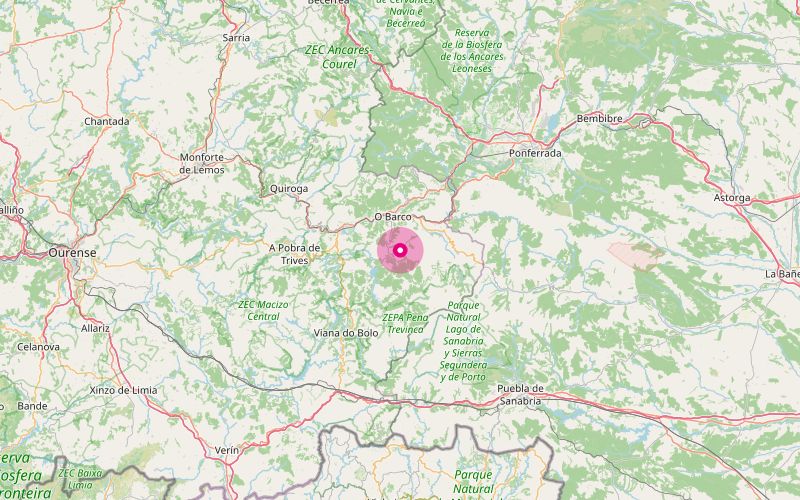
## Valdeorras in Brief Valdeorras is a Denominación de Origen located in the eastern part of the province of Ourense, in southeastern Galicia, bordering Castile and León. The appellation was officially recognized in 1945, making it one of Galicia’s historic denominations, even if its international visibility is much more recent. The vineyard is centered around the Sil valley and several municipalities, including O Barco de Valdeorras, A Rúa, Vilamartín de Valdeorras, and Petín.
The region produces white, red, and, more marginally, rosé wines, with a clear qualitative dominance of whites made from Godello. The planted vineyard covers just over 1,000 hectares depending on the vintage and declarations, placing Valdeorras among Spain’s small to mid-sized appellations. Production remains fragmented among cooperatives, family wineries, and estates working a heritage of small, often scattered parcels.
Valdeorras owes part of its contemporary reputation to the pioneering role it played in the rediscovery of Godello in the 20th century. At a time when the grape had declined sharply, several local producers and technicians contributed to its massal selection and replanting. Today, the appellation is often cited as one of the major centers of Spain’s great terroir-driven white wines.
## Terroir and Geology The vineyard mainly follows the course of the Sil and its tributaries, in a landscape of enclosed valleys, hillsides, and terraces. Vines are generally planted between roughly 300 and 700 meters in altitude, with varying exposures that play an important role in harvest timing and wine profile. This topographical diversity explains part of the stylistic heterogeneity between the warmest valley-floor sectors and the more ventilated or higher sites.
Geology is one of Valdeorras’s defining markers. Its soils combine schist, slate, quartzite, sand, and, depending on the area, granite or alluvial components. The presence of slate and schist is particularly significant to the local identity, as these rocks warm quickly, provide good drainage, and encourage deep rooting in contexts of limited summer water reserves.
That said, overly simplistic shortcuts about a supposed “minerality” directly produced by the rock should be avoided. What soils more tangibly contribute is a modulation of vigor, water availability, and the pace of ripening. In Valdeorras, these parameters help shape whites that are often taut, structured, and savory, as well as reds in which the fruit remains clear without excess weight.
The history of the territory is also tied to slate extraction, an important economic activity in the comarca. This proximity between quarry and vineyard has durably shaped the landscape and landholding structure. It also explains why some vineyard parcels remain highly fragmented, with small units farmed by hand on sometimes steep slopes.
## Climate Valdeorras has a transitional climate between Galician Atlantic influence and more continental traits coming from the interior of the peninsula. Compared with Galicia’s Atlantic seaboard, rainfall here is more moderate and summers are hotter. This intermediate position gives the appellation a distinct personality within northwestern Spain.
Winters can be cold, with frost risk in certain sectors, while summers are generally dry and bright. Diurnal temperature swings, especially in higher areas, help preserve acidity and support gradual aromatic ripening. This combination is particularly favorable to Godello, which can achieve good concentration without entirely losing its acidic backbone.
Intra-annual variability remains significant. Spring rains influence pressure from fungal diseases, while summer heat episodes or late-season storms can accelerate the harvest. As in many Spanish regions, the current challenge is balancing technological ripeness, freshness, and fruit integrity in the face of warmer vintages.
Relief plays an essential regulating role. Ventilated slopes and certain exposures slightly delay ripening, whereas the valley floor can experience higher temperatures. This mosaic of situations allows producers to compose complex blends or, conversely, to highlight more clearly defined single-parcel cuvées.
## Grape Varieties Valdeorras’s emblematic grape variety is Godello, now at the center of the appellation’s image. Here it produces wines capable of combining flesh, tension, and aromatic precision, with expressions ranging from discreet white fruit to notes of citrus, herbs, fennel, or warm stone depending on site and élevage. Its ability to respond well to oak, lees, and extended aging makes it a grape particularly suited to high qualitative ambitions.
Among the other authorized white varieties are notably Palomino, Doña Blanca, and Treixadura. Palomino, historically present, long contributed to volume far more than to the territory’s qualitative reputation. Treixadura and Doña Blanca may play a supporting role, depending on the estate, to nuance the aromatics or texture of blends.
For reds, Mencía is the principal and highest-quality grape. It is accompanied by other authorized varieties, notably Garnacha Tintorera, Merenzao, Sousón, Brancellao, Mouratón, Gran Negro, and Tempranillo, depending on existing plantings and producer practices. The recent interest in minor indigenous varieties is part of a broader dynamic seen in Galicia and neighboring Bierzo.
Blending rules exist within the appellation specifications, but the contemporary spirit of Valdeorras often highlights majority-variety or even single-varietal cuvées, particularly for Godello and Mencía. This varietal clarity has contributed to the territory’s recognition in the marketplace. It does not exclude relevant blends, especially for reds, when the producer seeks to bring added color, structure, or tension.
## Wine Styles Valdeorras whites are the appellation’s stylistic benchmark. In their most direct version, they offer a dry, precise profile, medium- to full-bodied, with substance often denser than in other Spanish Atlantic whites. The best combine ripe fruit without heaviness, integrated acidity, a chalky or saline texture on the palate, and an extended finish.
An important part of the qualitative hierarchy is determined by élevage choices. The most ambitious cuvées may be aged on lees, in tank, large cask, demi-muid, or barrel, with very different results depending on how well oak is handled. Godello supports these approaches when they respect the fruit and structure, and some wines then gain in complexity, volume, and aging potential.
Young whites are often approachable within two to four years after harvest, but the best examples evolve usefully for longer. With time, they may develop notes of wax, dried fruit, dried herbs, and sometimes a lightly smoky dimension. This aging capacity explains why Valdeorras is regularly compared with Spain’s most serious white wine regions, without needing to force international equivalences.
The reds, dominated by Mencía, remain less well known but deserve close attention. They generally sit in a register of fresh red and black fruit, moderate structure, fine tannins, and an expression that is more floral or spicy than powerfully extracted. Depending on terroir, yields, and élevage, they can range from supple and immediate to more nervy wines suited to a few years of cellaring.
Rosés exist but remain secondary in the appellation’s economy. They are generally vinified in a dry, light- to medium-bodied style focused on fruit freshness. Valdeorras’s identity nevertheless rests overwhelmingly on its Godello whites and, to a lesser extent, its Mencía reds.
## Producers to Watch - Rafael Palacios: a leading figure in high-precision Godello, with single-parcel cuvées that have helped bring Valdeorras to the forefront. - Compañía de Vinos Telmo Rodríguez: its work in Valdeorras has restored the value of hillside vineyards and a fine-grained reading of individual sites. - Virxe de Galir: an estate recognized for its clean Godello wines and carefully made reds, with a clear and consistent range. - Bodegas Godeval: a key player in the modern revival of Godello, historically important in the selection and dissemination of the variety. - Valdesil: a benchmark house combining solid entry-level cuvées with more ambitious terroir selections. - A Coroa: a reliable producer, especially followed for its balanced whites and contemporary reading of the local style.
## Food and Wine Pairings Valdeorras Godello works very well with roast turbot and a restrained garnish, as its texture matches the fish’s richness without erasing its finesse. A discreet lees or oak élevage further strengthens this affinity. The pairing gains precision if the sauce remains lightly creamy.
With pan-seared scallops, a young white Valdeorras highlights the dish’s briny sweetness through its tension and savoriness. A celery purée or a touch of brown butter works better than an overly lemony preparation. The wine brings length rather than simple contrast.
With roast poultry and herbs, the more structured whites are highly convincing. Godello can handle more generous textures than many Atlantic whites, allowing it to pair with chicken supreme, reduced jus, or mushrooms. The key is to preserve moderate intensity so as not to harden the pairing.
Mencía reds pair well with pink lamb, especially when the cooking remains precise and the seasoning restrained. Their fresh fruit and moderate tannic frame accompany the meat without weighing it down. A garnish of grilled peppers or eggplant works well.
With Galician charcuterie, empanadas, or grilled pork dishes, Valdeorras reds find natural ground. Their relative suppleness and spicy expression adapt to rustic flavors that are not excessively fatty. The lightest versions can also work slightly chilled.
Pressed uncooked cheeses or aged ewe’s milk tommes suit the riper whites and more delicate reds. Overly powerful cheeses should be avoided, as they overwhelm the nuance of Godello and the finesse of Mencía. The most convincing pairings rely on texture and salt rather than aromatic force.
## FAQ ### Where exactly is Valdeorras located? Valdeorras is in the eastern part of the province of Ourense, in southeastern Galicia, along the Sil valley. The appellation is close to Bierzo, in Castile and León, which helps explain certain climatic and viticultural similarities.
### Why is Godello so important there? Godello has found in Valdeorras a favorable balance between ripening warmth and preservation of freshness. The region also played a historic role in its rediscovery and replanting in the 20th century, which reinforced its status as the signature grape.
### Does Valdeorras mainly produce white or red wine? Today, Valdeorras’s image rests first and foremost on whites, and particularly on Godello. Reds, especially those based on Mencía, exist in significant proportion but remain less known in export markets and international criticism.
### Can Valdeorras wines age? Yes, especially the best Godello whites from old vines, low yields, and well-managed élevage. The reds generally keep for a shorter time, but the most serious cuvées can evolve usefully over several years.
### What style should one expect from a white Valdeorras? One should expect a dry wine, generally more textured and more structured than many Spanish Atlantic whites. The best combine fruit ripeness, measured acidity, palate relief, and a persistent finish, with or without oak aging depending on the producer’s intent.