Trentino-Alto Adige/Südtirol, the Alpine Arc of Precision Wines
Between Trentino and Südtirol, this Alpine region delivers taut whites, incisive reds, and great sparkling wines, shaped by altitude, diverse soils, and a two-headed wine culture.
geoVINUM · 2026-11-04
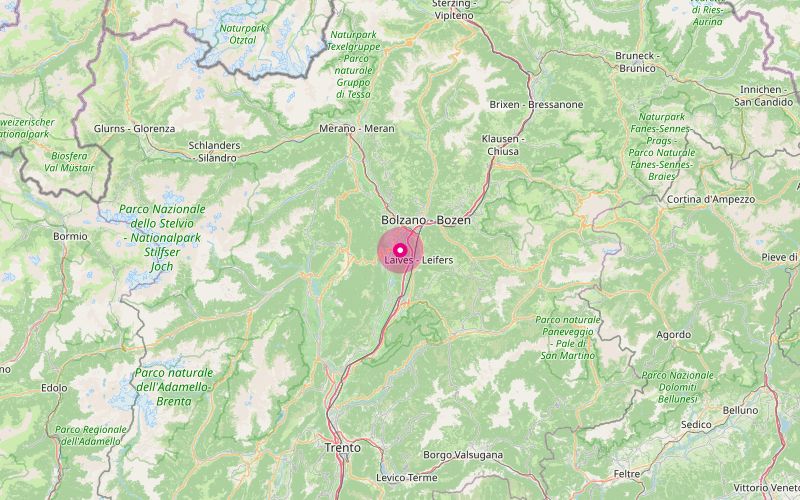
## Trentino-Alto Adige/Südtirol in Brief Trentino-Alto Adige/Südtirol, officially Trentino-Alto Adige/Südtirol, is Italy’s northernmost wine region. It stretches along the Adige axis, between Lake Garda to the south and the Brenner Pass to the north, on the border with Austria and Switzerland. Here, vineyards coexist with a landscape of steep valleys, alluvial cones, and often spectacular Alpine slopes.
The administrative region brings together two autonomous provinces with clearly distinct identities: Trentino around Trento, predominantly Italian-speaking, and Alto Adige/Südtirol around Bolzano, predominantly German-speaking. This historical, cultural, and linguistic duality also shapes the vineyard, its grape varieties, and its styles. It explains the coexistence of an Italian blending tradition alongside a more site-specific, varietal reading often found in the Germanic Alpine world.
The region produces white, red, rosé, and sparkling wines, with an especially strong reputation for dry mountain whites and, on the Trentino side, traditional-method sparkling wines. The region includes two province-wide DOCs, Trentino and Alto Adige/Südtirol, as well as a mosaic of local appellations such as Teroldego Rotaliano, Trento, Valle Isarco/Eisacktaler, and Santa Maddalena/St. Magdalener. Volumes remain modest by Italian standards, but the share of controlled-origin wines is high and the average quality remarkably consistent.
## Terroir and Geology Relief is the primary factor structuring the vineyard hierarchy. Vines are mostly planted between 200 and 800 meters above sea level, sometimes higher on the coolest slopes, with highly variable exposures depending on valley orientation and incline. The alluvial plains on valley floors support more productive viticulture, while well-drained terraces and hillsides generally yield the most precise and tautest wines.
The Adige and its tributaries organize the wine-growing landscape. To the north, the Isarco/Eisack valley concentrates high-altitude vineyards renowned for their incisive whites; around Bolzano, the warm basins and slopes favor Schiava/Vernatsch, Lagrein, and certain textured whites. Farther south, in Trentino, areas such as the Piana Rotaliana, Vallagarina, and the hills around Trento offer very different settings, from deep alluvial soils to limestone slopes suited to Chardonnay and Pinot Noir destined for sparkling wines.
The geology is unusually complex for such a compact territory. One finds volcanic porphyry, dolomitic and limestone formations, schist, gneiss, granite, as well as vast moraine and alluvial deposits inherited from the glaciations. This diversity explains the wide range of tactile and aromatic profiles, from saline, stony whites grown on poor soils to broader reds from warmer gravelly terraces.
The porphyry soils of Alto Adige are often associated with tense, spicy expressions, particularly for Sauvignon Blanc, Sylvaner, and Lagrein. Limestone and dolomitic sectors frequently favor more linear whites, with direct acidity and a chalky finish. In the Piana Rotaliana, the alluvial cone of the Noce provides Teroldego with a benchmark terroir, capable of combining substance, black fruit, and structural freshness.
## Climate The climate of Trentino-Alto Adige/Südtirol is Alpine, but it cannot be reduced to coolness alone. The valleys function as thermal corridors where altitude, abundant sunshine, marked diurnal swings, and regular air circulation combine. This mechanism allows for slow, complete ripening with good preservation of acidity, a central element of the region’s identity.
The influence of Lake Garda clearly softens the southern sectors, particularly in Trentino. It limits extreme cold, lengthens the growing season, and contributes to vintage consistency for Chardonnay, Pinot Noir, and certain valley reds. By contrast, the northernmost areas and the high vineyards of the Isarco valley experience more overtly mountain conditions, favorable to short- or mid-cycle white varieties.
Local winds play a useful role in the vineyard’s sanitary balance. The Ora del Garda, a breeze rising northward from the lake in the afternoon, ventilates the valleys, while cooler currents descend from the mountains at night. This alternation reduces stagnant humidity, tempers intense summer heat, and contributes to the grapes’ aromatic clarity.
Climate change is already visible in harvest dates, canopy management, and altitude choices. The warmest sectors now seek more shade, while plots once considered marginal are gaining viticultural interest. Despite this evolution, the region retains a clear comparative advantage: altitude and cool nights maintain balances that many more southerly areas now struggle to preserve.
## Grape Varieties The ampelographic landscape reflects the region’s cultural frontier. In Alto Adige, many long-established Central European or international varieties dominate: Pinot Grigio, Pinot Bianco, Chardonnay, Sauvignon Blanc, Gewürztraminer, Sylvaner, Müller-Thurgau, Kerner, and Riesling. Reds there rely mainly on Schiava/Vernatsch, Lagrein, Pinot Noir, and, to a lesser extent, Merlot and Cabernet.
Trentino gives more space to Chardonnay, Pinot Noir, Pinot Grigio, and reds such as Teroldego, Marzemino, Merlot, and Cabernet. Chardonnay and Pinot Noir are decisive for Trento DOC, Italy’s benchmark for traditional-method sparkling wines. Teroldego, a major native grape variety, finds its most accomplished expression in the Teroldego Rotaliano DOC.
Among the emblematic varieties, Gewürztraminer holds a special place, since the village of Tramin/Termeno is often considered its historical cradle or, at the very least, one of its most important ancient centers. In the best sites, it gives powerful yet structured wines, more floral and spicy than merely exuberant. Schiava, long underestimated, can produce delicate, low-tannin reds meant to be enjoyed relatively young, yet highly expressive of their origin on the slopes around Bolzano.
The rules vary by appellation, but the regional logic often favors varietal labeling when the wine clearly expresses the dominant grape. Alto Adige/Südtirol DOC largely operates on this basis, with possible additional geographic mentions. By contrast, certain historical denominations remain tied to a specific style or grape, such as Santa Maddalena for Schiava with a possible contribution of Lagrein, or Lago di Caldaro/Kalterersee for light reds made predominantly from Schiava.
## Wine Styles Dry whites are the qualitative core of the region. Pinot Bianco, Sauvignon Blanc, Chardonnay, Sylvaner, Kerner, and Riesling often reach a remarkable level of precision here, with moderate to medium alcohol, clear acidity, and textures that are more or less full depending on site and élevage. The best examples combine ripe fruit, saline tension, and a clear reading of terroir, without excessive reliance on oak.
Gewürztraminer occupies a category of its own. In this cool area, it can retain enough acidic backbone to avoid heaviness, even when developing intense aromas of rose, lychee, sweet spices, and citrus peel. Some producers pursue a dry, firm style, others a broader expression; in both cases, balance depends closely on harvest timing.
The reds are highly diverse. Schiava yields pale ruby wines, supple and low in tannin, often marked by cherry, almond, and dried herbs; Lagrein offers more color, substance, and depth, with notes of blackberry, violet, cocoa, and sometimes an iron-like edge. On cool slopes, Pinot Noir finds some of its most convincing Italian settings, with styles focused on red fruit, tannic finesse, and generally restrained extraction.
Teroldego holds a singular place in Trentino. In the Piana Rotaliana, it can combine dense color, crunchy black fruit, spice, and freshness, with firm but rarely harsh tannins when fully ripe. Entry-level versions are meant to be drunk young; bottlings from the best terroirs, sometimes aged in large vessels or discreet oak, gain complexity over several years.
Trento DOC produces some of Italy’s most serious traditional-method sparkling wines. The base wines rest mainly on Chardonnay and Pinot Noir, often with long lees aging, yielding fine-bubbled wines with lemony, chalky, and brioche-like profiles. The best vintages and riserva cuvées age well, developing notes of hazelnut, dry pastry, and warm stone.
Cru or subzone mentions exist mainly where local tradition is strong, but understanding the vineyard depends as much on altitude, exposure, and soil type as on appellation alone. Overall, oak aging is better integrated today than it was two decades ago. The regional style favors definition, drinkability, and freshness over demonstrative power.
## Producers to Watch - Cantina Terlano: a benchmark cooperative in Alto Adige, especially renowned for its precise, mineral, long-aging whites. - Alois Lageder: a major estate of the upper Adige, committed to biodynamics, equally accomplished with whites, Lagrein, and Pinot Noir. - Elena Walch: a leading producer around Termeno and Caldaro, known for its single-vineyard cuvées and clear interpretations of local grape varieties. - Foradori: an essential name in Trentino, central to the contemporary redefinition of Teroldego and the Piana Rotaliana. - Ferrari Trento: an emblematic house of Trento DOC, a pioneer and still a benchmark for traditional-method sparkling wines. - Abbazia di Novacella: a historic player in the Isarco valley, remarkable for Sylvaner, Kerner, Grüner Veltliner, and other high-altitude whites.
## Food and Wine Pairings An unoaked Pinot Bianco or Chardonnay from Alto Adige works very well with Alpine trout, simply poached or grilled, with fine herbs and lemon. The wine’s tension matches the fish’s delicacy without masking its texture. This pairing also works with Arctic char or lake pike-perch.
A dry Gewürztraminer usefully accompanies assertively seasoned but not fiery cuisine, such as squash-filled ravioli with brown butter and sage, or Thai dishes built around aromatic herbs. Its aromatic intensity engages with the spices, while its relative freshness prevents saturation. It suits fragrant dishes better than heavy sauces.
A Schiava from Santa Maddalena pairs well with Tyrolean charcuterie, speck, or roast poultry with mushrooms. Its light structure and low astringency respect salt, smoke, and tender textures. It is also a good table red for mildly seasoned autumn cooking.
A Lagrein, darker and more structured, finds its place with feathered game, a roasted rack of lamb, or braised meats. Its tannins and density better absorb reduced jus and more extended cooking. Creamy polenta with porcini also makes a convincing accompaniment.
A Teroldego Rotaliano pairs accurately with grilled meats, pasta with duck ragù, or semi-aged cheeses. Its black fruit and acidic nerve support the richness of the dish without weighing it down. More ambitious versions can handle more concentrated preparations.
Trento DOC sparkling wines excel as an aperitif, but also at the table with light fried foods, gougères, veal carpaccio, or a citrus risotto. The bubbles and acidity cleanse the palate and revive the appetite. Older cuvées also pair readily with butter-based, mushroom-based, or Parmesan-based dishes.
## FAQ ### What is the difference between Trentino and Alto Adige? Trentino corresponds to the province of Trento, predominantly Italian-speaking, while Alto Adige or Südtirol corresponds to the province of Bolzano, predominantly German-speaking. The wine styles, grape varieties, and cultural references are close, but not identical.
### Which grape varieties are the most emblematic of the region? Among whites, Pinot Bianco, Sauvignon Blanc, Chardonnay, and Gewürztraminer are essential, with Sylvaner, Kerner, and Müller-Thurgau in the cooler sectors. On the red side, Schiava, Lagrein, and Teroldego are the strongest identity markers.
### Is Trentino-Alto Adige/Südtirol mainly a white wine region? The region is particularly strong in dry whites, which often carry its international reputation. It also produces excellent reds and top-tier sparkling wines, especially in Trento DOC.
### Which wines can age? The best whites of Alto Adige, particularly certain Pinot Bianco, Sauvignon Blanc, or single-vineyard cuvées, age very well. Ambitious Trento DOC wines, certain Lagrein, certain Pinot Noir, and the best Teroldego also have real cellaring potential.
### Why do the wines retain so much freshness? Altitude, cool nights, temperature swings, and regular winds slow and balance grape ripening. This combination preserves acidity, aromatic precision, and flavor definition, even in the sunniest sectors.