Tuscany, a laboratory for Italy’s great wines
Between inland hills and the Tyrrhenian coast, Tuscany combines the tradition of sangiovese, a diversity of terroirs, and blending freedom driven by IGP Toscana.
geoVINUM · 2026-11-04
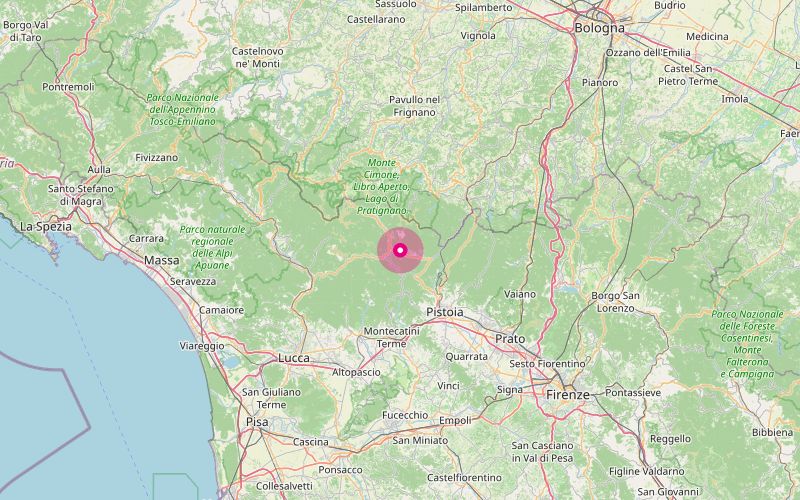
## Tuscany in brief Tuscany is a major wine region in central Italy, open to the Tyrrhenian Sea and shaped by a landscape of hills, valleys, and inland massifs. From both an administrative and wine perspective, it is a region, but the name "Toscana" also exists as a protected geographical indication, now IGP Toscana, an essential flexible framework for many contemporary wines. Production covers all colors, with a clear dominance of reds, and relies on a network of DOC and DOCG appellations among the most highly regarded in Italy, from Chianti Classico to Brunello di Montalcino, including Vino Nobile di Montepulciano and Bolgheri.
The former IGT Toscana designation, introduced around the turn of the 1990s as part of the reform of Italian geographical indications, gave clear status to wines made outside the stricter specifications of the historic appellations. It played a decisive role in the recognition of cuvées born of innovative blends or international grape varieties, often associated with the history of the so-called "Super Tuscans." It should be remembered, however, that Tuscany cannot be reduced to this category alone: its reputation rests as much on its traditional denominations as on this zone of regulatory freedom.
The region is among the largest and highest-quality areas of the Italian vineyard, with viticulture stretching from Florence to Siena, from the coast of Livorno to Grosseto, and into the cooler inland elevations. The wine landscapes are ancient, but their modern profile is the result of a long process of adaptation combining rural heritage, postwar replanting, estate upgrading, and oenological modernization since the 1970s. This combination explains the coexistence in Tuscany of highly codified terroir wines and signature cuvées that claim greater stylistic freedom.
## Terroir and geology Tuscany presents a particularly complex geological mosaic, with no single core comparable to that of a small appellation. In the central zones, the hills of Chianti and their extensions often rest on alternating marls, clays, friable limestones, and local schists, with two terms frequently cited: galestro, a flaky rock that breaks down easily, and alberese, a more compact marly limestone. These soils, poor to moderately fertile and well drained, are well suited to sangiovese, a variety sensitive to vigor and to site expression.
Around Montalcino, altitude, exposure, and the diversity of geological formations create marked contrasts between sectors. One finds calcareous, marly, and clay soils there, sometimes stonier or richer in iron-bearing elements depending on the slope. This diversity contributes to structural differences between more taut wines from the north, cooler high-altitude areas, and southern sectors that often yield more generous ripeness.
In Montepulciano, in southeastern Tuscany, the hills are more strongly marked by clay-sand deposits, marls, and richer formations, producing wines that are often softer in youth. On the coast, especially in Bolgheri and the Maremma, the terroirs shift again into a different register: alluvial, gravelly, sandy, or clay soils appear, under the direct influence of the sea. These coastal settings have favored the rise of Bordeaux and Rhône varieties, better suited to certain stylistic ambitions than to the historic hills of the center.
Altitudes play a structuring role at the regional scale. A large share of the quality vineyard is planted on slopes, often between roughly 100 and 600 meters, with clear temperature differences depending on altitude and exposure. In a warm, sunny region, this topography makes it possible to modulate the pace of ripening, preserve acidity, and avoid overly heavy expressions.
## Climate The Tuscan climate is broadly Mediterranean, but it varies greatly depending on distance from the sea, altitude, and the openness of the valleys. Coastal sectors experience a more marked maritime influence, with relatively mild winters, frequent breezes, and summer heat tempered by proximity to the Tyrrhenian. Inland, temperature swings increase, and the cooler nights of the slopes help preserve aromas and acidic tension.
The growing season is generally long, sunny, and dry enough to allow good phenolic ripeness, especially for sangiovese, a demanding variety in this respect. Risks do not disappear, however: spring frost on certain elevated sites, hydric stress in summer, heat spikes at ripening time, and late-season storm episodes that can disrupt the harvest. In this context, management of canopy cover, yields, harvest date, and choice of exposure has become central.
Climate change is accentuating trends already visible for several decades. Harvests are often earlier than in the past, and producers are increasingly seeking ventilated sites, higher-altitude slopes, and practices that limit overripeness. In the best estates, the challenge is not merely to achieve concentration, but to preserve the savory profile, tannin definition, and freshness that underpin the identity of Tuscany’s great reds.
## Grape varieties Sangiovese remains Tuscany’s emblematic grape variety and its main qualitative thread. It forms the basis of Chianti, Chianti Classico, Vino Nobile di Montepulciano, and Brunello di Montalcino, where it must be used alone under the local name brunello. Its ability to translate differences in soil, altitude, and exposure makes it the preferred tool of origin appellations, but it requires precise viticulture to avoid rustic tannins, dilution, or insufficiently ripe acidity.
Among the supplementary indigenous grape varieties, canaiolo long played a historic role in Chianti blends. Colorino can bring color and substance, while ciliegiolo, more present in certain coastal areas and in the Maremma, yields supple, fruity reds or contributes to blends. For whites, trebbiano toscano and malvasia bianca lunga have a long regional history, particularly in simple still wines and certain traditional wines, even if their prestige is lower today.
Tuscany has also widely embraced international varieties. Cabernet sauvignon, cabernet franc, merlot, syrah, petit verdot, and sometimes pinot nero hold an important place in IGP Toscana and in certain coastal DOCs such as Bolgheri. Vermentino has become a significant white on the coast, where it produces saline, citrus-driven wines well suited to the maritime climate.
Blending rules vary depending on the appellation. In Chianti Classico, sangiovese must be the majority and white grapes are no longer permitted, which has strengthened the stylistic coherence of the wines. By contrast, IGP Toscana allows broad freedom in grape varieties and styles, which explains its importance for producers wishing to move beyond traditional frameworks without leaving their Tuscan roots.
## Wine styles Tuscany above all produces reds, spanning from easy-drinking wines for early consumption to great cellar wines built to age for several decades. Sangiovese-based reds generally combine marked acidity, firm tannins, and an aromatic profile of Morello cherry, red plum, violet, dried herbs, tobacco, and sometimes an earthy or iron-like note. Depending on site and élevage, they may seem taut and chiseled, or broader and more sun-filled.
Chianti and Chianti Classico offer a classical reading of the grape, often centered on freshness, tangy cherry, and a structure ranging from medium to substantial. Vino Nobile di Montepulciano tends toward softer textures in youth, without giving up the aging capacity of the best wines. Brunello di Montalcino represents one of the most ambitious expressions of sangiovese, with greater concentration, depth, and long aging mandated by the specifications.
IGP Toscana reds may follow either a varietal or a blending logic. They enabled the rise of cuvées based on cabernet sauvignon, merlot, or cabernet franc, often aged in barriques and oriented toward denser texture, more polished tannins, and darker fruit than the traditional reds of the central part of the region. Historically, some of these wines were marketed as simple table wines for lack of a place within the hierarchies of the time; they later helped drive the evolution of Italian regulations.
Whites occupy a more discreet but still significant place. Vermentino from the coast and the Maremma produces dry, incisive, slightly saline wines, while other IGP Toscana whites may combine trebbiano, malvasia, chardonnay, sauvignon blanc, or viognier depending on the estate’s aims. Tuscany also produces rosés in limited quantity and sweet wines, foremost among them Vin Santo, traditionally aged for a long time in wood from dried grapes, often trebbiano and malvasia.
The internal designations and categories deserve careful reading. In Chianti Classico, the Annata, Riserva, and Gran Selezione levels correspond to increasing requirements for selection and aging. Aging potential depends less on the prestige displayed than on the precise origin, the balance of the vintage, and the producer’s style, but the best Brunello, Chianti Classico, and top IGPs from serious estates can evolve effortlessly over ten to twenty years, sometimes longer.
## Producers to watch - Antinori: a major force in modern Tuscan history, active in Chianti Classico, Bolgheri, and IGP Toscana alike, with a central role in the rise of the so-called Super Tuscans. - Tenuta San Guido: a Bolgheri estate behind Sassicaia, a foundational wine in the international recognition of Bordeaux blends in Tuscany. - Fontodi: a benchmark of Panzano in Chianti, known for precise, structured Chianti Classico wines deeply rooted in sangiovese. - Biondi-Santi: a historic name in Montalcino, associated with the definition and renown of modern Brunello. - Avignonesi: an important Montepulciano estate, active in Vino Nobile and several contemporary Tuscan expressions. - Fattoria Le Pupille: a recognized figure of the Maremma, illustrating the quality potential of southern coastal Tuscany in both reds and whites.
## Food and wine pairings - Chianti Classico with bistecca alla fiorentina: the wine’s acidity and tannins structure the richness of the grilled meat. - Rosso or Brunello di Montalcino with wild boar ragù: the gamey character and depth of the dish match the wine’s density. - Vino Nobile di Montepulciano with pappardelle with porcini mushrooms: the wine’s texture accompanies the flesh of the mushroom without overpowering it. - Tuscan vermentino with linguine alle vongole: the wine’s salinity and tension extend the iodine note of the dish. - Merlot- and cabernet-based IGP Toscana with roast rack of lamb: the wine’s substance matches the meat’s sweetness. - Vin Santo with cantucci: a classic regional pairing built on the wine’s concentration and the biscuit’s dry texture.
## FAQ ### Is Tuscany an appellation or a wine region? Tuscany is first and foremost an Italian wine region. The name Toscana also exists as an IGP, which can create a useful confusion to clarify: one designates a broad winegrowing territory, the other a regulatory category of wines produced within that territory.
### What exactly does "Super Tuscan" mean? The term is not a legal category, but a customary designation that arose for highly ambitious Tuscan wines made outside the classic rules of the DOCs of the time. Many first used vino da tavola status, then IGT Toscana, before some appellations were later adapted.
### What is the most important grape variety in Tuscany? Sangiovese clearly dominates from both a historical and qualitative standpoint. It is at the heart of the great inland reds, even if the coastal zones have shown that in Tuscany other varieties, notably cabernet sauvignon, cabernet franc, and merlot, can also reach a high level.
### Are Tuscan wines always powerful and oaky? No, the region produces a very wide range of styles. Traditional reds centered on sangiovese often favor tension, acidity, and terroir transparency, while certain IGP or Bolgheri cuvées seek greater density, ripeness, and wood aging.
### Which Tuscan wines should be cellared? The best Brunello di Montalcino, Chianti Classico Riserva or Gran Selezione, Vino Nobile from recognized producers, and certain top-end IGP Toscana wines age very well. Their suitability for aging nevertheless depends on the vintage, the producer, the level of ripeness, and the balance between fruit, acidity, alcohol, and tannins.