Toro, Castilian Power and Old Tinta de Toro Vines
Between the Duero and the plains of Zamora, Toro produces deep, structured reds that are more precise than in the past. A key appellation of Castile and León.
geoVINUM · 2026-11-04
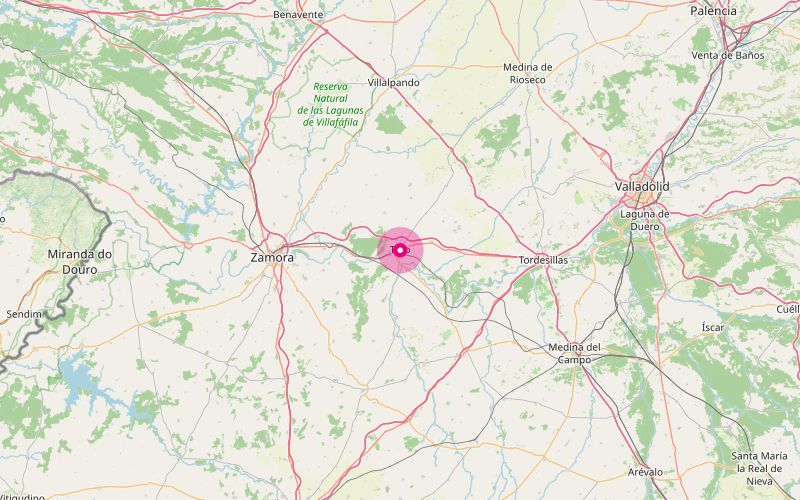
## Toro at a glance Toro is an appellation of origin located in western Castile and León, mainly in the province of Zamora, with a small extension into Valladolid, along the middle course of the Duero. The protected designation of origin Toro was officially recognized in 1987, although the area’s winegrowing reputation is much older and documented since the Middle Ages. The appellation mainly produces red wines, but it also permits rosés and whites. The vineyard covers just over 5,000 hectares, placing Toro among Spain’s mid-sized appellations, but one with a strong identity within the country’s interior.
Toro established itself internationally from the 1990s onward, when several estates showed that its natural power could be channeled through more precise work in the vineyard and cellar. The historic style, dense and alcoholic, gradually gave way to more legible wines, without losing the tannic backbone that defines the local signature. The appellation nonetheless remains associated with characterful reds, built for the table and often capable of substantial aging. Toro’s foundation rests on one dominant grape variety, Tinta de Toro, a local selection of Tempranillo adapted to strongly continental conditions.
## Terroir and geology Toro’s vineyards stretch across terraces and plateaus overlooking the Duero and its tributaries, in an open landscape where vines alternate with cereal fields and scattered pinewoods. Altitudes generally range from around 620 to 750 meters, which is high without being mountain viticulture. This position brings full ripeness while preserving a measure of tension thanks to cooler nights. The relief remains moderate, but exposures and soil depth create noticeable nuances between parcels.
The soils are predominantly sandy-silty to sandy-clay, often mixed with pebbles and stony material on the ancient terraces of the Duero. There are also more clay-rich layers, as well as limestone subsoils in places, even if Toro is not an appellation defined by limestone in the same way as other Spanish regions. The relative poverty of the soils naturally limits yields, especially on old bush-trained vines. This constraint plays a decisive role in the concentration of the grapes and the structural firmness of the wines.
Toro preserves a remarkable heritage of very old vines, some of which are still ungrafted. This survival is explained by the significant proportion of sandy soils, which are less favorable to the spread of phylloxera. It is important, however, not to turn this into an absolute generalization: not all of Toro’s vines are pre-phylloxera or ungrafted. Even so, the presence of parcels aged 50, 70, or sometimes more than 100 years is indeed one of the appellation’s major quality markers.
## Climate Toro has a marked continental climate, with Atlantic influence weakened by the distance from the ocean and the barrier effect of the relief. Winters are cold, summers are hot and dry, and the thermal range between day and night can be significant during ripening. Rainfall remains moderate to low depending on the vintage, exposing the vine to regular water stress. In this context, the choice of plant material, canopy management, and vine age become decisive.
Summer heat encourages advanced phenolic ripeness, with thick skins and abundant tannins, while also often leading to high alcohol levels. Altitude and cooler nights nevertheless temper some of the excesses, especially on well-situated parcels harvested at the right time. The most successful years are those that combine a dry summer with an end of the growing cycle free of heat spikes. Toro is therefore an appellation where balance depends less on obvious climatic freshness than on the producers’ ability to interpret a naturally sun-drenched environment.
Wind also plays an important role in the sanitary condition of the vineyard. It dries the bunches after possible rainy episodes and reduces the pressure of certain fungal diseases. This ventilation, combined with low rainfall, facilitates relatively healthy viticulture, even if modern climatic hazards increase the risks of drought and stalled ripening. In extreme vintages, precision in extraction and élevage then becomes essential to avoid massive wines.
## Grape varieties Toro’s central grape variety is Tinta de Toro, regarded as a local adaptation of Tempranillo. In practice, it stands out for its often small berries, thick skins, good sugar accumulation, and naturally marked tannic structure. Well grown and harvested with discernment, it produces deeply colored, profound, long-lived wines capable of expressing ripe black fruit, spice, dry earth, and sometimes a balsamic note. It is around this grape that the appellation’s modern identity has been built.
The reds may also include, in more modest proportions, Garnacha as well as other varieties authorized by the specifications. Depending on regulatory periods and replantings, complementary international or Spanish grapes have also been permitted, but they remain secondary in the qualitative perception of Toro. In practice, the most emblematic bottlings are often very largely, or even exclusively, dominated by Tinta de Toro. This grape-terroir preeminence explains the appellation’s stylistic coherence despite the diversity of producers.
For rosés, the base also relies on local red varieties, with Tinta de Toro in the foreground. Whites are more marginal and may draw on authorized grapes such as Verdejo or Malvasía Castellana, depending on producers’ practices and the declared vineyard plantings. They occupy a minor place in Toro’s image, which remains above all a land of red wine. Blending rules do exist within the specifications, but in market discourse, the dominance of the main grape matters more than regulatory complexity.
## Wine styles Toro reds are generally dense, intensely colored, and structured by firm tannins. The best examples pair this substance with sufficient acidic framework and clear fruit ripeness, which avoids any sense of heaviness. One frequently finds aromas of blackberry, black plum, black cherry, licorice, cocoa, tobacco, dry garrigue, and sweet spices when there is oak aging. The register is not one of airy finesse, but of disciplined power.
Oak aging was long used in a demonstrative way, with forceful extraction and marked new barrels. Over the past fifteen years, many producers have refined their approach by reducing toast levels, extending some élevages in less interventionist vessels, or seeking gentler extraction. The result is wines that remain solid, but are more articulated, with better-defined tannic grain. This evolution has been decisive in restoring Toro’s standing among Spain’s serious appellations in the eyes of international tasters.
Spain retains its traditional aging designations, and producers in Toro may use the categories Joven, Roble, Crianza, Reserva, and Gran Reserva when legal conditions are met. These indications provide a reference point for aging and maturation time, but they do not exhaust the true qualitative hierarchy. Some single-parcel or old-vine bottlings that do not align with these categories are more ambitious than wines classified under the classic designations. As elsewhere in Spain, it is therefore important to read the cuvée level, grape origin, and winemaking style simultaneously.
In terms of cellaring, Toro often offers high potential. Entry-level reds are enjoyable in their early years for their dark fruit and energy. Serious bottlings, from old vines and raised with precision, often benefit from waiting five to ten years, sometimes longer in great vintages. With time, the initial power melds into notes of fine leather, tobacco leaf, dry undergrowth, and preserved black fruits without entirely losing its framework.
## Producers to watch - Numanthia: an emblematic estate of Toro’s modern revival, known for concentrated, ambitious reds built on old Tinta de Toro vines. - Bodega San Román: Mariano García’s vision in Toro, with powerful wines shaped by a constant search for balance and texture. - Teso La Monja: a benchmark property of the Eguren family, active across several high-level bottlings, some of them among the appellation’s most sought-after. - Fariña: a historic and educational player in Toro, important in spreading the appellation’s reputation and capable of offering an accessible reading of its style. - Matsu: a house known for its old-vine bottlings with a ripe, generous profile, which has greatly contributed to Toro’s international visibility. - Bodegas Pintia: Vega Sicilia’s project in Toro, located on the opposite bank of the Duero, known for a technically very controlled interpretation of local power.
## Food pairings - Charcoal-grilled rib steak: the tannic substance and dark fruit of a red Toro pair well with richness and the Maillard reaction. - Roast lamb shoulder with rosemary: the wine’s sun-filled character resonates with dry herbs and the meat’s melting texture. - Iberian pluma and candied peppers: the meat’s smoky sweetness and reduced juices support the wine’s density without weighing it down. - Wild boar stew: with an evolved bottling, tertiary notes of leather, spice, and undergrowth work very well with game. - Aged Manchego or Zamorano: firm sheep’s milk cheeses absorb the alcoholic power and highlight aromatic depth. - Lentils with chorizo: a convincing regional match, especially with a young Toro or one briefly aged, where fruit and spice remain direct.
## FAQ ### Is Toro an appellation or a wine region? Toro is both a historic winegrowing area and a Spanish protected designation of origin. In common usage, the term mainly refers to the appellation centered around the town of Toro and several neighboring municipalities.
### Does Toro produce only red wines? No, the appellation also permits rosés and whites. However, its reputation rests very clearly on reds based on Tinta de Toro, which make up the core of both its image and its qualitative production.
### What is Tinta de Toro? Tinta de Toro is Toro’s local selection of Tempranillo. It is reputed to produce more concentrated grapes and more structured wines than in cooler or more moderate areas.
### Are all Toro vines pre-phylloxera? No, but Toro preserves a notable number of old vines, some of them ungrafted. This singularity is linked to the presence of sandy soils, which locally limited the impact of phylloxera.
### Are Toro wines always very powerful? Power remains a common trait, linked to the climate and the grape variety. However, the best producers today seek more precision, fruit freshness, and tannin quality rather than simple concentration.
### Can Toro age for a long time? Yes, especially bottlings from old vines and raised with care. Their tannic structure, concentration, and dry extract often allow them to evolve favorably over many years.