Terrasses du Larzac, altitude and precision in the Languedoc
Northwest of Montpellier, Terrasses du Larzac has established itself as one of the major appellations for red Languedoc wines. Its identity is built on altitude, wide diurnal shifts, and a mosaic of soils.
geoVINUM · 2026-11-04
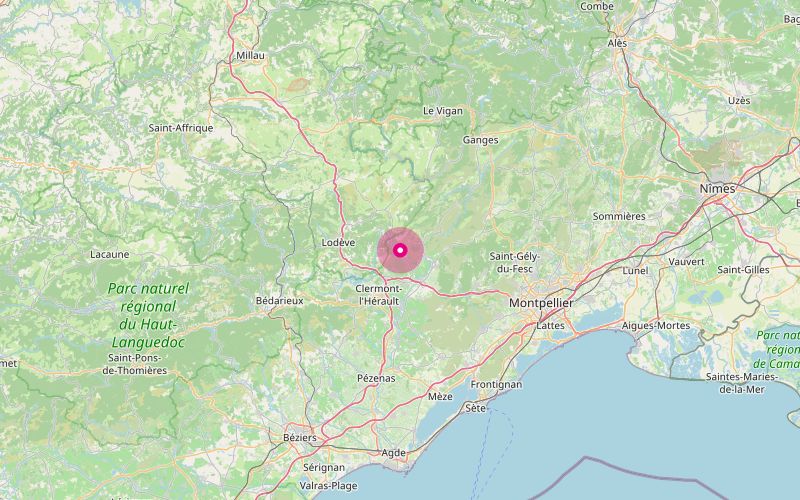
Terrasses du Larzac at a glance
Terrasses du Larzac is a communal appellation of the Languedoc located northwest of Montpellier, on the foothills and valleys bordering the Larzac plateau. The name was first recognized within Coteaux du Languedoc in 2005, before gaining autonomous protected designation of origin status in 2014. The area covers several communes in Hérault around Aniane, Montpeyroux, Jonquières, Saint-Saturnin-de-Lucian, Puéchabon, and Arboras.
The appellation produces only still red wines. It is one of the sectors that has most contributed to repositioning the Languedoc around characterful reds, structured yet marked by genuine freshness. Planted surface area and volumes vary depending on sources and vintages; it is therefore safer to note that this remains a relatively modest appellation on the regional scale, but one with a strong identity in specialist markets.
Its reputation rests less on power than on the balance between Mediterranean ripeness and the tension linked to altitude. The best wines combine concentration, tannic finesse, length, and ageing potential. In the Languedoc landscape, Terrasses du Larzac thus occupies a singular place, at the crossroads of southern sunshine and the freshness of higher relief.
Terroir and geology
The vineyard stretches across a set of terraces, slopes, and valleys open to the south, yet influenced by the mass of the Larzac plateau to the north. Altitude is a structuring factor, with vines generally planted higher than in many neighboring Languedoc zones. This foothill position slows ripening and helps preserve acidity, color, and aromatic definition.
The geology is highly fragmented, which explains the diversity of expressions observed between communes and even between parcels. Limestone overwhelmingly dominates, in the form of scree, slabs, marls, or colluvial deposits, often mixed with clays of varying depth. There are also local occurrences of sandstone, pebbles, stony scree, and areas richer in iron oxide, which modulate vigor and water retention.
This mosaic of soils provides good drainage, essential in a climate with dry summers, while also allowing, depending on the profile, for regular water supply. Poor, stony soils favor low yields and concentrated berries; slightly deeper clay-limestone soils often deliver more flesh and volume. Limestone, which is very present, is frequently associated with a straight tannic frame, clear garrigue notes, and a sensation of freshness on the palate.
The appellation cannot be reduced to a single terroir. A wine from Aniane, a wine from Montpeyroux, or a wine from Saint-Privat may share a common matrix, but they often differ in density, spice register, floral character, or firmness of structure. This internal diversity is one of Terrasses du Larzac's strengths, provided it is not confused with stylistic heterogeneity.
Climate
The climate is Mediterranean, with hot, dry summers, high sunshine levels, and rainy episodes concentrated mainly in spring and autumn. The proximity of Larzac nevertheless significantly modifies this general framework. Nights are cooler than on the plain, and day-night temperature differences are more pronounced as harvest approaches.
This thermal effect is central to the personality of the wines. It encourages slow polyphenol ripening, limits the drop in acidity, and sometimes delays harvest dates compared with other Languedoc sectors. Grapes can therefore reach full ripeness without systematically tipping into overjammy or overly alcoholic profiles.
Wind influences also play an important role. Airflows coming down from the causse, sometimes referred to locally as nocturnal cold-air drainage, help keep the vineyard healthy and reinforce the cooling effect. In an increasingly hot Mediterranean context, this natural ventilation is an agronomic and qualitative asset.
The downside of this climate remains water irregularity. Summer drought can sharply reduce yields, while late-season Cévenol episodes require heightened vigilance. Growers who know their soils well, the optimal harvest date, and how to manage extraction in the cellar are often the ones who most accurately translate this contrasting climate.
Grape varieties
The vineyard is planted with the great Mediterranean red varieties of southern France. Syrah, Grenache noir, and Mourvèdre form the qualitative core of many blends. Carignan, long underestimated, also holds an important place, especially in old vines, where it brings depth, spice, acidity, and a kind of verticality.
Cinsault can appear as a complementary grape, as can, depending on the historical regulatory frameworks of the Languedoc, a few accessory varieties admitted on a more marginal basis. In the spirit of the appellation, however, the main grapes must clearly dominate the composition. The blends seek less a varietal demonstration than the synthesis of a place and a vintage.
Blending rules are intended to anchor the style in traditional Mediterranean grape varieties. Syrah, Grenache noir, and Mourvèdre form the regulatory and sensory backbone of the appellation, while Carignan and Cinsault complete the balance. In practice, Syrah often plays the role of aromatic and tannic backbone, Grenache brings volume and fruit, Mourvèdre extends the palate, and Carignan adds lift and freshness.
Proportions vary greatly depending on commune, exposure, and vine age. In the coolest sectors, Syrah retains a particularly clear peppery and floral profile. On drier, stonier soils, Grenache and Mourvèdre produce sunnier wines, but still held in check by the climatic signature of the area.
Wine styles
Terrasses du Larzac produces only reds, generally blends and carefully matured. The dominant style combines ripe black fruit, garrigue herbs, spice, pepper, and sometimes black olive or licorice, with a palate that is structured yet fresher than the Languedoc origin might suggest. Concentration is common, but the best examples avoid excessive sweetness and overt oak.
Maturation methods vary. Some producers favor concrete tanks or large vessels to preserve fruit brightness and the reading of terroir; others use demi-muids, foudres, or barrels, with convincing results when the wood remains integrated. The level of ripeness, the finesse of extraction, and the quality of the tannin often matter more than the vessel itself.
In youth, the wines can show as dense, tight, and slightly austere, especially in structured vintages. With a few years in bottle, they gain complexity and develop notes of bay leaf, cocoa, tapenade, fine leather, and dry undergrowth. The most ambitious cuvées have genuine cellaring potential, often a decade or more depending on the vintage and estate.
There is no official internal hierarchical designation comparable to a cru system, but the reputation of certain lieux-dits and certain producers already shapes market perception. The underlying trend is toward more precise wines, less marked by extraction and more attentive to balance. This strengthens the appellation's readability without distancing it from its Mediterranean matrix.
Producers to watch
- Mas Jullien: pioneering estate in Jonquières, a historic benchmark for the definition of a great Languedoc red with relief, at once deep, savory, and long-lived.
- Montcalmès: located in Puéchabon and Aniane, recognized for dense and refined blends, where élevage supports the structure without dominating it.
- Domaine de la Terrasse d’Elise: in Aniane, highly attentive parcel work, wines often precise and distinctive, with a fine reading of grape varieties and soils.
- Mas de Daumas Gassac: outside the Terrasses du Larzac appellation for part of its emblematic production, but a major actor in the Aniane sector and an essential reference point for understanding the local renewal.
- Clos Maïa: wines from mountainous Languedoc, taut and nuanced, driven by demanding viticulture and a search for expression without excess weight.
- La Pèira: an ambitious and assertive style, often more sculpted, that has greatly contributed to the sector's international visibility.
Food and wine pairings
Terrasses du Larzac calls for cuisine with texture and relief rather than a simple logic of power. Successful pairings rely on the echo between fruit ripeness, spice, dried herbs, and tannic firmness. Young wines work well with grilled meats; more evolved bottles excel with slow-cooked dishes or gamey flavors.
- Roast leg of lamb with thyme, garlic, and short jus.
- Gardianne de taureau or beef daube with black olives.
- Grilled Iberian pork rack, braised fennel, and rosemary reduction.
- Duck breast, roasted beetroot, and a mild-spice jus.
- Lamb tagine with lightly sweetened prunes, ras el-hanout, and toasted almonds.
- Aged ewe's milk tomme or mature Laguiole with a vintage already softened by age.
FAQ
Where exactly is the Terrasses du Larzac appellation located?
The appellation is in Hérault, northwest of Montpellier, on the southern foothills of the Larzac plateau. It extends around several villages of the Languedoc foothills, between valleys, slopes, and limestone terraces.
Since when has Terrasses du Larzac been a standalone appellation?
The name Terrasses du Larzac was first recognized as a geographical designation within Coteaux du Languedoc in 2005. Its elevation to autonomous appellation status dates from 2014.
Which grape varieties dominate in Terrasses du Larzac wines?
Syrah, Grenache noir, and Mourvèdre form the main foundation of the appellation. Carignan often plays a decisive role in balance, especially from old vines, with Cinsault in support depending on the blend.
What do Terrasses du Larzac wines generally taste like?
They often show aromas of black fruit, pepper, garrigue, licorice, and sometimes black olive. The palate is structured and ripe, but supported by more marked freshness than in many other Mediterranean areas of the Languedoc.
Can Terrasses du Larzac be aged in the cellar?
Yes, the best cuvées have good ageing potential. Depending on the estate, the vintage, and the format, they can gain complexity over several years and evolve toward spicier, balsamic, and tertiary notes.