Taurasi, Irpinia’s great red built for aging
In Irpinia, Taurasi gives Aglianico an austere, deep and enduring expression. This Campanian DOCG ranks among Italy’s benchmark ageworthy reds.
geoVINUM · 2026-11-04
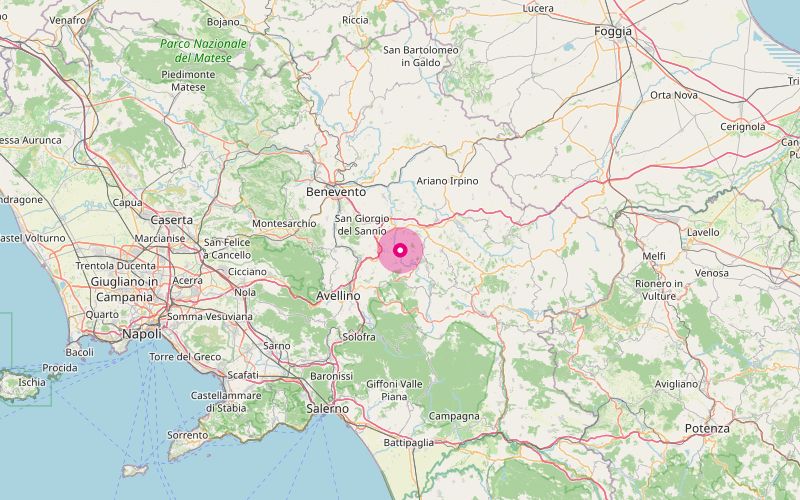
## Taurasi at a glance Taurasi is a DOCG appellation in Campania, in Irpinia, within the province of Avellino, east of Naples. The denomination applies exclusively to red wines, made around Aglianico, and its DOCG status dates back to the early 1990s, following a DOC phase obtained in the late 1970s. The vineyard area spans a group of hillside communes around Taurasi, at altitudes often high for southern Italy. Along with Fiano di Avellino and Greco di Tufo, Taurasi forms the trio of Irpinia’s great historic DOCGs.
The nickname “Barolo of the South” is common in wine literature, but it oversimplifies an identity that belongs to Irpinia alone. Taurasi shares with certain great Piedmont reds a firm tannic structure and long aging potential, without resembling them aromatically or geologically. The core of its style lies in the combination of slow ripening, marked acidity and a dense tannic framework. The result is wines that are often severe in youth, then more nuanced after several years in bottle.
## Terroir and geology The Taurasi area lies in the mountainous interior of Campania, far from the tempering influence of the coast. The vines occupy slopes and rolling plateaus, generally between about 350 and 700 meters in altitude, in a landscape broken up by valleys and varied exposures. This topography contributes to differing ripeness levels from one commune to another, and sometimes from one hillside to the next. Irpinia’s relief therefore plays a direct role in the reading of the vintage and in the hierarchy of sites.
The geology is complex and heterogeneous, as is often the case in the southern Apennines. One finds clay-limestone formations, marls, sandier strata, as well as volcanic elements linked to the region’s geological history. This mosaic of soils does not impose a single profile, but it often favors wines that are both full-bodied and vibrant. The limestone and clay components in particular are regularly associated with depth on the palate and the staying power of the tannins.
The most compact soils can delay ripening and preserve water reserves during dry summers, while lighter or more sandy-volcanic sectors sometimes yield more fragrant expressions and a less massive tannic grain. Altitude and exposure then become variables just as important as the nature of the subsoil. In the best sites, Aglianico manages to retain its acidity without sacrificing phenolic ripeness. This balance partly explains Taurasi’s ability to age slowly.
## Climate Taurasi’s climate is more continental than the general image of southern Italy might suggest. Winters are cold for the latitude, with possible frosts, and summers remain hot but are moderated by altitude and by distinctly cooler nights. Day-night temperature swings favor aromatic synthesis and limit the drop in acidity. This structural freshness is one of the keys to the local style.
Aglianico is a late-ripening grape variety, often reaching maturity very late in the season, sometimes as late as the end of October or November depending on the year and the site. This long growing cycle requires a stable, dry autumn to bring the harvest to full ripeness. In cooler or wetter vintages, sorting and extraction management become decisive. In successful years, by contrast, the slowness of ripening brings great tannic precision and aromatic depth that is rare in southern Italy.
Year-to-year variation matters greatly in Taurasi. Warm vintages can produce wines that are more generous, darker and sometimes more quickly approachable, but the best of the appellation retains a clear tension. More classical years emphasize straightness, notes of Morello cherry, plum, dried herbs, earth and spice. This sensitivity to vintage contributes to the appellation’s nobility and justifies close attention to producers.
## Grape varieties Taurasi is made from Aglianico, the major red grape of southern Italy and Irpinia’s reference variety. The regulations require a clear dominance of Aglianico, traditionally at a minimum of 85%, with the possibility of a limited addition of other red grape varieties authorized in the province of Avellino. In practice, many producers work with 100% Aglianico in order to claim a more direct reading of the terroir. This approach has become established with rising quality standards since the end of the 20th century.
Aglianico stands out for its thick skins, richness in phenolic compounds, high acidity and natural ability to produce ageworthy wines. Young, it can appear compact, austere and sometimes severe, with tight tannins and an aromatic expression that is still restrained. With age, it develops notes of black cherry, plum, dried violet, leather, tobacco, licorice, undergrowth and smoke. In Taurasi, this evolution is often slow and gradual.
Accessory grape varieties, when used, generally play a marginal softening role rather than a strong identity-defining one. Their historical presence should not obscure the fact that the appellation was built on the expression of Aglianico. The stylistic debate therefore concerns blending less than harvest date, extraction, aging vessel and length of maturation. That is where the diversity of interpretations is found today.
## Wine styles Taurasi produces only red wines, structured and suited for aging. The regulations require lengthy aging before release, with a minimum of three years from 1 November of the harvest year, including at least one year in wood. The Riserva designation requires even longer maturation, traditionally at least four years, with a minimum of eighteen months in wood. These regulatory requirements explain the wines’ late arrival on the market.
The classic style is built on a deep ruby color evolving toward garnet, a firm palate, pronounced acidity and abundant tannins. Dominant aromas range from ripe black and red fruits to spice, tobacco, leather and balsamic or earthy nuances with age. Aging may be carried out in large casks, botti or barriques, depending on the estate’s choices. The most precise producers today seek to preserve the wine’s energy without diluting its architecture in new oak.
In their youth, many Taurasi benefit from time in a decanter or, better still, a few years in the cellar. Their aging potential is real and can extend over one or several decades for the most accomplished cuvées and the best vintages. With evolution, the substance relaxes, the tannins become polished and the aromatic register gains tertiary complexity. The best examples then combine power, freshness and persistence without heaviness.
The contemporary style of certain estates tends toward more measured extraction and more parcel- or commune-specific definition. This shift makes it possible to distinguish more clearly the nuances between sectors, exposures and soil types. Taurasi thus gains in readability, without giving up its vocation as a great wine of patience. For the enthusiast, it is less a red of immediate seduction than a wine of evolution.
## Producers to watch - Mastroberardino : a historic Irpinia house that played a decisive role in preserving and securing recognition for Campania’s great wines, including Taurasi. - Feudi di San Gregorio : a major player in modern Campania, known for technically sound, widely distributed Taurasi, with a contemporary reading of the appellation. - Perillo : an estate sought after for deep, classical Taurasi that are very slow to open, often prized by lovers of austere, long-aging versions. - Contrade di Taurasi : attentive parcel work and a precise expression of Aglianico, with wines that highlight the appellation area’s internal diversity. - Villa Raiano : a recognized Irpinia producer offering rigorous, balanced interpretations of local terroirs. - Caggiano : a well-established estate in Taurasi, appreciated for structured, consistent reds faithful to the spirit of the appellation.
## Food and wine pairings Taurasi calls for food with texture and presence, capable of absorbing its tannic structure and freshness. Young versions are better suited to dishes rich in protein and juices, while mature bottles accompany more complex, slightly gamey flavors. Serving it slightly cool, around cellar temperature, helps preserve the wine’s precision. Prior aeration is often useful with recent vintages.
- Roast leg of lamb with rosemary and potatoes.
- Beef daube or long-braised beef cheek.
- Wild boar stew or feathered game ragout.
- Grilled lamb chops and roasted vegetables.
- Aged Pecorino, mature caciocavallo or other characterful hard cheeses.
- Pasta al ragù Napoletano simmered for a long time.
## FAQ ### Is Taurasi always a 100% Aglianico wine? Not necessarily from a regulatory standpoint, since a small proportion of other authorized red grape varieties may enter the blend. In practice, many producers bottle Taurasi made entirely from Aglianico.
### Why does Taurasi age so well? Its longevity rests on the combination of high acidity, substantial tannic material and slow ripening at altitude. The extended aging required by regulation before release also helps stabilize the wine without necessarily making it ready to drink.
### What does the Riserva designation mean on a Taurasi? The Riserva designation indicates a longer aging period than for basic Taurasi. It often corresponds to a more ambitious or more concentrated style, but quality depends above all on the producer and the vintage.
### At what age should you drink Taurasi? An entry-level Taurasi can be tasted after a few years, especially with good aeration. The most serious cuvées often show their best after eight to fifteen years, or even longer in great vintages.
### Does Taurasi resemble Barolo? The comparison mainly refers to aging capacity and tannic firmness. In terms of grape variety, aromas and terroir, Taurasi has an identity of its own, more southern in substance but often very fresh in balance.