Tasmania, Australia’s Cool Home of Great Pinots and Sparkling Wines
Australia’s southern island, Tasmania has established itself through its cool-climate wines, especially Pinot Noir, Chardonnay, and traditional-method sparkling wines.
geoVINUM · 2026-11-04
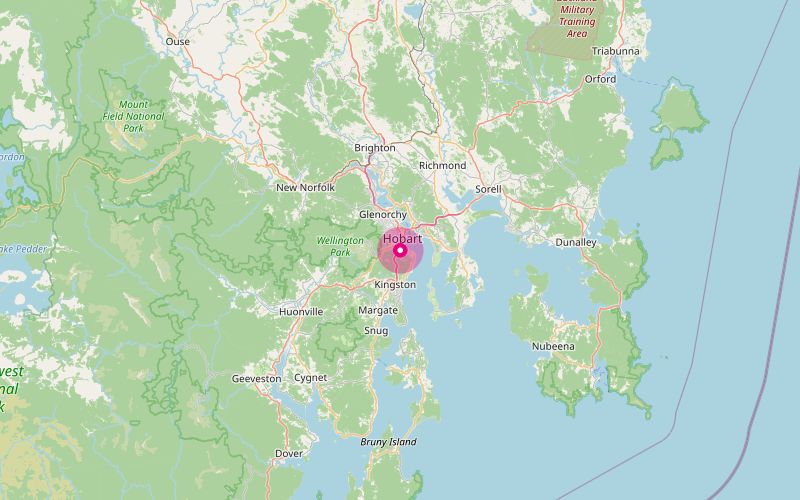
## Tasmania in Brief Tasmania is a geographical indication covering the entire island state of Tasmania, south of the Australian mainland and separated from Victoria by the Bass Strait. Modern viticulture truly took off there from the 1970s onward, even though the history of the vine on the island is older. The region produces still white, rosé, and red wines, but its reputation rests above all on Pinot Noir, Chardonnay, and sparkling wines made according to the traditional method.
Within the Australian context, Tasmania clearly belongs to the cool-climate camp. This distinction explains its moderate alcohol levels, high acidity, and precise aromatic profiles, very different from the sunnier expressions of many continental areas. The island enjoys a strong image on both domestic and export markets, with sustained demand for its top-end cuvées.
From both an administrative and viticultural standpoint, the large Tasmania GI encompasses several recognized sub-regions, including Tamar Valley, Pipers River, Coal River Valley, Derwent Valley, Huon Valley, East Coast, and North West. This internal diversity matters just as much as the island’s name itself. It allows for nuanced styles, from very taut sparkling bases to fuller-bodied Pinot Noirs from the best-exposed sites.
## Terroir and Geology Tasmania’s terroir is not uniform; it brings together river-valley landscapes, sheltered slopes, gravelly terraces, and more windswept hillsides near the coast. The search for north- and northeast-facing exposures, valuable in the Southern Hemisphere, remains a constant in order to encourage ripening in a cool setting. The best sites combine sufficient light, effective drainage, and relative protection from the coldest winds.
The geology is complex and ancient, much like the island itself. Soils derived from dolerite, sandstone, mudstone, schist, alluvial silts, and gravel deposits can be found there, along with more clay-rich sectors. This mosaic does not impose a single taste, but it allows for highly varied interpretations of Pinot Noir and Chardonnay.
In Tamar Valley, rolling relief and varied soils produce a broad range of styles, from the most airy to the more structured. Pipers River, farther northeast, is especially associated with great sparkling wines thanks to cool sites and slow ripening. Coal River Valley, near Hobart, often stands out for relatively dry and bright conditions that favor precision of fruit.
Derwent Valley and Huon Valley, in the south, bring more delicate expressions, often shaped by a long growing season and fine acidic tension. On the East Coast, maritime influences, sunshine, and certain drier sectors allow for more open wines while remaining within a register of freshness. Tasmania’s appeal lies precisely in this ability to produce cool-climate wines without stylistic uniformity.
## Climate The climate is cool maritime, strongly shaped by the Southern Ocean and by the bodies of water surrounding the island. Summer temperatures remain moderate, which delays ripening and helps preserve acidity. The growing season is long, a key factor in developing complex aromas without excessive sugar accumulation.
Compared with the Australian mainland, Tasmania experiences fewer thermal extremes. Summer days can be bright, but cool nights slow acid respiration and help preserve the balance of the grapes. This moderate diurnal range contributes to the finesse of Pinot Noirs and the clarity of Chardonnays.
Rainfall varies significantly depending on the area. The west of the island is very wet, whereas several winegrowing zones in the east and southeast are drier and better suited to quality viticulture. This distribution partly explains the concentration of vineyards in sheltered valleys and along the eastern seaboard.
The vintage nevertheless remains an important parameter, because coolness implies a real risk of incomplete ripeness on marginal sites or in the coldest years. Wind, pressure from fungal diseases, and, at times, frost can complicate vineyard management. In return, when conditions are favorable, the island produces wines that are at once ripe, chiseled, and only lightly marked by overripeness.
## Grape Varieties Pinot Noir is Tasmania’s signature grape variety. It is expressed as still red, rosé, and above all as a major component of sparkling wines, where its finesse of fruit and discreet structure are especially prized. Depending on the sub-region and winemaking choices, it can evoke tart cherry, raspberry, sweet spices, undergrowth, and sometimes a smoky note.
Chardonnay holds an equally central place. It serves as the base for many high-level sparkling wines, but it also produces still whites with fine tension, often citrus-driven, floral, or lightly stony, capable of gaining complexity with élevage. In the best sites, it combines sufficient ripeness, measured texture, and a saline finish.
Sauvignon Blanc, Riesling, and Pinot Gris are among the most visible secondary varieties. Sauvignon can take on a more restrained profile than in warmer Australian regions, with more lemon, fine herbs, and mineral clarity. Riesling, more confidential, yields linear, lemony wines, while Pinot Gris ranges between a dry style, moderate breadth, and an expression of fresh pear.
There is also some Pinot Meunier for sparkling wines, along with more limited plantings of aromatic or Bordeaux varieties in the warmest sectors. Blending rules follow the general Australian framework: to claim a grape variety on the label, the wine must contain at least 85% of it. The same 85% threshold also applies in practice to geographical origin and vintage in Australian labeling.
## Wine Styles Tasmania’s most distinctive style is traditional-method sparkling wine. Blends based on Chardonnay, Pinot Noir, and sometimes Pinot Meunier find especially favorable ground here thanks to high natural acidity and slow ripening. The best examples combine finesse of mousse, notes of citrus, apple, brioche, and hazelnut, with real aging potential on lees and then in bottle.
Still Chardonnays are among Australia’s most convincing whites. They may be vinified in tank to preserve the brightness of the fruit, or aged partly in barrel with measured bâtonnage and partial malolactic fermentation depending on the style sought. The most ambitious cuvées generally avoid showy oak and favor balance between tension, volume, and length.
In red, Pinot Noir overwhelmingly defines the island’s identity. Styles range from light, crunchy, floral wines to deeper barrel-aged versions showing notes of morello cherry, cranberry, spice, dried leaf, and damp earth. The best bottles gain complexity over five to ten years, sometimes more, without losing their fresh framework.
Rosés, often made from Pinot Noir, favor a dry, lively, food-friendly expression. Aromatic whites, notably Sauvignon Blanc, Riesling, and Pinot Gris, offer credible alternatives, with profiles generally tauter than in many other Australian regions. Tasmania therefore produces less a single style than a coherent family of fresh wines, defined by precision more than by power.
## Producers to Watch - House of Arras: a major benchmark for Australian traditional-method sparkling wines, with in-depth work on blending, extended lees aging, and age-worthy complexity. - Jansz Tasmania: a key player in Tasmanian sparkling wine, recognized for consistent, fine, and widely distributed cuvées. - Tolpuddle Vineyard: an essential name in Coal River Valley, closely followed for its pure and taut expressions of Chardonnay and Pinot Noir. - Pooley Wines: a renowned family estate in the south of the island, appreciated for the precision of its Pinot Noirs, Chardonnays, and Rieslings. - Moorilla Estate: a historic property near Hobart, known for a serious range of cool-climate wines in a distinctive cultural setting. - Josef Chromy: an important producer in Tamar Valley, recognized for its sparkling wines as well as its still wines, with strong distribution.
## Food and Wine Pairings Tasmania’s sparkling wines pair very well with Pacific oysters, lightly seared scallops, or calamari fritters. Their acidity and fine mousse cleanse the palate without overpowering briny notes or delicate textures.
A taut, moderately oaked Chardonnay works well with roast turbot, sole meunière, or chicken with a light cream sauce. The wine supports the substance of the dish while retaining enough energy to avoid any sense of heaviness.
A Tasmanian Pinot Noir pairs accurately with grilled salmon, rare duck breast, or roast quail with mushrooms. The variety responds well to delicate meats and earthy preparations, especially when the sauce remains restrained.
Younger, crunchier versions of Pinot Noir suit fine charcuterie, country terrine, or roasted vegetables seasoned with herbs. The island’s dry rosés are useful with summer cuisine, for example lightly seared tuna, heirloom tomatoes, or a shrimp salad.
A dry Tasmanian Riesling can be highly relevant with smoked fish, sashimi, or spicy but not fiery cuisine, such as certain Thai dishes with lime and fresh herbs. Its tension lightens richness and extends citrus flavors.
## FAQ ### Is Tasmania the coldest wine region in Australia? It is one of the coolest and certainly the most emblematic among the major Australian cool-climate origins. Some high-altitude mainland areas can also be very cool, but Tasmania’s maritime consistency is distinctive.
### Why is Tasmania so renowned for sparkling wines? The cool climate allows grapes to be harvested with high natural acidity and moderate potential alcohol, conditions favorable to the traditional method. The Chardonnay–Pinot Noir–Pinot Meunier trio reaches slow ripeness here that preserves aromatic finesse.
### Which red grape variety should be prioritized? Pinot Noir clearly dominates the island’s red-wine identity. It produces wines that are more elegant and taut than powerful, with a real ability to express site differences.
### Can Tasmanian wines age? Yes, especially the best sparkling wines, ambitious Chardonnays, and Pinot Noirs from good terroirs. Their natural acidity is a major asset for bottle development, even if not all wines are designed for long cellaring.
### Which sub-regions are the most important? Tamar Valley, Pipers River, Coal River Valley, Derwent Valley, Huon Valley, and East Coast are among the most frequently cited references. Each brings a different nuance, between strict freshness, greater brightness, structure, or delicacy.
### Does the Tasmanian style resemble New Zealand? There are common points linked to cool climate and maritime influence. Tasmania nevertheless retains an identity of its own, often less aromatically demonstrative than certain New Zealand styles, with a marked emphasis on sparkling wines and on fine-textured Pinot Noirs.