Steiermark, white Styria of steep slopes
In southeastern Austria, Steiermark produces taut, aromatic, precise white wines. Three sub-regions, varied soils, and a borderland climate make it a singular winegrowing area.
geoVINUM · 2026-11-04
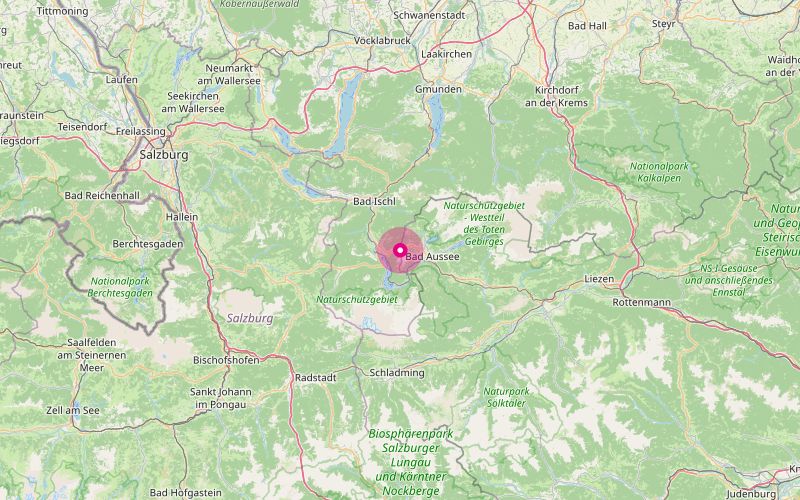
## Steiermark at a glance Steiermark, or Styria, lies in southeastern Austria, bordering Slovenia, and is one of the country’s major wine regions. The vineyard is now structured around three DACs recognized for still wines of regional typicity: Südsteiermark DAC, Vulkanland Steiermark DAC, and Weststeiermark DAC. Production is overwhelmingly white, although the region retains a rosé identity through the Schilcher of Weststeiermark. On the Austrian scale, Styria covers a more modest area than Lower Austria or Burgenland, but its qualitative role is central to the contemporary image of the country’s white wines.
Winegrowing Styria is often seen as one of the most spectacular vineyard landscapes in Central Europe because of its steep slopes and wooded rolling hills. This beauty is not merely scenic: the gradients, exposures, and fragmented parcels directly shape the wine profiles. The best sites produce whites with tension, aromatic clarity, and firm texture, often marked by a very precise reading of grape variety and place. The region has established itself in particular through Sauvignon Blanc, while maintaining a strong base of Morillon, the local name for Chardonnay, as well as Weissburgunder and Welschriesling.
The modern Styrian regulatory framework distinguishes regional appellation wines, village wines, and cru wines, according to a hierarchy that brings the vineyard’s communication closer to that of other European regions centered on origin. This evolution has accompanied the move upmarket of the estates and a clearer reading of terroirs. The recognition of the DACs has helped clarify the expected styles, without preventing a diversity of interpretations. Styria is therefore not a uniform region, but a coherent group of hillside vineyards dominated by dry whites.
## Terroir and geology The landscape matrix of Steiermark is one of often-steep hills, cut by small valleys and exposed in complex ways. In the most renowned sectors, viticulture takes place on abrupt slopes that require extensive manual labor and limit mechanization. This topography favors drainage, ventilation, and gradual ripening, while also demanding rigorous selection of rootstocks and viticultural practices. South-, southeast-, and sometimes southwest-facing exposures are sought after to secure ripeness in a relatively cool context.
Geological diversity is one of the region’s defining features. In Südsteiermark, one notably finds marls and sediments locally called Opok, a mixture of silts, clays, and consolidated calcareous material, which are highly important in the expression of many crus. These soils often yield wines that are both nervy and textured, with perceptible salinity and good aging potential. Gravels, sands, and more limestone-rich formations are also found depending on the sector.
Vulkanland Steiermark, formerly known as Südoststeiermark, presents a more fragmented geological landscape. Ancient volcanic formations, basaltic or tuffaceous depending on the site, coexist with sediments, clays, and deeper soils. This heterogeneity does not produce a uniform volcanic taste, but rather a range of textures and structures, often with broader, spicier whites. The sector’s reputation rests as much on the diversity of its profiles as on the singularity of certain sites.
Weststeiermark is cooler and has historically been associated with Schilcher, a rosé made from Blauer Wildbacher. Its soils notably include gneiss, schists, and poor ground that suit this acidic, energetic grape variety well. Here again, slope plays a decisive role in water balance and concentration. The reading of terroir here is expressed less through internationally known white varieties than through a local style with strong regional identity.
## Climate The climate of Steiermark is a moderate continental climate, strongly influenced by air currents coming from the south and southeast. The proximity of the Balkans and the Adriatic brings milder, more humid flows, while the relative altitude and cool nights preserve acidity. This combination explains the frequent contrast between high aromatic ripeness and a feeling of freshness. It also contributes to the varietal precision of aromatic grapes, particularly Sauvignon Blanc.
Temperature shifts between day and night are decisive during the ripening period. They slow the loss of acidity and favor the retention of fine aromatic compounds rather than simple sugar accumulation. In the best vintages, the harvest can reach full physiological ripeness without tipping into excessive alcohol levels. The wines’ final balance therefore rests less on power than on tension and definition.
Humidity is both an asset and a constraint. It supports active vegetation and can encourage even ripening, but it also increases pressure from fungal diseases, especially in dense or poorly ventilated parcels. Vineyard management therefore requires careful handling of canopy, yields, and picking dates. The most precise growers often work in successive passes in order to fine-tune the harvest to the desired profile.
Differences in mesoclimates between the three sub-regions are clear. Südsteiermark often combines marked relief, good ventilation, and a balance between ripeness and freshness. Vulkanland can produce more generous, broader wines without losing the acidic backbone that is characteristic of the region. Weststeiermark remains overall the coolest in expression, which suits the incisive liveliness of Schilcher and certain very taut whites.
## Grape varieties Sauvignon Blanc has become the international emblem of Styria. Here it produces dry wines, generally without any search for over-ripeness, marked by citrus, fine herbs, gooseberry, sometimes blackcurrant leaf, but also by smoky or stony nuances in the best terroirs. The local style differs from more exotic New World expressions through firmer acidity and fruit that is often more restrained. Single-cru bottlings can gain in complexity with a few years in bottle.
Morillon, the traditional Styrian name for Chardonnay, holds an important place. Depending on site and vinification, it can produce wines that are linear and saline, or broader versions aged in large cask or barrel, with oak use generally measured in the most precise estates. Weissburgunder, that is to say Pinot Blanc, produces whites that are more discreet aromatically but often very coherent at the table. Welschriesling, with no genetic link to Riesling, remains essential for light, taut wines that can sometimes be very incisive.
Among the other notable grape varieties, Gelber Muskateller plays an important role in regional identity. It yields intensely aromatic, floral, muscat-scented wines, almost always vinified dry, in which freshness avoids the pitfall of heaviness. One also encounters Grauburgunder, or Pinot Gris, capable of fuller body, as well as Traminer in certain sectors. The palette of varieties allows growers to respond to highly varied terroirs without diluting regional personality.
In Weststeiermark, Blauer Wildbacher deserves special mention. This indigenous red variety, or at least one historically rooted in the region, is the basis of Schilcher, a dry rosé with nervy acidity, often showing notes of tart red fruits and herbs. It can also be vinified as a red, but it is its rosé version that has forged its reputation. DAC labeling rules distinguish levels of origin and frame the expected styles according to the sub-region concerned.
## Wine styles Styria is first and foremost a land of dry whites. Entry-level regional styles seek varietal straightforwardness, immediate expression, and high drinkability, with rather neutral aging in stainless steel tanks or in vessels that leave little mark. Village and cru levels gain in density, length, and textural complexity. In these bottlings, lees aging, large cask, and sometimes used barrel are employed to support structure without dominating the fruit.
Styrian Sauvignon Blanc can range from a lively, chiseled register to a deeper, spicy, almost smoky profile. The best versions seek neither demonstrative varietal character nor assertive élevage, but rather a point of balance between fruit, acidity, and substance. Morillon and Weissburgunder excel in gastronomic styles, more discreet on the nose but often more reliable at the table. Gelber Muskateller plays the card of pure aromatics, with a dry finish that makes it particularly useful as an aperitif or with herb-driven dishes.
The Schilcher of Weststeiermark forms a category of its own. This dry rosé, nervy and often ranging from very pale to deeper-colored depending on the practices, is characterized by sharp acidity and an immediately identifiable palate profile. It is not designed for roundness or softness, but for energy, clarity, and compatibility at the table. It is one of the rare rosés of Central Europe whose local identity is so strongly asserted.
Aging potential varies significantly depending on the level and the grape variety. Regional bottlings are most often intended for relatively youthful consumption in order to preserve their aromatic brightness. The best crus of Sauvignon Blanc, Morillon, or Weissburgunder can evolve favorably over several years, developing notes of wax, dried herbs, warm stone, or yellow-fleshed fruits. In that case, aging rests more on acidic structure and dry extract than on any sort of alcoholic power.
## Producers to follow - Weingut Tement: a major benchmark in Südsteiermark, known for its hillside Sauvignon Blancs and very precise readings of crus. - Weingut Gross: an estate renowned for terroir-driven whites, structured and fine, from high-quality sites in Südsteiermark. - Weingut Sattlerhof: a historic producer, particularly strong with Sauvignon Blanc and Morillon, in a clean, taut style. - Weingut Erwin Sabathi: carefully crafted signatures, often highly legible in their expression of relief and Opok soils. - Weingut Polz: an important player in Südsteiermark, with a reliable range of varietal whites and single-parcel bottlings. - Weingut Strohmeier: a notable name in Weststeiermark, particularly for demanding interpretations of Schilcher and low-intervention wines.
## Food and wine pairings A Südsteiermark Sauvignon Blanc works very well with grilled trout, fresh herbs, and a squeeze of lemon. The wine’s acidity extends the freshness of the dish, and its vegetal dimension echoes the aromatics without hardening them.
A lees-aged Morillon pairs accurately with roast chicken, a light cream sauce, and mushrooms. The wine’s substance supports the richness of the dish, while its tension prevents any heavy impression.
A dry Gelber Muskateller is particularly convincing with asparagus, a soft-boiled egg, and a fine-herb vinaigrette. The grape variety has enough aromatic intensity to engage with asparagus, which is uncommon in pairing terms.
A village-level Weissburgunder pairs well with breaded veal cutlets or lightly sweet Viennese cuisine. Its aromatic discretion and linear structure leave room for the dish while cleansing the palate.
A Weststeiermark Schilcher finds a natural partner in smoked charcuterie, a warm potato salad, or lightly vinegared cold dishes. Its incisive acidity acts like an extra seasoning and revives every bite.
A dry, light Welschriesling can accompany fried river fish, marinated vegetables, or fresh cheeses. It excels in simple pairings where liveliness matters more than concentration.
## FAQ ### Where exactly is winegrowing Steiermark located? Winegrowing Steiermark is located in southeastern Austria, along the Slovenian border. Its main production areas are Südsteiermark, Vulkanland Steiermark, and Weststeiermark.
### Does Styria mainly produce white wine or red wine? The region is overwhelmingly focused on dry white wines. Red remains a minority, although Blauer Wildbacher plays an important role in rosé through Schilcher.
### What is the most important grape variety in Steiermark? Sauvignon Blanc is now the most emblematic grape variety on the international stage. It nevertheless shares regional identity with Morillon, Weissburgunder, Welschriesling, and Gelber Muskateller.
### What does Morillon mean in Styria? Morillon is the traditional local name for Chardonnay in Styria. Depending on terroir and élevage, it can produce very taut wines or broader, more gastronomic expressions.
### Is Schilcher just a simple rosé? Schilcher is indeed a rosé, but it has a very marked regional identity because of its grape variety, Blauer Wildbacher, and its high acidity. Its dry, nervy, and sometimes cutting style clearly sets it apart from many softer rosés on the market.