South Australia, Productive Heartland and a Mosaic of Terroirs
The driving force of Australia’s vineyard landscape, South Australia brings together highly contrasting climates and soils. Its production ranges from powerful reds to taut whites, with several benchmark regions.
geoVINUM · 2026-11-04
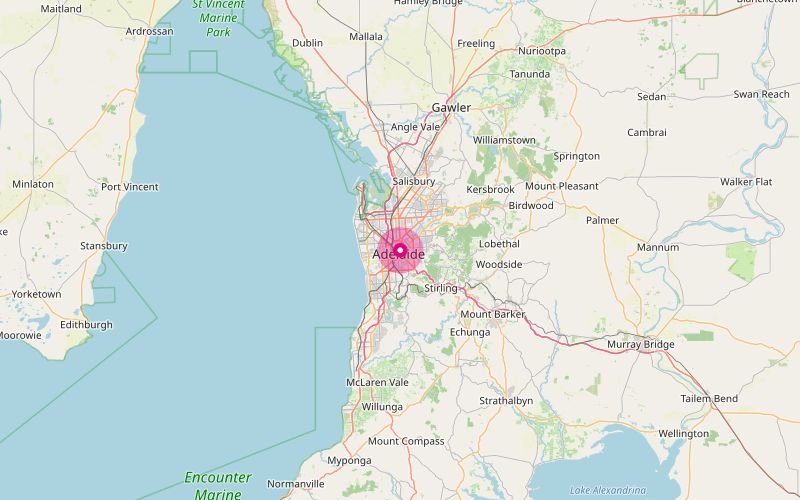
## South Australia at a Glance South Australia is Australia’s central wine state, located in the south-central part of the country around Adelaide, the Gulf St Vincent, and the great inland Murray basins. It is not an appellation in the European sense, but a state-level geographical indication recognized within the Australian Geographical Indications framework, above several wine zones, regions, and sub-regions. The state consistently accounts for a majority share of the nation’s wine production, thanks to the combination of prestigious vineyards and vast irrigated areas geared toward volume. It produces red, white, rosé, sparkling, and fortified wines, with particular renown for Shiraz, Cabernet Sauvignon, Riesling, Grenache, and Chardonnay.
South Australia’s strength lies in its scale and internal diversity. It includes both historic regions such as Barossa Valley, Eden Valley, McLaren Vale, Clare Valley, and Coonawarra, and much larger areas such as Riverland, which is crucial for supplying both the domestic market and export trade. This duality explains the coexistence of entry-level wines, precisely defined regional cuvées, and long-aging bottles from old vines. To understand South Australia, one must therefore distinguish the producing state from its quality-focused regions.
The local wine history begins in the 19th century with the free settlement of South Australia and the arrival of British, German, and Central European immigrants. Several Lutheran communities established notably in Barossa and Eden Valley played a lasting role in vine growing and in preserving old plant material. The state was also relatively spared by phylloxera in its major regions, allowing the survival of a heritage of own-rooted vines among the oldest in the world. That legacy still shapes the image and hierarchy of the state’s wines today.
## Terroir and Geology The word terroir takes on a very broad meaning in South Australia, given how much the geological contexts differ from one region to another. The relief of the Mount Lofty Ranges, the Murray alluvial plains, coastal sands, the limestones of the South East, and the ancient colluvial soils of the Barossa form a mosaic that resists reduction to any single model. In the quality-focused zones, soils are often poor to moderately fertile, which helps naturally limit vigor. In the more productive sectors, by contrast, irrigation and yield management become essential quality levers.
Barossa Valley rests on very complex geology, alternating schists, sands, silts, clays, and ferruginous deposits, with great variability over short distances. This diversity allows for multiple expressions of Shiraz, Grenache, Mourvèdre, and Sémillon, ranging from fleshy, dark profiles to more aromatic styles. To the east, Eden Valley gains altitude and freshness on leaner soils, often granitic or schistous, well suited to Riesling and more vibrant Shiraz. Clare Valley also presents a mosaic of limestone, schist, slate, and red soils, giving rise to very taut Rieslings and more structured reds depending on the area.
McLaren Vale combines sands, clays, silts, gravels, and schists, with a pedological diversity regularly highlighted by producers. Maritime proximity plays as important a role there as the soils, especially in preserving balance in Grenache, Shiraz, and Cabernet Sauvignon wines that are often ripe yet increasingly measured. Coonawarra, in the Limestone Coast, remains the clearest soil reference point, with its famous strip of terra rossa over limestone. This well-drained red soil, rich in iron oxide, has become an identity marker for Cabernet Sauvignon, even if other soils in the area can also produce solid wines.
Riverland and the other great flatland areas show another face of South Australian terroir. Soils there are often alluvial, sandy to silty, with water resources made accessible by the Murray basin. These conditions favor higher yields and simpler wine profiles, but they do not rule out all qualitative ambition when site selection and harvest timing are precise. In these sectors, the key lies less in a traditional notion of cru than in the technical mastery of water, canopy, and crop load.
## Climate South Australia’s climate is broadly hot and dry, but this general formula hides decisive nuances. Coastal and hill regions benefit from maritime influences and altitude effects that temper summer temperatures. The inland continental areas are hotter, drier, and more dependent on irrigation. Fungal disease pressure is often lower there than in humid regions, which favors consistent ripening.
Barossa Valley has a warm climate, especially favorable to full Shiraz ripeness. The contrast between hot days and cooler nights can nevertheless preserve some aromatic lift, especially on the best-exposed sites and at higher relative elevations. Eden Valley and Clare Valley offer cooler conditions, with markedly colder nights that support the natural acidity of Riesling. This diurnal range explains an important part of the precision of the whites from these areas.
McLaren Vale has a Mediterranean climate, warm and dry, moderated by the proximity of Gulf St Vincent. Sea breezes limit thermal extremes and help preserve more freshness than one might imagine from average temperatures alone. Coonawarra is cooler than the regions near Adelaide thanks to its southern maritime influence and longer growing season. This slower ripening particularly suits Cabernet Sauvignon, which can develop clean fruit, firm tannins, and a well-integrated mentholated or herbal framework.
Water is a central issue at the state level. In hot and dry zones, irrigation historically supported vineyard expansion and remains crucial for volume stability. Climate change management is now leading to adjustments in rootstocks, exposures, canopy height, and sometimes varietal choices. There is also a search for cooler sites, earlier harvests, and less marked élevage in order to preserve balance.
## Grape Varieties Shiraz is South Australia’s emblematic grape variety and likely the one that has contributed most to the state’s international reputation. It takes very different forms depending on the region: dense, ripe, and spicy in Barossa; more peppery and taut in Eden Valley; more maritime and sometimes saltier in McLaren Vale. Cabernet Sauvignon is the other major benchmark red, with a particularly classical expression in Coonawarra and more generous versions in other warm regions. Grenache has seen a qualitative revival in recent years, notably from old bush vines.
Among the other important reds are Mourvèdre, often called Mataro in traditional local vocabulary, as well as Merlot and sometimes Petit Verdot in Bordeaux-style blends. GSM, the combination of Grenache, Shiraz, and Mourvèdre, is well established and is not subject to blending rules as restrictive as those of European AOCs. Producers enjoy considerable varietal and technical freedom within national labeling rules. In Australia, a wine may claim a grape variety, vintage, or origin if the corresponding regulatory threshold is met, generally 85%.
On the white side, Riesling is essential in Clare Valley and Eden Valley, where it produces some of the country’s most distinctive dry whites. Chardonnay is widely planted and spans a broad spectrum, from simple volume wine to more ambitious whites from more temperate climates, raised with finesse. Sémillon has a notable history in Barossa, often in richer styles than those of Hunter Valley. Sauvignon Blanc, Pinot Gris, Viognier, Fiano, Vermentino, and other Mediterranean varieties are advancing in certain areas in response to heat and changing tastes.
## Wine Styles Dry reds dominate the image of South Australia. Barossa long embodied a very ripe, powerful, concentrated Shiraz style, often aged in American or French oak barrels, with broad texture and strong aging potential in the best cuvées. That aesthetic still exists, but it now coexists with fresher interpretations that are less extracted and less oaky. McLaren Vale produces fleshy reds that are becoming increasingly precise, while Coonawarra favors a more structured, blackcurrant-and-cedar register for Cabernet.
Old vineyards are a major feature of the state’s premium styles. Several houses and estates promote vine-age mentions, although these indications stem more from sector initiatives than from a strict appellation system. Wines from very old Shiraz, Grenache, or Mourvèdre vines can combine concentration, textural softness, and tertiary complexity with age. The best examples develop notes of tobacco, spice, fine leather, dry earth, and preserved black fruit without losing their backbone.
South Australia’s dry whites deserve particular attention. Riesling from Clare Valley and Eden Valley is frequently vinified without oak, with moderate alcohol levels, high acidity, and aromas of citrus, white flowers, and sometimes wet stone. Young, these wines are incisive; after a few years, they often develop notes of wax, light honey, and toast without marked residual sugar. Chardonnay, depending on origin, may be simple and fruity or more ambitious, with barrel fermentation, lees aging, and a sought-after balance between fruit, acidity, and texture.
South Australia also produces rosés, sparkling wines, and fortified wines. Rosés are most often dry and intended for early drinking, often based on Grenache, Shiraz, or Sangiovese depending on the producer. Sparkling wines exist, but the state is not the symbolic center of this Australian category. Fortifieds, by contrast, recall an important historical chapter, particularly tawny styles based on red varieties or old lots kept for long periods in cellar.
## Producers to Watch - Penfolds : major house founded in 1844, active across several South Australia regions; its range illustrates multi-regional blending as much as site-specific cuvées. - Henschke : benchmark producer of Eden Valley and Barossa, known for old vines and some of Australia’s most closely followed ageworthy reds. - Yalumba : historic Barossa player, important for Shiraz, blends, and recognized work with Viognier and Mediterranean varieties. - d’Arenberg : a central name in McLaren Vale, with a traditional reading of the vineyard and a wide range of red and white cuvées. - Jim Barry Wines : key Clare Valley producer, particularly strong in Riesling and Shiraz, with several benchmark sites. - Wynns Coonawarra Estate : classic Coonawarra signature, essential for understanding the local Cabernet Sauvignon style.
## Food and Wine Pairings - Barossa Shiraz and herb-roasted rack of lamb: the wine’s concentration matches the richness and aromatic intensity of the meat. - Coonawarra Cabernet Sauvignon and grilled ribeye: the firm tannins and black fruit pair well with fire cooking and restrained sides. - McLaren Vale Grenache and glazed pork belly: the ripe fruit and spice support the dish’s sweetness and crisp texture. - Clare Valley Riesling and oysters or sashimi: the high acidity and lemony finish extend the wine’s natural salinity. - Oaked Chardonnay and chicken in mushroom cream sauce: the wine’s texture complements the sauce without weighing it down. - Australian tawny and blue cheese or walnut tart: the oxidative sweetness and dried-fruit notes create a stable, clear pairing.
## FAQ ### Is South Australia a region or a group of regions? South Australia is first and foremost an Australian state and a large-scale geographical indication. It encompasses several very different wine zones and regions, some of which have a much more precise identity for the taster.
### What is the difference between Barossa and Coonawarra? Barossa is mainly associated with Shiraz, generous wines, and a heritage of very old vines. Coonawarra is better known for Cabernet Sauvignon grown on limestone terra rossa, with a straighter, fresher expression.
### Does South Australia produce only powerful red wines? No. The state also produces some of Australia’s best dry Rieslings, notably in Clare Valley and Eden Valley. It also offers Chardonnay, rosés, sparkling wines, and fortifieds in a range of styles.
### Is irrigation common? Yes, especially in hot and dry areas or in volume-producing regions such as Riverland. In quality-focused regions, it is also used, but generally with finer control in order to preserve vine balance and grape concentration.
### Which wines age best? The great Shiraz wines of Barossa and Eden Valley, the best Cabernet Sauvignon from Coonawarra, and the Rieslings of Clare Valley and Eden Valley all have good aging potential. Their evolution depends on the vintage, the winemaking style, and the initial level of concentration.