Japan: The Patient Emergence of a Winegrowing Nation
Between humidity, typhoons and tiny vineyard plots, Japan has built a singular wine culture. Today, koshu and Muscat Bailey A are its clearest signatures.
Audrey Sousa Chaillet · 2026-11-03
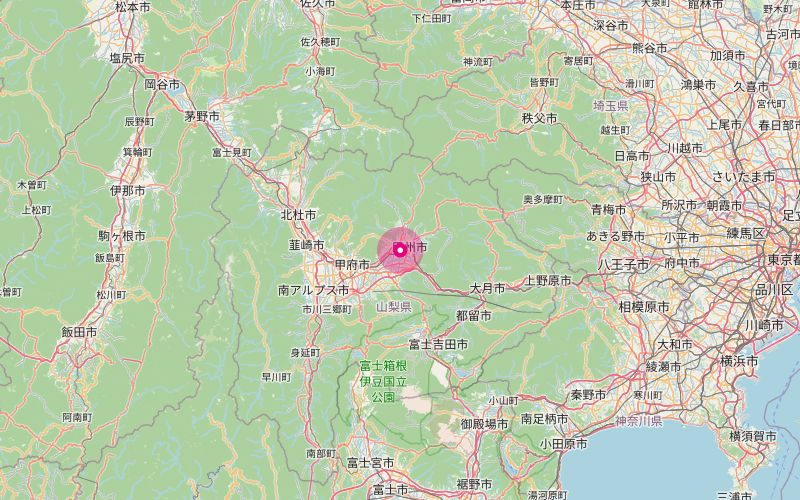
## Japan at a glance Japan is a niche wine-producing country on the global stage, but its viticulture now has a clearly defined identity. The vineyard is concentrated בעיקר on the main island of Honshu, with major centers in Yamanashi, Nagano, Yamagata, Hokkaido and in a few better-ventilated inland valleys. International recognition of Japanese wine has been structured only recently, notably with the entry into force of the Yamanashi geographical indication in 2013 and stricter national rules on labeling for “Japanese wine” in 2018. Production includes whites, reds, sparkling wines and a few skin-contact wines, but the country’s image rests first and foremost on koshu for whites and Muscat Bailey A for reds.
## Terroir and geology Japanese vineyards are not built on vast continuous plains, but on a mosaic of small plots often hemmed in between mountains, alluvial valleys and urban areas. This fragmentation partly explains the low volumes and the high cost of grapes, but it also allows for a finer reading of exposures, altitudes and air circulation. The best areas seek a rare compromise in Japan: enough warmth to ripen, enough altitude or wind to limit humidity, and soils capable of draining abundant rainfall.
Yamanashi remains the historical and qualitative reference, particularly in the Kofu Basin, west of Tokyo. Vines there are often planted between roughly 300 and 700 meters in altitude, on alluvial fans, gravelly deposits and well-draining soils shaped by a complex mountain environment. Mount Fuji is not the direct heart of the vineyard, but its presence neatly captures the broader topographical setting: relief, relative diurnal range and the search for airy sites. This geography explains why vineyard management, even more than elsewhere, determines final quality.
Nagano offers another important expression, often more continental, with cooler inland valleys and altitudes suited to precise, taut styles. Hokkaido, farther north, attracts attention for its relatively less humid summer season and for the progress of pinot noir, chardonnay and grapes intended for sparkling wines. Yamagata, for its part, retains a notable role in the cultivation of Muscat Bailey A and in diversified production. At the scale of the country, one must therefore speak of several winegrowing Japans rather than a single model.
## Climate Climate is the main constraint on Japanese viticulture. A large share of the production regions experiences hot, humid summers, high rainfall during the growing season, and a real risk of typhoons as harvest approaches. Under these conditions, fungal disease pressure is intense and the harvest window can close abruptly. Full phenolic ripeness is less difficult to reach than preserving the sanitary condition of the grapes.
Japanese viticulture has therefore developed specific technical responses. Pergola training, long dominant, allows clusters to be better ventilated, kept away from damp ground and protected through shade management during the hottest periods. In the most quality-focused sectors, more classic trellising can also be seen, often paired with pruning and leaf removal carefully adapted to local risks. Site selection, exposure, altitude and vigor control are decisive, because a few days of rain at the wrong time can profoundly alter the desired style.
Climate change is slowly reshaping the map of the vineyard. Some northern or high-altitude regions are gaining in interest, while traditionally humid areas must arbitrate between easier ripening and increased sanitary pressure. This partly benefits Hokkaido and certain sectors of Nagano, without calling into question the symbolic and qualitative role of Yamanashi. For the taster, this climatic reality is reflected in wines often conceived for precision, drinkability and aromatic transparency rather than power.
## Grape varieties Japan’s emblematic grape variety is koshu, a pink-skinned grape long cultivated in Yamanashi Prefecture. Its exact origin was long debated, but it is generally regarded as an ancient Asian variety belonging to the species Vitis vinifera. It produces pale wines, low to moderate in alcohol, with frequent notes of citrus, yuzu, apple, white flowers and sometimes a slight phenolic or bitter nuance on the finish. Its value lies not in aromatic intensity, but in finesse of texture and compatibility with Japanese cuisine.
The main red grape of national identity is Muscat Bailey A, a crossing created in Japan at the beginning of the 20th century by Kawakami Zenbei. Long confined to simple, fruity expressions, it has progressed significantly when grown at better-controlled yields and vinified more judiciously. It then produces supple, low-tannin reds marked by strawberry, cherry, sometimes a spicy or muscat-like touch, with a profile generally approachable young. Its ageing potential remains modest on average, but the best examples are gaining in substance and seriousness.
Among the other grapes are international varieties planted for several decades. Chardonnay and sauvignon blanc deliver convincing results in cool, well-ventilated sectors, notably for precise dry whites and for sparkling bases. Merlot, cabernet sauvignon, cabernet franc and pinot noir are present to varying degrees, with mixed fortunes depending on region and vintage. Delaware, Niagara and Concord also exist in the Japanese agricultural landscape, but they more often belong to table grapes or simpler productions.
There is no unified national system comparable to the great European appellations to impose detailed blending rules everywhere. However, geographical indications and labeling rules increasingly frame the origin and nature of wines. Since 2018, the term “Japanese wine” implies that the grapes were harvested in Japan, clearly distinguishing these wines from products made from imported musts or wines. This clarification has mattered greatly for the market’s legibility.
## Wine styles Koshu whites are the country’s most distinctive style. They are generally vinified dry, in a light- to medium-bodied register, with acidity ranging from moderate to fresh depending on site and vintage. Ageing most often aims to preserve aromatic delicacy, with a majority of stainless-steel tanks, sometimes lees ageing, and more rarely the use of oak, employed with caution. The best wines do not rely on concentration, but on clarity, perceived salinity and a final bitterness that is useful at the table.
Muscat Bailey A reds are frequently oriented toward fruit and suppleness. They do not tolerate severe extraction or pronounced oak well, as these tend to unbalance their texture. The most convincing producers therefore favor moderate macerations, short or neutral ageing, and a search for finesse rather than structure. These are often wines at their best in youth, even if some serious cuvées gain a few years of complexity.
International varieties yield styles that are more immediately legible for Western tasters. Chardonnay can range from a straight, lemony white to broader versions partially aged in barrel. Pinot noir and merlot perform best in cooler or better-ventilated zones, with moderate alcohol profiles and no heaviness. Sparkling wines are progressing clearly, particularly in Hokkaido and Nagano, where natural acidity and relative freshness favor balanced base wines.
Ageing potential remains broadly short to medium for a large share of Japanese wines. The finest koshu can evolve for a few years toward more discreet notes, sometimes slightly herbal, smoky or citrus-peel-like, without seeking the depth of a great long-lived white. The best chardonnays, certain sparkling wines and a few cool-climate reds offer more potential. The key notion nonetheless remains gastronomic harmony more than prolonged ageing capacity.
## Producers to watch - Grace Wine : a highly respected Yamanashi estate, a major reference for dry, precise koshu capable of expressing individual sites. - Château Mercian : a historic player born from a house founded in the 19th century, central to the qualitative modernization of Japanese wine. - Manns Wines : an important producer in Yamanashi, strong in its work with local varieties and in the carefully rendered expression of koshu. - Coco Farm & Winery : an estate recognized for its serious cuvées and its notable role in the visibility of contemporary Japanese wine. - Takeda Winery : a Yamagata house reputed for its attentive approach and for well-made Japanese reds. - Domaine Takahiko : an emblematic figure of Hokkaido, especially followed for cool-climate pinot noirs with strong personality.
## Food and wine pairings Dry koshu pairs very naturally with sea bream or yellowtail sashimi. Its low aromatic imprint, measured freshness and slight bitterness respect the texture of raw fish without overwhelming its umami.
A lees-aged koshu works well with shrimp or vegetable tempura. The wine cuts through the fried coating without bringing excessive acidic hardness, which would be less comfortable with certain more incisive whites.
Muscat Bailey A pairs with chicken thigh yakitori or lightly sauced tare. Its crunchy red fruit and supple structure extend the grilled character without tannic conflict.
A cool-climate Japanese merlot suits tonkatsu or lightly sweet glazed pork. The wine’s moderate body supports the breaded texture or fatty meat without weighing the whole down.
A chardonnay from Nagano or Hokkaido can pair very well with pan-seared scallops or fish in a white miso sauce. The style remains tense enough to support the dish while offering more breadth than a koshu.
A Japanese brut sparkling wine finds its place with oysters, vegetable fritters or kaiseki cuisine at the beginning of a meal. The bubbles bring lift and palate-cleansing effect while remaining compatible with delicate flavors.
## FAQ ### Is Japan a major wine-producing country? Japan is not a major producer by volume and its vineyard remains modest on a global scale. However, it has become a credible wine-producing country in qualitative terms, with a few regions and producers now clearly identified.
### Is koshu the oldest Japanese grape variety? Koshu has been cultivated in Japan for a very long time, especially in Yamanashi, but the exact dating of its arrival remains difficult to establish with certainty. Its historical and symbolic importance nonetheless makes it the country’s most emblematic grape variety.
### Since when has Japan produced wine in a modern way? Modern commercial viticulture accelerated after the Meiji Restoration beginning in 1868. Japanese pioneers went to train in Europe in the 1870s, and the history of Mercian goes back to 1877.
### Why are vines often trained on pergolas? Pergola training helps manage humidity, improve bunch aeration and reduce certain sanitary risks in a rainy climate. It also corresponds to a long local tradition of vine training, adapted both to table grapes and to part of wine production.
### Does Japan import more wine than it produces? Yes, by a very large margin. The Japanese market is one of the largest in Asia for imported wines, and domestic production covers only a small share of total consumption.