Chambertin-Clos de Bèze, the historical matrix of Gevrey
A major grand cru of Gevrey-Chambertin, Clos de Bèze brings together depth, energy, and longevity. Its identity rests on a precise hillside, an ancient name, and a hierarchy patiently built over time.
geoVINUM · 2026-11-03
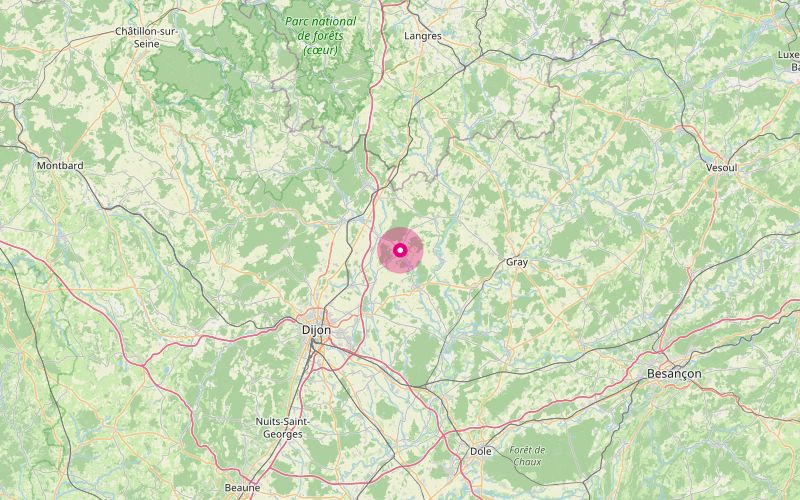
## Chambertin-Clos de Bèze at a glance Chambertin-Clos de Bèze is a grand cru of the Côte de Nuits, located in the commune of Gevrey-Chambertin, north of Beaune. The controlled designation of origin was recognized in 1937, within the first core of Burgundian grands crus defined by the INAO. It produces almost exclusively red wines from pinot noir, even though the appellation also legally permits white wines under very marginal conditions. The area covers a little more than 15 hectares, making it a modest-sized cru by Burgundy standards, but a central one in the hierarchy of Gevrey.
The name brings together two historical realities. Clos de Bèze refers to the ancient core, cultivated from the early Middle Ages under the impetus of the abbey of Bèze, while Chambertin refers to the neighboring cru, which became one of Burgundy’s most famous names. Since the appellation decree, wines from the Clos de Bèze climat may be marketed either under the name Chambertin-Clos de Bèze or under the sole name Chambertin. In practice, the full designation is overwhelmingly preferred, so strongly does it assert a distinct identity.
## Terroir and geology Clos de Bèze occupies the upper and middle part of the slope, just north of Chambertin proper, in the noblest sector of the Gevrey hillside. The exposure is predominantly east to southeast, with a regular incline that promotes water runoff and good interception of the morning sun. The historic clos is not merely a heritage backdrop: it also expresses an old logic of land and cultural protection. The present landscape is the result of a long viticultural continuity, more than of any theatrical design.
The subsoil belongs to the classic structure of the Côte de Nuits. Jurassic limestones are found here, associated with marls and slope scree, in a fine mosaic that varies from one parcel to another. The soils are generally brown limestone soils, shallow to moderately deep, with a notable proportion of stones ensuring drainage and heat retention. This combination gives pinot noir a favorable setting for full ripening without heaviness.
Clos de Bèze’s reputation rests in part on this articulation between structural power and aromatic relief. Where some sectors of Gevrey emphasize tannic build first and foremost, Clos de Bèze often adds a dimension of sap, depth, and length. The cru retains a natural density, but its nobility is above all expressed in the precision of its grain and in its persistence. It is a terroir that can handle élevage without losing its definition.
As is often the case in Burgundy, the winegrowing climat cannot be reduced to cadastral uniformity. Even within the appellation itself, nuances of soil depth, stoniness, and vigor can influence the final profile of the wines. Estates that vinify certain parcels separately show that Clos de Bèze can range from a floral, ascending expression to a more earthy and fleshy reading. The unity of the cru remains, but it is expressed through a plurality of voices.
## Climate The climate is semi-continental with a classic Burgundian influence, with cold winters, a spring exposed to frost hazards, and summers that can be hot without being uniformly dry. The Côte de Nuits benefits from a slope effect and air drainage that limit certain excesses, but consistency is never guaranteed here. Vintages therefore matter with particular force. Clos de Bèze is a cru where the annual weather leaves a clear imprint without erasing the signature of the place.
The orientation of the hillside plays a decisive role. Morning sunshine favors a rapid start to photosynthesis after cool nights, while the slope helps limit stagnant humidity. In cool years, this setting makes it possible to achieve more complete phenolic ripeness than in flatter or colder situations. In sunny years, by contrast, the challenge is to preserve fruit freshness and avoid any excessive extraction.
Climate change is gradually altering the cru’s historical framework. Harvest dates have generally moved earlier, and episodes of heat or drought are more frequent than they once were. Even so, Clos de Bèze remains better equipped than many more fertile or heavier terroirs, thanks to its well-draining soils and moderate hillside elevation. The quality of canopy work, picking dates, and élevage now matters just as much as the reputation of the site alone.
## Grape varieties The main grape variety is pinot noir, which here gives some of the most complete wines of the Côte de Nuits. The specifications for Burgundy’s red grands crus allow chardonnay, pinot blanc, and pinot gris as accessory varieties, according to very limited historical practices. In practice, Clos de Bèze is planted and vinified almost exclusively with pinot noir. The question of accessory varieties therefore belongs more to appellation law than to the contemporary taste of the cru.
The high planting densities traditional in Burgundy encourage moderate competition between vines and a more concentrated output per vine. Vineyard management here aims less at volume than at balance between crop load, ripeness, and sanitary condition. In this kind of grand cru, the harvest date is an essential lever, because the gap between taut fruit and fruit already tending toward compote can be narrow. Sorting in the vineyard and then again in the cellar is often decisive in heterogeneous vintages.
Blending rules are simple in principle: the varietal identity must remain dominated by pinot noir. Where accessory varieties still exist, they must remain marginal and integrated into the declared vineyard as a whole. The Burgundian logic is not one of blending varietal profiles, but of translating a place. At Clos de Bèze, the challenge is therefore not to compose a style, but to let the terroir order the substance.
## Wine styles The red wines of Chambertin-Clos de Bèze rank among the deepest and most nuanced expressions of Gevrey-Chambertin. Young, they can show dense substance, a core of black fruit or dark red fruit, notes of violet, fine spices, licorice, and sometimes a smoky or gamey touch. With age, the bouquet gains complexity, moving toward underbrush, noble leather, faded rose, macerated fruits, and sweet spices. The most constant trait remains the alliance between breadth and tension.
The style is not one of massive force. The best Clos de Bèze stand out for generous volume, but also for the wine’s internal circulation, a kind of longitudinal energy that extends flavor rather than weighing it down. The tannins are present, often tight in youth, then take on a silkier grain with time. Acidity, without being conspicuous, supports precision and aging capacity.
Élevage is almost always carried out in oak barrels, with a variable proportion of new wood depending on the estate, the vintage, and the wine’s density. In a cru of this rank, élevage aims to stabilize, refine, and support texture, not to impose a dominant aromatic signature. Fermentations may or may not include a proportion of whole clusters, depending on the producer’s philosophy. Here again, the level of the cru calls for measured interpretation: extraction and oak must serve the wine’s natural relief.
The aging potential is high. In a balanced vintage and in the hands of a rigorous estate, a Clos de Bèze can evolve favorably for fifteen to thirty years, sometimes longer. Its youth is impressive for its density, but the true greatness of the cru often reveals itself only after several years in bottle. It is a wine that benefits from patience if one is seeking tertiary complexity and a fused structure.
## Producers to watch - Domaine Armand Rousseau : a major benchmark for the cru, with wines of great depth, combining concentration, purity of fruit, and remarkable aging capacity. - Domaine Drouhin-Laroze : often a structured and patient reading of Clos de Bèze, with a faithful expression of the climat and generally well-controlled élevage. - Domaine Pierre Damoy : a historic producer of Gevrey, valued for powerful, complete wines consistently built for long aging. - Domaine Faiveley : a precise, structured style in which élevage supports serious substance without erasing the cru’s mineral framework. - Louis Jadot : a leading house whose versions of Clos de Bèze show a classic, consistent, and technically sound interpretation. - Domaine Prieuré Roch : a more singular approach, often marked by great freedom of texture and a very embodied reading of grand cru pinot noir.
## Food and wine pairings Clos de Bèze calls for dishes that are both savory and restrained, capable of accompanying the wine’s depth without overwhelming its finesse. The most convincing pairings rely on textures, juices, and precise cooking rather than on sheer intensity. Serving it slightly cool and decanting appropriately to the wine’s age often improves the match.
- Roast pigeon, reduced jus, and beetroot : the blooded flesh of the pigeon answers the nobility of the tannins, while the beetroot extends the earthy and spicy nuances.
- Venison fillet, light sauce grand veneur : a classic pairing, provided the sauce remains restrained and allows the wine’s freshness to breathe.
- Bresse chicken with morels : an excellent dialogue between silky texture, aromatic depth, and the finesse of élevage.
- Dry-aged beef, rare cooking, short jus : the pairing works through chew and umami, provided overly sweet garnishes are avoided.
- Lièvre à la royale in a lightly bound version : for evolved bottles, when the wine has gained in gamey complexity and velvetiness.
- Aged Époisses in moderation : a possible regional pairing with mature wines, but one to handle carefully because of the cheese’s power.
## FAQ ### Is Chambertin-Clos de Bèze different from Chambertin? Yes. They are two distinct and contiguous grands crus of Gevrey-Chambertin, each with its own delimited area and personality. Clos de Bèze is historically a climat in its own right, even if its name may legally be supplemented or replaced by Chambertin on the label.
### Why is this cru considered a major one in Burgundy? Its reputation rests on the rare combination of historical antiquity, hillside location, and qualitative consistency. The best wines combine depth, aromatic complexity, structure, and aging aptitude at an exemplary level.
### Is white wine produced in Chambertin-Clos de Bèze? The Burgundian regulatory framework theoretically allows white wines in certain red grands crus, under precise conditions. In practice, Chambertin-Clos de Bèze is devoted almost exclusively to reds, and the market knows only marginal exceptions, if any.
### How long should a Clos de Bèze be cellared? A good producer in a balanced vintage often deserves at least eight to twelve years before beginning to unfold. The best bottles then gain in complexity over two or three decades, depending on the estate’s style and storage conditions.
### What is the general style of Clos de Bèze? The cru generally combines density, energy, and length. It often offers more immediate flesh than some very strict neighboring crus, while retaining an acidic and tannic backbone that ensures its hold over time.