Cadillac, the botrytised sweetness of the right bank
On the right bank of the Garonne, Cadillac produces sweet white wines based on noble rot. The appellation stands out for its precise framework, classical style, and strong ageing potential.
geoVINUM · 2026-11-03
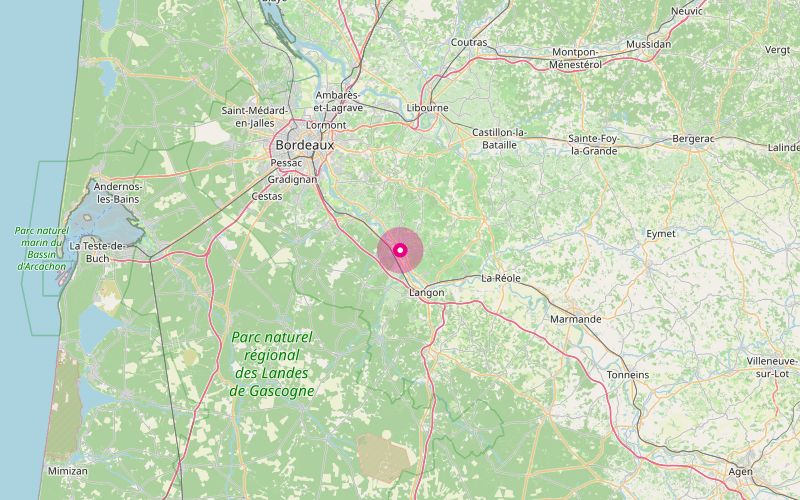
## Cadillac at a glance Cadillac is a Bordeaux AOC dedicated to sweet white wines. It lies on the right bank of the Garonne, southeast of Bordeaux, around Cadillac-sur-Garonne and neighboring communes of the Côtes de Bordeaux. The appellation was officially recognized in the 20th century and belongs to the family of great sweet whites from the Garonne valley, alongside Loupiac, Sainte-Croix-du-Mont and, further upstream, Sauternes and Barsac. Production remains modest by Bordeaux standards, with a limited vineyard area, making it a discreet yet steady source of classic sweet wines.
## Terroir and geology The Cadillac vineyard is planted on slopes and terraces overlooking the Garonne. This topographical position matters as much as the nature of the soils, as it promotes airflow through the parcels while providing exposures favorable to the slow ripening of white grapes. The vineyard landscape alternates between slopes, breaks in relief, and gentler sectors, with a patchwork of plots typical of the southern Entre-deux-Mers.
The soils most often combine clay, limestone, and gravelly or silty formations depending on the area. The clays provide valuable water reserves during the summer, while the limestone contributes to the acidity retention of the musts and a certain straightness on the palate. Gravel and sandy materials, when present, speed up drainage and encourage earlier ripening, useful for obtaining concentrated berries without losing all tension.
In a sweet wine appellation, terroir does not act only on yield or vine vigor. It also determines the finesse of noble rot, the speed at which the berries shrivel, and the ability to organize successive selective passes through the vineyard. The best sectors are those that allow Botrytis cinerea to establish itself cleanly, without tipping into grey rot or acetic spoilage.
The right bank of the Garonne offers here a pattern well known in southern Bordeaux. Morning mists rising from the river bring the humidity needed for botrytis to develop, while drier afternoons limit sanitary problems. This back-and-forth between dampness and ventilation explains Cadillac’s classic profile: sweet wines built on natural concentration rather than simple overripeness.
## Climate Cadillac falls under a temperate oceanic climate, marked by relatively mild winters, sometimes damp springs, and summers generally moderated by Atlantic influence. In this setting, the success of sweet wines depends less on extreme heat than on a fine late season. September and October play a decisive role, as this is when the balance between concentration, grape health, and freshness is established.
The proximity of the Garonne brings a decisive microclimatic factor. Autumn morning mists encourage noble botrytis to settle on the berries, primarily sémillon, after which daytime sunshine allows the water contained in the grapes to evaporate. This succession of humidity and relative dryness concentrates sugars, acids, and aromatic precursors.
The most complete vintages are often those in which late-summer rainfall remained moderate and autumn was long enough to allow repeated passes through the vines. Conversely, uniformly damp weather can compromise the purity of the selections, while overly rapid dryness can sometimes hinder the noble expression of botrytis. Viticulture in Cadillac therefore requires very close observation of each parcel and a high degree of labor availability at harvest time.
## Grape varieties The plantings of Cadillac follow the classic base of Bordeaux sweet whites. Sémillon generally plays the leading role thanks to its thin skin, its favorable susceptibility to noble rot, and its ability to provide volume, wax, honey, and an enveloping texture. It forms the backbone of most serious cuvées in the appellation.
Sauvignon blanc contributes liveliness, aromatic brightness, and fruit definition. Even in wines rich in residual sugar, it helps preserve a clearer reading of the palate and avoid any impression of heaviness. Sauvignon gris, more confidential, can bring additional flesh and a broader aromatic nuance.
Muscadelle sometimes completes the blend in small proportions. When well handled, it adds floral notes, fresh grape character, and at times a slightly spicy register. As is often the case in Bordeaux, its role is more that of a seasoning than a structural grape variety.
The appellation regulations govern grape ripeness and the expected level of residual sugar in the wines. Cadillac belongs to the liquoreux category, which implies highly concentrated musts and a harvest often carried out in successive selective passes. The logic is not that of a simple medium-sweet white, but of a wine made from overripe grapes, most often affected by botrytis, with enough richness to leave significant residual sugar after fermentation.
## Wine styles Cadillac produces exclusively sweet white wines. Their color evolves from a deep yellow in youth to gold and then light amber with age. The nose frequently combines apricot, candied peach, honey, orange peel, acacia blossom, quince, and, in the most successful botrytised versions, notes of saffron, wax, and dried fruit.
On the palate, the sought-after style rests on the balance between richness and length. A successful Cadillac is not merely a sweet wine; it must retain enough acidity to carry the liqueur, define the finish, and support drinkability. The texture may be unctuous, but the best expression remains that of structured sweetness, with a clean finish rather than indistinct volume.
Maturation practices vary from estate to estate. Some producers favor tank to preserve the clarity of the fruit and the legibility of the botrytis, while others use oak, often with restraint, to add dimension and round out the texture. Oak ageing can bring nuances of vanilla, brioche, or sweet spices, but it only makes sense if it respects the precision of the wine.
Cadillac does not enjoy the market renown of Sauternes, but the appellation often offers a more direct and accessible reading of Bordeaux sweet wine. In its youth, the wine can charm with its candied fruit and suppleness. With a few years in bottle, it gains complexity, develops notes of dark honey, wax, marmalade, and dried fruit, and can hold for a decade or more in the best cuvées.
Vintage profile must also be considered. Botrytised years produce deeper, spicier, and more persistent wines. Years marked more simply by overripeness often yield Cadillacs that are more floral, fruitier, and slightly less complex, but sometimes easier to approach in their early years.
## Producers to watch - Château du Payre: a consistently reliable reference from the Cadillac area, appreciated for precise, classical sweet wines well supported by freshness. - Château Ricaud: an estate known for its careful work in the southern Entre-deux-Mers, with sweet whites that combine ripeness and definition. - Château de Myrat: chiefly associated with Barsac, but useful to follow for understanding the style of Gironde sweet wines built on botrytis and measured élevage. - Château La Rame: a recognized estate in Sainte-Croix-du-Mont, a relevant neighbor for situating Cadillac within the geography of Garonne sweet wines. - Château Loupiac-Gaudiet: an emblematic producer of the neighboring appellation of Loupiac, useful as a stylistic benchmark for lovers of classic Bordeaux sweetness.
## Food and wine pairings Cadillac calls for pairings that respect its liqueur without overwhelming its freshness. The best matches play either on salty contrast, aromatic resonance, or textural harmony. It benefits from being served lightly chilled rather than ice-cold, so that the botrytis and the complexity of the fruit can fully express themselves.
- Semi-cooked foie gras and toasted bread, for a classic pairing in which the richness of the dish answers the wine’s unctuousness.
- Roquefort or Bleu des Causses, because the salt and fat of the cheese revive the finish and lighten the perception of sweetness.
- Poultry with cream and morels, when the wine has enough acidity to support a generous dish.
- Poultry tagine with apricots and almonds, with a fine echo of the wine’s candied fruit and sweet spice notes.
- Pear, almond, or quince tart, provided the dessert remains moderately sweet so as not to dominate the wine.
- Lightly spicy Asian cuisine, especially based on lacquered pork or shrimp, to play on the contrast between sweetness and spice.
## FAQ ### Is Cadillac a liquoreux wine or a moelleux wine? Cadillac belongs to the family of Bordeaux liquoreux white wines. This implies a high level of concentration and, in practice, overripe grapes often affected by noble rot.
### Where exactly is the Cadillac appellation located? The appellation is located on the right bank of the Garonne, southeast of Bordeaux. It is organized around Cadillac-sur-Garonne and neighboring communes in the Côtes de Bordeaux area.
### Which grape varieties go into the blend? Sémillon generally forms the base of the wines, complemented by sauvignon blanc. Sauvignon gris and muscadelle may also take part in the blend depending on the estate’s practices.
### Can Cadillac age for a long time? Yes, the best bottles evolve favorably over many years. With time, they develop notes of honey, wax, dried fruit, and marmalade, while retaining a more integrated liqueur.
### What is the difference between Cadillac and Sauternes? Both appellations produce sweet white wines based on natural concentration and often on botrytis. Sauternes benefits from historic renown and a stronger cru hierarchy, while Cadillac often offers a more discreet and affordable path into the Bordeaux sweet wine style.
### Should you decant a Cadillac? In general, this is not necessary for young wines, which open well in the glass if served at the right temperature. A light aeration may nonetheless be useful for an evolved bottle or an oak-aged style, in order to release tertiary aromas.