Cabernet de Saumur, the Loire white with a paradoxical name
Behind a misleading name, Cabernet de Saumur refers to a still white Chenin from the limestone slopes of Saumur. A discreet, precise appellation that is deeply rooted in the Loire.
geoVINUM · 2026-06-12
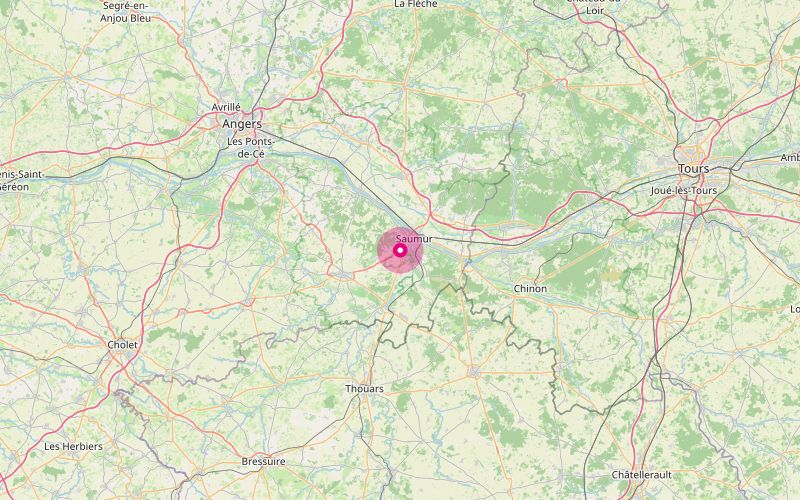
## Cabernet de Saumur in brief Cabernet de Saumur is a controlled designation of origin from the Loire Valley, produced around Saumur, on the border between Anjou and Touraine, mainly in Maine-et-Loire and marginally in neighboring departments within the Saumur area. Despite its name, it does not designate a cabernet wine, but a still white wine made from Chenin B, chenin blanc. The appellation was recognized in the mid-20th century as part of the organization of the Saumur appellations, then incorporated into the current body of French PDOs. It remains a confidential production on the Loire scale, far smaller in volume than Saumur sparkling wines and the reds of Saumur-Champigny.
The name regularly causes confusion. In historical local usage, “cabernet” here did not refer to a grape variety, but to a category of still wines from Saumur, as opposed to sparkling wines, which long structured the vineyard’s economy. This lexical survival was preserved by appellation law. It explains how a wine lover may read “Cabernet de Saumur” on the label of a white chenin wine without this constituting an ampelographic anomaly.
## Terroir and geology The vineyard belongs to the geological landscape characteristic of the Saumur region, dominated by the soft limestones of the Turonian, commonly called tuffeau. This pale, porous, friable rock has shaped local architecture as much as viticulture, and it plays a central role in the water behavior of the soils. It slowly releases water, encourages deep rooting, and contributes to the steady ripening of chenin. On these limestone foundations are layered surface variations, with clays, silts, and locally sands that modulate vine vigor and aromatic expression.
The relief is nothing spectacular, but it matters. The vines occupy gentle slopes, plateau edges, and well-exposed hillsides overlooking the Loire, the Thouet, or their tributaries. These situations allow good air drainage and partly limit the risk of frost in the valley bottoms, even if chenin remains sensitive to spring hazards. In the best sectors, the combination of active limestone, measured drainage, and bright exposure gives whites that are both firm in structure and nuanced in aroma.
Tuffeau does not impart a chalky taste in the literal sense, but it encourages a style. The wines often gain tension, length, and a sensation of freshness, with a texture less broad than in some more southerly Loire chenins. This limestone base suits a dry, gastronomic reading of the variety well. It also explains the wines’ ability to evolve toward notes of wax, quince, dried flowers, and sometimes rubbed stone.
## Climate The climate of Cabernet de Saumur is Loire in character, halfway between oceanic influence and more continental nuances. The proximity of the Atlantic generally tempers extremes, but the gradual move inland increases thermal amplitude and makes vintages more contrasted than farther down the Loire. Winters remain moderate, summers can be warm without being systematically scorching, and autumn plays a decisive role in the ripeness of chenin. The length of the growing season directly determines the balance between acidity, sugar richness, and aromatic development.
Saumur is also relatively sheltered compared with other Loire areas. The sector often receives less rainfall than western Anjou, which reduces part of the fungal disease pressure and helps preserve the sanitary condition of the grapes. This relative dryness does not eliminate the risks of mildew or botrytis, but it often allows for calmer harvests. For chenin, a late-ripening and demanding variety, this climatic window is a major asset.
Annual variations nevertheless remain decisive. In cool years, the wines are stricter, with profiles of citrus, apple, and white flowers, and a taut palate. In sunnier years, the fruit gains flesh, moving toward pear, quince, or yellow fruits, without the acidity disappearing if picking dates are well judged. This sensitivity to vintage is part of the appellation’s appeal, as it does not seek to erase differences between years.
## Grape varieties The appellation grape variety is Chenin B. It forms the exclusive identity of Cabernet de Saumur, clearly setting this PDO apart from many other Loire denominations where blending remains possible. Chenin finds particularly favorable ground here thanks to its ability to combine high acidity, aromatic finesse, and expression of limestone soils. It is a variety that can produce simple wines if picked too early or overcropped, but becomes highly convincing when it ripens slowly under controlled yields.
The specifications follow the logic of the Saumur appellations: minimum planting density, vine-training rules, and yield limits are intended to guarantee sufficiently concentrated raw material. The goal is not power, but precision. Chenin naturally carries acidity; the grower’s task is therefore to seek the right physiological ripeness without losing the wine’s backbone. In this area, that tension remains one of the main markers of quality.
The idea that the name requires the presence of cabernet franc or cabernet sauvignon is mistaken. None of these black grape varieties enters into the composition of the wine. The confusion is common among international consumers, especially since the word “cabernet” is universally associated with a family of red grapes. In the case of Cabernet de Saumur, administrative and commercial history prevails over ampelographic etymology.
## Wine styles Cabernet de Saumur produces dry still white wines. Their classic profile combines a pale color, aromas of apple, pear, discreet quince, white flowers, and sometimes fennel, with a straight, fresh palate often marked by a saline or chalky finish. The style is neither exuberant nor demonstrative. It favors clarity, energy, and suitability at the table.
Depending on site, vintage, and cellar choices, the wines may develop in two directions. The most direct versions seek fruit brightness and straightforwardness, with aging on fine lees in tank to preserve tension. Other cuvées, from old vines or more limestone-rich parcels, accept longer élevage, sometimes in wooden vessels that have held several wines, without any search for an oaky aromatic imprint. The use of wood, when it exists, is aimed more at the wine’s breathing and added texture than at aromatization.
In youth, these wines pair well with fish cuisine, vegetables, and goat cheeses. After a few years, they can gain complexity, with notes of light honey, wax, dried fruits, and dried herbs, while retaining a firm acidic framework. Aging potential varies according to the raw material and élevage, but the best examples generally hold for several years. This is not an appellation of technical showmanship; its success rests above all on the balance between ripeness, freshness, and readable terroir expression.
## Producers to watch - Château de Villeneuve: a benchmark in the Saumur region, particularly strong on precise, straight chenin whites built for aging. - Domaine Guiberteau: a major estate of the Saumur appellation area, recognized for chiseled chenins and a demanding reading of limestone terroirs. - Domaine Arnaud Lambert: rigorous parcel-by-parcel work, a taut and clean style, with very readable expression of the soils of Brézé and Saint-Cyr-en-Bourg. - Clos Rougeard: an emblematic house best known for its reds, but whose whites have long counted in the hierarchy of the Saumur region. - Château Yvonne: serious and consistent production, attentive to chenin ripeness and the balance between flesh and freshness. - Domaine des Roches Neuves: an important figure in the Saumur vineyard, with precise chenin whites that are often energetic and highly gastronomic.
## Food and wine pairings Cabernet de Saumur calls for clean-lined cuisine rather than heavily seasoned cooking. Its acidity, discreet substance, and often saline finish make it a good partner for delicate textures and preparations where freshness matters as much as flavor. It excels less with sheer richness than with pairings built on relief and definition.
- Zander or pike with a light beurre blanc: the wine’s acidity responds to the sauce without weighing down the whole.
- Warm oysters or just-seared scallops: the wine’s limestone character pairs well with iodine notes and the softness of the flesh.
- Chicken with cream and mushrooms: with a somewhat evolved vintage, chenin gains a breadth that supports the dish’s texture.
- White asparagus, mousseline sauce, or warm vinaigrette: the wine’s tension helps handle a vegetable that is often difficult to pair.
- Loire goat cheeses, especially Sainte-Maure-de-Touraine or aged crottin: a classic regional pairing, built on freshness and texture.
- Fish rillettes or herb vegetable terrine: a dry white from Saumur enhances cold, lightly saline preparations.
## FAQ ### Is Cabernet de Saumur a red cabernet wine? No. Despite its name, the appellation designates a still white wine made from chenin blanc. The word “cabernet” here reflects a local historical legacy rather than an indication of grape variety.
### What is the difference from Saumur blanc? Both appellations concern chenin whites from the same broader Saumur area. Cabernet de Saumur corresponds to a specific and more discreet denomination inherited from the history of local classifications, whereas Saumur blanc is now far more visible on the market.
### Is the wine always dry? Yes, the appellation is intended for dry still whites. Depending on producers and vintages, the perception may range from great straightness to a more enveloping feel, but the style remains that of a dry gastronomic white.
### Can it be cellared? Simple cuvées are often best appreciated in their youth for their clarity of fruit. The best wines, especially those from well-situated limestone terroirs and raised with care, can evolve favorably for several years.
### Why is the appellation little known? Because it remains confidential compared with more established names such as Saumur, Saumur-Champigny, or Saumur’s fine bubbles. Its low profile says nothing about its potential quality; it is due above all to the commercial history of the vineyard and to limited volumes.