Cabernet d’Anjou, the benchmark off-dry rosé from the Loire
An emblematic off-dry rosé from Anjou, Cabernet d’Anjou is built on the Cabernet grapes and on a precise style, shaped by Loire freshness and carefully managed balance.
geoVINUM · 2026-11-03
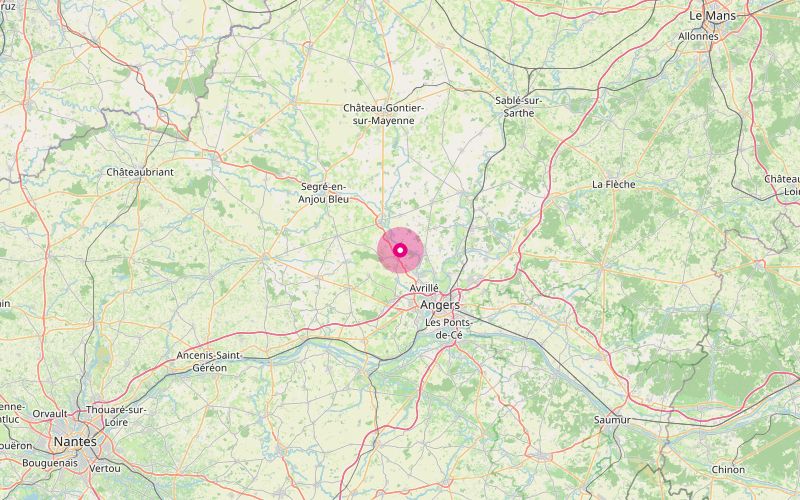
## Cabernet d'Anjou at a glance Cabernet d’Anjou is a controlled designation of origin from the Loire Valley, produced in the Anjou vineyard area, mainly around Angers and Saumur, in the departments of Maine-et-Loire, Deux-Sèvres, and Vienne. The appellation has been recognized since 1950 and is now protected at the European level as a PDO. It applies exclusively to still rosé wines, made in a tender to off-dry style from the Cabernet franc and Cabernet-Sauvignon grape varieties. It is one of the most widely distributed rosés in the Loire Valley, with significant production on a regional scale, although no single stable figure can be given without reference to a specific vintage.
## Terroir and geology The Cabernet d’Anjou area lies within the broader Anjou wine region, across a patchwork of slopes, plateaus, and valleys along the Loire and several of its tributaries. This open geography explains the diversity of exposures and elevations, and therefore the varying ripening patterns from one sector to another. The parcels selected for the appellation are generally planted on soils offering good drainage and moderate water supply, favorable to the steady ripening of the Cabernets.
The geology of Anjou is divided into two major groups. To the west lies Anjou noir, formed of schist, spilite, sandstone, and rocks from the Armorican Massif, often giving shallow soils that react quickly to climatic conditions and favor vivid expressions. To the east stretches Anjou blanc, under sedimentary influence, with limestone, chalk, and sandy-clay formations from the Paris Basin, generally bringing more suppleness and consistency.
In the case of Cabernet d’Anjou, this mosaic does not lead to as parcel-specific a reading as with certain terroir-driven whites, but it does weigh on the wine’s final balance. Schist soils often favor rapid phenolic ripeness and more nervy profiles, while deeper or more clay-rich ground supports fuller ripeness and a broader fruit expression. This geological diversity explains how an appellation style can remain coherent while still allowing for perceptible nuances from one sector to another.
## Climate The climate is temperate oceanic, under the general influence of the Atlantic, though with more noticeable continental modulation as one moves inland. Winters remain relatively mild and summers are rarely extreme, which favors fairly regular growing cycles. The Loire and its tributaries act as thermal buffers and help ventilate the vineyard.
Anjou benefits from moderate rainfall by Loire standards, especially in certain sheltered zones. This relative dryness partly limits fungal disease pressure and makes it possible to harvest the Cabernets in good sanitary condition. For a gently sweet rosé appellation, this stability matters greatly, because the aim is not only aromatic freshness but also grapes able to reach sufficient ripeness without losing their acidity.
The style of Cabernet d’Anjou depends precisely on this point of balance. If the climate is too cool, the Cabernets retain vegetal notes and marked acidity that are poorly suited to the tender style; if it is too warm, tension drops and the wine can lose definition. The best vintages combine good skin ripeness, expressive juice, and still-clear acidity, making it possible to preserve the varietal readability of Cabernet while achieving the desired softness.
## Grape varieties The appellation is based on two main grape varieties: Cabernet franc and Cabernet-Sauvignon. The former has historically held a major place in the Loire vineyard and brings the wine its red-fruit framework, freshness, and fine tannic profile. The latter, later-ripening and often more structuring, can reinforce color, palate density, and certain blackcurrant or dark-fruit nuances.
The specifications allow these two varieties without imposing, in common practice, a communication hierarchy between them on the appellation label. In practice, many producers favor a substantial Cabernet franc base, more naturally aligned with Loire balances, then adjust with Cabernet-Sauvignon depending on the vintage and the profile sought. The blend aims less at power than at harmony between fruit, tension, and sweetness.
Cabernet d’Anjou is not a rosé built on secondary grape varieties. It does not call on Grolleau, despite its importance in other Anjou rosés, nor on Pineau d’Aunis, nor on Gamay within its core regulatory identity. This ampelographic precision clearly distinguishes the appellation within the Loire rosé family.
## Wine styles Cabernet d’Anjou is a still, non-sparkling rosé whose signature rests on perceptible sweetness. It belongs to the family of tender to off-dry rosés, with residual sugars clearly present, balanced by Loire acidity generally sufficient to avoid any heaviness. This stylistic point is essential: it is neither a dry gastronomic rosé in the Provençal sense nor a sweet wine, but an intermediate register historically rooted in Anjou practice.
Color ranges from salmon pink to deeper pink, sometimes with coral highlights. Aromas frequently suggest strawberry, raspberry, redcurrant, and pomegranate, and, depending on the blends and vintages, nuances of blackcurrant, boiled candy, or rose. On the palate, it combines a supple attack, immediate fruit at the core, and a finish driven by freshness that keeps the sugar from taking over.
From a technical standpoint, the appellation is produced mainly through direct pressing or short skin maceration rather than through pronounced extraction. It is therefore important to correct the idea that Cabernet d’Anjou is defined by notable tannic architecture: phenolic presence remains moderate, because the objective is aromatic clarity and balance, not structure. The color may be sustained, but that does not mean the wine is built like a powerful saignée rosé.
Aging is generally carried out in tank in order to preserve fruit precision and varietal clarity. Wood remains marginal in the appellation and does not correspond to its most typical expression. Marketing is most often early, but the notion of "primeur" is not a defining part of Cabernet d’Anjou’s identity as it may be in other categories of young wines; what matters most is bringing a fruit-driven rosé to market.
Aging potential is generally limited. Most bottles give their best expression within two to three years of harvest, when the fruit remains bright and the balance between sweetness and acidity is most clearly expressed. Some particularly carefully made cuvées can last a bit longer, but the appellation is not intended for extended aging.
## Producers to watch - Château de Fesles: a historic Anjou estate, consistent with tender rosés and attentive to precision of balance. - Domaine des Deux Vallées: a house recognized for its Loire work and its ability to produce clean, approachable, technically well-executed rosés. - Château de Parnay: an estate in the Saumur sphere, often relevant for expressions of Cabernet franc and Loire wines with a precise profile. - Ackerman: a major Loire Valley player, best known for fine bubbles, but also present in Anjou with broad distribution. - Bouvet Ladubay: another important Loire name, whose understanding of Cabernet grapes and Loire balances deserves attention depending on the cuvées and vintages. - Loire Propriétés / Marquis de Goulaine: an influential cooperative trading structure for understanding the appellation’s classic style and commercial reach.
## Food and wine pairings Cabernet d’Anjou pairs first and foremost with cuisines in which the wine’s slight sweetness answers a salty, mildly spiced, or tangy component in the dish. It works better at the table than is often said, provided overly bitter or strongly tannic preparations are avoided. Its serving temperature should remain cool, around that of a tasting rosé, without excessive chill so as not to harden the acidity.
- Pork or poultry rillettes, served with country bread and gherkins.
- Ham on the bone, fine charcuterie slices, or mildly seasoned pâté en croûte.
- Lightly spiced Asian cuisine, such as spring rolls, lacquered pork moderate in sugar, or mildly spiced pad thai.
- Strawberry, tomato, and basil salad, when the dish plays on sweet-savory contrasts without excess.
- Summer vegetable tart, especially with sweet pepper, zucchini, and fresh goat cheese.
- Lightly sweetened red-fruit desserts, especially strawberry soup or a thin raspberry tart.
## FAQ ### Is Cabernet d’Anjou a dry rosé? No. Cabernet d’Anjou belongs to the category of tender to off-dry rosés, with perceptible sweetness. Its balance rests on the combination of residual sugar, immediate fruitiness, and fresh acidity.
### What is the difference between Cabernet d’Anjou and Rosé d’Anjou? The essential difference lies in the grape varieties and the regulatory style. Cabernet d’Anjou is based on Cabernet franc and Cabernet-Sauvignon, whereas Rosé d’Anjou may draw on a broader varietal range and often develops a simpler, softer profile.
### Is Cabernet d’Anjou made by saignée? That is not the appellation’s dominant definition. Most wines are obtained by direct pressing or short maceration in order to preserve clean fruit and a light structure. The style sought is not that of a heavily extracted rosé.
### Can a bottle be kept for several years? Yes, but within modest limits. Most Cabernet d’Anjou wines are best drunk young, ideally within two to three years, when fruit and freshness remain in the foreground.
### On what occasion should it be served? Cabernet d’Anjou works very well as an aperitif, but it shows greater interest with simple cuisine featuring slight contrasts. It pairs particularly well with fine charcuterie, certain gently spiced dishes, and preparations that play on salty-sweet combinations.