Brulhois, hillside reds between Agenais and Gascogne
A discreet appellation of the South-West, Brulhois mainly produces structured reds and dry rosés. Its identity rests on clay-limestone hillsides, Abouriou, and precise blends.
geoVINUM · 2026-06-12
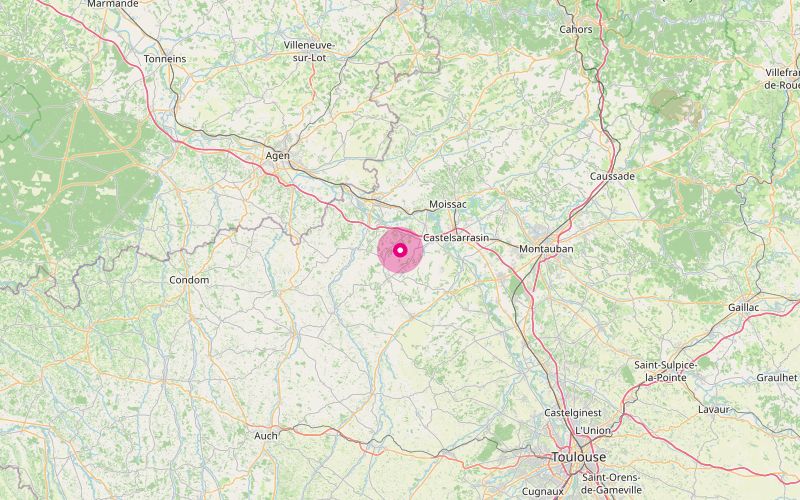
## Brulhois at a glance Brulhois is a South-West appellation located on both sides of the Garonne, at the junction of Lot-et-Garonne and Tarn-et-Garonne, between Agen and Valence-d’Agen. The name refers to an old hillside vineyard often associated with the “terre de feu” (“land of fire”), an expression that evokes both the color of certain soils and the heat of this exposed landscape. The appellation was recognized as an AOP in 2011, after a long journey under other frameworks of recognition.
Brulhois produces red and rosé wines; there is no white in the appellation’s specifications. Production remains modest on the French scale, which explains lower commercial visibility than Cahors, Madiran, or Fronton. This discretion should not obscure a clear identity, built on structured wines, the use of Atlantic grape varieties, and the distinctive role of Abouriou.
The vineyard lies within a transition zone between Bordeaux, Gascon, and more broadly South-Western influences. This position explains a culture of blending rather than a single-variety reading of the wines. It also explains profiles that combine black fruit, substance, relative freshness, and assertive tannins.
## Terroir and geology Brulhois stretches across hillsides and terraces overlooking the Garonne valley and some of its tributaries. The relief is not dramatic, but it is enough to create varied exposures, air flows beneficial to vine health, and different water behaviors depending on the parcel. In a modest-sized vineyard, these site nuances matter greatly in the hierarchy of cuvées.
The soils most often combine clay, limestone, boulbènes, and gravelly or silty-clay formations depending on the area. This geological mosaic encourages different expressions: more flesh and restraint on clay, more tension and texture on limestone, earlier ripening on certain freer-draining terraces. Soil diversity makes blending especially relevant, as it allows growers to correct the excesses of a vintage or a site.
The traditional expression “terre de feu” is often highlighted when Brulhois is discussed. It should not be read as a slogan but as the sign of a long-standing relationship between the color of the land, summer heat, and grape ripeness. In practice, this identity translates into reds with a sunny register that nonetheless retain, in the best sectors, enough tannic backbone and hold to avoid heaviness.
The vineyard was once more extensive than it is today. Successive restructurings, competition from other regions, and the area’s lower profile have reduced its commercial presence without erasing its agronomic coherence. This contraction has also led some producers to focus on more rigorous selections of parcels and rootstocks.
## Climate The climate of Brulhois falls under a degraded oceanic influence, with a more marked continental sensitivity than in Bordeaux. Winters generally remain moderate, springs can be irregular, and summers are hot, with sometimes prolonged dry spells. This combination favors the phenolic ripeness of red varieties while also exposing the vine to water stress depending on soil type.
The Garonne valley acts as a climatic corridor, bringing both air circulation and useful thermal contrasts. Slightly cooler nights on certain hillsides help preserve a measure of balance in hot vintages. Conversely, valley bottoms or more fertile sectors can push the vine toward excessive yields if vineyard management is not controlled.
The classic South-West risks are very much present: spring frost, fungal pressure during wet periods, localized hail, and summer water stress. Harvest timing is therefore crucial, particularly for Tannat and Abouriou, which can quickly change register depending on the picking window. The best producers seek less over-ripeness than precision in tannin texture and stability of balance.
## Grape varieties The grape mix of Brulhois clearly belongs to the family of South-West red wines, with bridges toward Bordeaux. The main varieties are Cabernet Franc, Cabernet Sauvignon, Cot, Merlot, and Tannat. Abouriou, a historic grape of Lot-et-Garonne, serves as a local signature even if it is not alone in carrying the appellation’s identity.
Among the accessory or complementary varieties, Fer Servadou is notably found. Depending on the estate and the parcels, it can play a supporting aromatic and tannic role, with a spicier and sometimes more incisive register. Blending thus makes it possible to combine flesh, color, structure, and freshness without locking the appellation into a single formula.
Abouriou deserves specific comment. Deeply present in local wine history, it often brings color, early ripening, dark fruit, and a sense of volume that can be useful in cooler years. Poorly handled, it can also give massive or somewhat rustic wines; well managed, it contributes to the singularity of Brulhois by avoiding a simple imitation of the Bordeaux model.
The reds are generally blends, and this practice is less a regulatory constraint than a stylistic necessity. Merlot brings roundness and mid-palate, the Cabernets structure the aromatic profile and backbone, Tannat reinforces staying power, while Cot and Abouriou deepen color and substance. For rosés, the same grape families yield dry wines that are more vinous than demonstratively aromatic.
## Wine styles Brulhois is first and foremost a red-wine vineyard. The wines generally show a deep color, a nose oriented toward black fruits, plum, spices, and sometimes a licorice or smoky nuance depending on élevage. On the palate, the tannic structure is clear, with a style that can be more earthy than polished in youth for certain cuvées.
Entry-level versions favor direct fruit, measured extraction, and rather short élevage, often in tank, in order to preserve accessibility. They pair well with food thanks to their present but not excessive substance. More ambitious cuvées rely on parcel selection, tighter yield control, and longer élevage, sometimes in large casks or barrels.
Wood aging is not a stylistic obligation, and it succeeds above all when it supports the framework without disguising the wine. Brulhois does not respond well to overly pronounced vanilla signatures, because its interest lies more in the frankness of black fruit, controlled rusticity, and depth on the palate. The best examples show that discreet wood can refine the tannins without erasing the personality of the local grape varieties.
Rosés occupy a smaller but serious place. These are dry wines, often fairly deep in color for the category, aiming less for airy lightness than for gastronomic usefulness. They work well with charcuterie, grilled foods, and outdoor cooking, with a register of red fruits, citrus, and sometimes mild spices.
Aging potential mainly concerns the more structured reds. Simple cuvées drink well within three to five years, while the fruit remains in the foreground. The best bottles, especially when they include Tannat, Cot, or Abouriou from good hillsides, can evolve longer toward notes of undergrowth, fine leather, and discreet prune.
## Producers to watch - Cave du Brulhois: a central player in the appellation, it plays a decisive role in the vineyard’s visibility and offers a range that allows several expressions of the terroir to be understood. - Domaine de Lapeyrouse: an estate regularly cited among the local benchmarks, with an approach that seeks balance between fruit, structure, and readable terroir expression. - Domaine du Pech: a useful address for understanding the hillside dimension of Brulhois and its ability to produce serious, consistent table reds. - Domaine de Chiroulet Brulhois: to be distinguished from the Gers properties of the same name, this type of estate illustrates the local anchoring of small-scale viticulture attentive to blending. - Independent winegrowers of the Brulhois area: several small holdings contribute to the appellation’s diversity with confidential cuvées, often more expressive at the table than in isolated tasting.
## Food and wine pairings Brulhois red works very well with grilled duck breast. The wine’s density answers the richness of the meat, while notes of black fruit and spice extend the flavors of cooking over fire.
A South-West cassoulet suits the more structured cuvées. The wine’s tannic presence finds a counterpoint in the texture of the beans and the richness of the confit meats.
With an entrecôte bordelaise or a rib of beef, a red raised with restraint comes fully into its own. Brulhois then brings more useful rusticity than sophistication, which serves the straightforward character of the meat.
Brulhois rosé pairs well with a plate of Gascon charcuterie. Its dry, vinous character cuts through the fat and retains enough substance not to disappear against the salt and spices.
With herb-marinated lamb skewers or grilled vegetables, young reds deliver very good results. Their straightforward fruit and simple but solid structure suit cooking over embers.
Finally, an aged sheep’s milk cheese makes a reliable match. The cheese’s texture softens the tannins and brings out the spicy dimension of the blend.
## FAQ ### Where exactly is the Brulhois appellation located? Brulhois is located in the South-West, around the Garonne valley, mainly between Lot-et-Garonne and Tarn-et-Garonne. The vineyard lies in a transition zone between Agenais and wine-growing Gascogne.
### Does Brulhois produce only red wine? No, the appellation produces red and rosé wines. Reds clearly dominate the local identity and reputation, while rosés exist in a dry, gastronomic style.
### What is the most typical grape variety of Brulhois? Abouriou is often considered the vineyard’s most distinctive marker. It is not always the majority grape in blends, but it recalls the appellation’s roots in Lot-et-Garonne.
### What style of wine can be expected from a Brulhois red? You can expect a deeply colored, structured wine generally centered on black fruit, spice, and a present tannic substance. Depending on the estate and the vintage, the style ranges from a straightforward mealtime red to a denser ageworthy cuvée.
### What dishes should Brulhois be served with? Brulhois is particularly at ease with grilled meats, duck, slow-cooked dishes, and certain South-West charcuteries. The rosés suit summer meals and grilled foods, while the reds call for more earthy cuisine.