Bouzeron, Aligoté in Its Own Right in Burgundy
The only village appellation in Burgundy devoted entirely to Aligoté, Bouzeron shows what this grape variety can achieve on well-situated limestone slopes.
geoVINUM · 2026-06-12
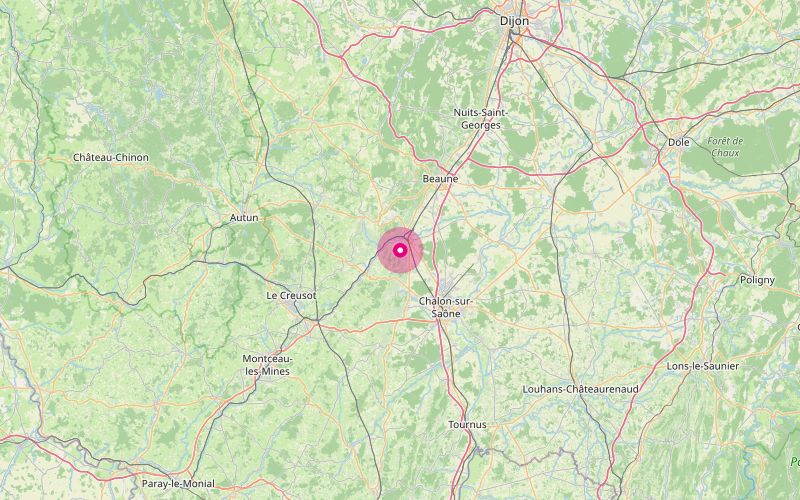
## Bouzeron at a Glance Bouzeron is a communal appellation in the Côte Chalonnaise, south of the Côte de Beaune, in the commune of Bouzeron and partly in the neighboring commune of Chassey-le-Camp, in Saône-et-Loire. The Bouzeron appellation d’origine contrôlée was officially recognized in 1997, after long existing under the name Bourgogne Aligoté de Bouzeron. It produces only dry white wines, made exclusively from Aligoté in its highest-quality selection, Aligoté doré. The vineyard covers just over fifty hectares, making it a small appellation by Burgundian standards.
Bouzeron occupies a distinctive place in the regional hierarchy. In Burgundy, Aligoté is most often confined to the regional appellation Bourgogne Aligoté, whereas here it rises to village appellation status. This promotion is not merely symbolic: it acknowledges the historic suitability between a grape variety and a specific site. It also enshrines a style of white wine that is lively, saline, and structured, distinct from the simpler expressions of the grape elsewhere.
Bouzeron’s identity rests on a simple yet demanding idea. The wine does not seek volume or an impression of richness, but length, precision, and poise at the table. In the best examples, the substance remains measured, the acidity ripe, and the mineral relief outweighs the varietal aromatics. This is an appellation of nuance rather than demonstration.
## Terroir and Geology The village of Bouzeron lies at the northern edge of the Côte Chalonnaise, in a landscape of slopes cut by small valleys. The vines are planted mainly on well-drained hillsides, between the lower and mid-slope sections, with varied but often cool exposures. This topography partly protects against excessive vigor and encourages measured water supply. It contributes to slow ripening, beneficial for a grape naturally high in acidity.
The geology explains much of the wines’ profile. The soils rest largely on Jurassic limestone formations, mixed with marl and stony debris. In the leanest sectors, root systems go deeper and natural yields tend to moderate. Aligoté gains density on the palate and tension here, without losing its frankness of expression.
Brown limestone soils dominate, with varying proportions of clay depending on the lieu-dit. Where clay is slightly more present, the wines gain more flesh and roundness without tipping into heaviness. In the stonier, paler zones, the expression becomes sharper, with often more saline finishes. This internal mosaic is enough to explain why interpretations of Bouzeron can differ so widely from one estate to another.
It is also worth recalling that the appellation was built on a massal and cultural selection of Aligoté. The growers most committed to the local style long favored Aligoté doré, considered better suited to phenolic ripeness and complexity than Aligoté vert. This varietal choice, combined with limestone slopes, contributes to the qualitative distinction of the area. It sheds light on the coherence of the message carried by the appellation since attaining communal status.
## Climate Bouzeron falls under Burgundy’s semi-continental climate, with cold winters, springs exposed to frost risk, and summers that can be warm without erasing the site’s freshness. The moderate altitude and the openness of the slopes create an environment that is generally well ventilated. This airflow limits part of the disease pressure and helps preserve clean acidity. It also favors healthy grapes, crucial for producing precise whites without excessive reliance on technique.
Its northern position within the Côte Chalonnaise is another important factor. Bouzeron generally ripens a little later than the southern sectors of the côte. This relative slowness suits Aligoté, which can otherwise slip toward too simple an expression when harvested from more fertile or warmer sites. Here, the challenge is not so much obtaining acidity as giving it a ripe, integrated form.
Warm vintages have noticeably changed perceptions of the appellation. In sunny years, Bouzeron gains breadth, ripe white fruit, and sometimes notes of pear or peach, while generally retaining its limestone framework. In more classical years, the profile returns to lemon, fresh apple, white flowers, and a more chiseled palate. The appeal of the appellation lies precisely in this ability to reflect the vintage without losing its axis.
The main climatic risk remains spring frost, as in much of Burgundy. Hail and episodes of intense heat can also affect yields or hasten the harvest. For a small appellation, these hazards have a significant impact on available volumes. They are a reminder that Bouzeron’s qualitative consistency also depends on precise viticultural choices, from soil work to harvest date.
## Grape Varieties Bouzeron is effectively and legally a single-variety appellation: only Aligoté is permitted for the production of the appellation’s white wines. More precisely, local tradition and the specifications have enshrined the use of Aligoté doré, the qualitative form of the grape, better suited to the level of ambition sought. It is therefore not simply a refuge for acidic grapes, but a terroir defined around specific plant material. This point is essential to understanding the reputation of the best wines from the area.
Aligoté belongs to Burgundy’s long history, but its image long suffered from high yields and plantings on less noble land. Bouzeron helped overturn that reading by showing that, on well-exposed limestone slopes and with controlled crop loads, the grape can produce wines of real depth. Its interest does not lie in exuberant aromatics, but in structure. Acidity, salinity, and texture often take precedence over fruity showmanship.
There is no complex blending rule in Bouzeron since the appellation does not rest on mixed plantings. In the cellar, stylistic latitude comes instead from choices of harvest date, pressing, settling, lees aging, and the vessel used. Some producers seek a very pure reading in tank or in large neutral vessels. Others introduce a share of barrel, most often old, to broaden the palate without marking the wine with oak.
## Wine Styles Bouzeron wines are dry whites with a generally pale color, often more bright than golden in youth. The nose is built around citrus, apple, fresh pear, white flowers, and sometimes a note of almond or struck stone. With age, nuances of light honey, fine wax, and discreet yellow fruit may emerge. The aromatic register nevertheless remains restrained: this is rarely a wine of expansion, more often a wine of line.
On the palate, the most convincing style combines a direct attack, a straight mid-palate, and a mouthwatering finish. The best version of Bouzeron is neither thin nor biting; it has enough flesh to carry the acidity. Minerality, a term often used vaguely, here refers to a concrete impression of limestone freshness and salinity on the finish. This sensation explains the wine’s suitability for the table more than for showy tasting.
Aging regimens vary by estate. Some producers favor stainless steel or neutral vats in order to preserve fruit brightness and acidic clarity. Others use old barrels, demi-muids, or foudres to work the lees, gain texture, and establish a slower evolution. New oak, when used at all, must remain discreet; with this grape, toasty aromatics quickly dominate if badly proportioned.
Bouzeron drinks very well young, on its energy and thirst-quenching character, but the best bottles often benefit from waiting a few years. Between three and eight years, they readily develop more volume, less prominent acidity, and a more complex finish. The more ambitious cuvées and great vintages can last longer, especially at estates that harvest at good ripeness and take care with lees aging. The aging potential is therefore not theoretical; it is simply more understated than demonstrative.
There are no premier cru or grand cru designations in Bouzeron. This absence should not be read as a shortcoming, but as the reflection of a small appellation whose identity was built around a collective message. Qualitative hierarchy is read above all at the level of producers, lieux-dits, and aging practices. For the enthusiast, the estate name matters here almost as much as the appellation name.
## Producers to Follow - Domaine A. et P. de Villaine: the historic benchmark estate of the appellation, decisive in the recognition of Bouzeron and in the qualitative rehabilitation of Aligoté. - Domaine Chanzy: a precise and consistent reading of the appellation, with measured aging and a profile faithful to the terroir’s tension. - Domaine de Villaine: the village’s most clearly identified signature, both for the purity of its wines and for the role it played in defining the style of modern Bouzeron. - Domaine Jacqueson: a respected producer of the Côte Chalonnaise, serious in vineyard management and useful for placing Bouzeron within the regional landscape. - Cave de Bissey: a cooperative player useful for understanding the appellation in an accessible register, without sacrificing the grape’s clarity.
## Food and Wine Pairings - Pacific oysters, simply shucked, to echo the wine’s salinity and liveliness. - Gougères or Comté puff pastries, where Bouzeron’s acidity lightens the pastry and refreshes the palate. - Trout meunière or poached pike-perch, with a restrained butter sauce, in order to preserve the grape’s finesse. - Pike quenelles with a light Nantua sauce, a classic Burgundian pairing built on tension rather than power. - Chicken with cream and mushrooms, if the wine has a few years of age and a slightly broader élevage. - Lightly aged goat cheeses or young Chaource, combining milky freshness with a limestone backbone.
## FAQ ### Is Bouzeron a Bourgogne Aligoté? Bouzeron is more than a simple Bourgogne Aligoté. It is a distinct village appellation, recognized for a specific terroir and for a particular high-quality expression of Aligoté.
### Why is Bouzeron important in Burgundy? Bouzeron is the only communal Burgundian appellation entirely dedicated to Aligoté. As such, it has played a central role in the reappraisal of a grape long considered secondary.
### What does a Bouzeron taste like? A well-made Bouzeron often suggests lemon, fresh apple, pear, white flowers, and a saline finish. The sought-after style is dry, taut, precise, and well suited to the table.
### Should Bouzeron be drunk young? Yes, Bouzeron drinks very well in its early years for its freshness and brightness. The best examples, however, gain texture and complexity after a few years in bottle.
### What dishes should Bouzeron be served with? Bouzeron is especially well suited to seafood, freshwater fish, restrained creamy preparations, and certain fresh cheeses. Its ripe acidity and saline finish make it a highly versatile table wine.