Bourgogne Passe-tout-grains, Burgundy’s Useful Blend
A regional red appellation from Burgundy, Passe-tout-grains brings together Pinot Noir and Gamay in a supple, fruity, immediately appealing style rooted in a long blending tradition.
geoVINUM · 2026-06-12
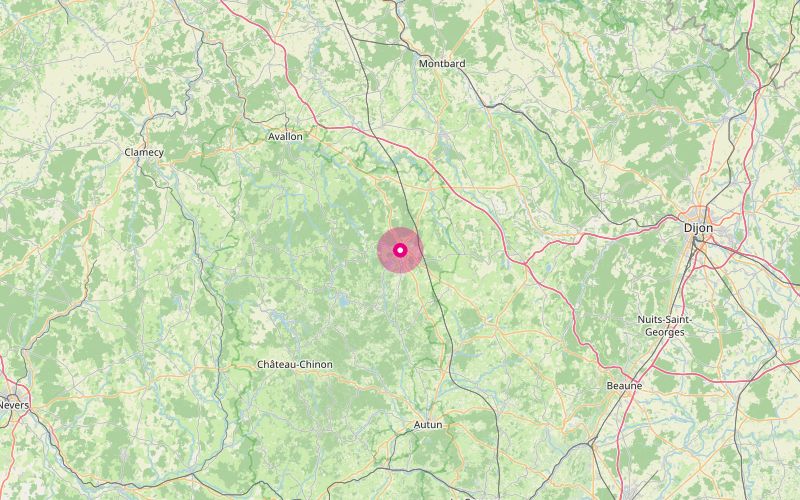
## Bourgogne Passe-tout-grains in brief Bourgogne Passe-tout-grains is a regional appellation d’origine contrôlée of Burgundy reserved for red wines. The appellation was recognized in 1937, and its production area covers a large part of the Burgundian vineyard, from Yonne to the south of Saône-et-Loire, in communes authorized for regional appellations. It is based on a blend dominated by the Pinot Noir-Gamay pairing, according to precise rules that distinguish it from other red Burgundies. Production remains scattered and uneven depending on the vintage, as the appellation depends heavily on growers’ planting choices and the importance they choose to give it.
Far from being a marginal curiosity, Passe-tout-grains belongs to the concrete history of winegrowing Burgundy. For a long time, it represented a practical response to the diversity of parcels, yields, and the needs of the local market. Its identity does not rest on a famed climat or on rarity, but on a blending logic and an old regional tradition. That foundation makes it particularly useful for understanding Burgundy beyond its most publicized crus.
## Terroir and geology The appellation does not refer to a single terroir, but to a broad, fragmented, and geologically diverse area. It may be produced in Burgundian sectors suitable for regional appellations, on soils ranging from the classic limestones and marls of the Côte d’Or to the more clay-rich or granitic formations found in southern zones where Gamay is more widely planted. This diversity explains the marked variability of profiles, from very light, crunchy wines to fuller, more structured versions. The common denominator is therefore not strict geology, but the sought-after balance between grape varieties and the aim of producing a red of fruit, suppleness, and freshness.
In limestone or marl-limestone sectors, Pinot Noir generally retains its structuring role. It brings a straighter frame, fine tannins, and a clearer definition of red fruit. On deeper, more fertile soils, or in areas historically favorable to Gamay, the expression may become more expansive, with greater suppleness and more immediate aromatics. The final style then depends less on isolated parcel origin than on the proportion of each grape variety, the harvest date, and the conduct of vinification.
This territorial dispersion long encouraged a condescending reading of the appellation. In reality, it illustrates another facet of Burgundy, founded on adaptation rather than on the strict hierarchy of lieux-dits. Passe-tout-grains is not meant to compete with a village or premier cru on the terrain of parcel precision. It offers a different model, where blending is a tool of coherence rather than a renunciation of identity.
## Climate The Burgundian climate is broadly semi-continental, with cold winters, springs exposed to frost risk, and summers whose warmth varies greatly from vintage to vintage. In this context, Passe-tout-grains often benefits from the natural complementarity between Pinot Noir and Gamay. The former may lose flesh in cool or delicate years, while the latter more easily retains a juicy, early-drinking expression. Conversely, in warm vintages, Pinot Noir helps preserve a certain firmness when Gamay tends to gain ripeness and roundness.
The relative earliness of Gamay plays an important role in the economics of the appellation. Historically, it made it possible to secure production of pleasing reds in sectors or years when Pinot Noir proved more capricious. That does not mean Passe-tout-grains is a fallback wine. When well handled, the blend instead allows for very fine adjustment of the balance between freshness, fruit, and structure.
Climate change is now altering the parameters of style. More regular ripening can produce richer, less incisive wines if harvest dates are not controlled. Attentive producers therefore seek to preserve the appellation’s traditional drinkability, avoiding overripeness, excessive extraction, and overly marked élevage. Tension remains a decisive quality criterion.
## Grape varieties The appellation is based first and foremost on two major red grape varieties of Burgundy: Pinot Noir and Gamay. The specifications require a minimum of 30% Pinot Noir, while the share of Gamay forms the main complement of the blend. This rule alone clearly distinguishes Passe-tout-grains from a simple Bourgogne rouge, which may be made differently and does not display the same varietal logic. The appellation’s identity arises precisely from this regulated coexistence between two grape varieties with different temperaments.
Pinot Noir provides the wine’s backbone. It contributes finesse to the tannic grain, shape on the palate, and an aromatic register of cherry, redcurrant, or small red berries drawn with greater delicacy. Gamay, for its part, gives lift to the fruit, straightforwardness from youth, and often a floral or spicy touch that makes the wine immediately legible. In the best cases, neither grape variety dominates to the point of erasing the other; the wine then rests on true complementarity rather than on a simple addition of qualities.
Depending on cellar practice, the grapes may be co-fermented or vinified separately before blending. Co-fermentation can reinforce aromatic integration and the wine’s fluidity. Blending after élevage, by contrast, allows for more precise adjustment of proportions according to the vintage. Both approaches exist, and neither by itself defines quality; everything depends on the producer’s stylistic intent and technical accuracy.
## Wine styles Bourgogne Passe-tout-grains is produced exclusively as red; the rosé versions mentioned in some texts do not fall under the appellation. The expected style is that of a supple, fruity wine, generally low in tannin, designed to offer pleasure young. The color is most often ruby to light garnet, with moderate intensity that reflects its positioning. This is a red of straightforwardness rather than demonstration.
On the nose, the most frequent aromas evoke fresh cherry, raspberry, redcurrant, sometimes wild strawberry, peony, or violet. Depending on the proportion of Gamay, the fermentation used, and the vintage, notes of sweet pepper, light licorice, or crunchy fruit may appear. Pinot Noir generally refines the aromatic reading and lengthens the finish. Gamay, meanwhile, often imprints the foreground of the bouquet.
On the palate, the best examples combine light to medium body, clear acidity, and discreet but present tannins. A successful Passe-tout-grains should be neither diluted nor hard, neither jammy nor excessively oaked. Élevage is most often carried out in tank or neutral vessels in order to preserve the expression of fruit. Some estates occasionally use large old casks, but new oak is generally not sought for this style.
Its primary vocation is drinking within two to five years of harvest. A few more ambitious bottles, from low yields and a high proportion of Pinot Noir, may evolve honorably for a little longer. It remains more accurate, however, to speak of short- to medium-term cellaring rather than a true long-keeping wine. Its value lies in the rightness of its expression in youth.
## Producers to watch - A. et P. de Villaine: in Bouzeron, the estate produces a precise, digestible Passe-tout-grains that is highly instructive for understanding the possible nobility of the appellation. - Domaine Marquis d’Angerville: through its activities in greater Burgundy, the house has shown that a demanding view of regional appellations can produce wines of great clarity. - Domaine Robert Chevillon: in Nuits-Saint-Georges, the estate long illustrated a serious, unadorned reading of Burgundian regional cuvées. - Domaine de la Vougeraie: its attentive approach to terroirs and élevage often gives entry-level appellations a definition above the average. - Maison Joseph Drouhin: a historic player in the region, the house regularly offers reliable, readable cuvées useful for situating the style of the appellation. - Bouchard Père & Fils: a major Burgundian name, it helps maintain the appellation’s visibility with accessible, technically polished versions.
## Food and wine pairings Passe-tout-grains calls for simple, precise cooking that is not overly marked by sweetness or wood. Its direct fruit and moderate structure make it especially versatile at the table. It works best with tender textures and preparations in which acidity, juices, or fresh herbs retain their place. A slightly cool serving temperature reinforces this gastronomic aptitude.
- Burgundian jambon persillé, whose freshness and texture respond well to the wine’s crunchy fruit.
- Roast chicken and root vegetables, for a simply right pairing that does not overwhelm the wine’s body.
- Grilled sausage or andouillette, especially if the accompaniment remains restrained and lightly spiced.
- Country terrine, where the light tannins are enough to cleanse the fat without hardening the whole.
- Trout or salmon served lukewarm with a mushroom garnish, in the spirit of a light table red.
- Mild soft cheeses, such as a brillat-savarin or a young reblochon.
## FAQ ### What does “Passe-tout-grains” mean? The name refers to an old practice of blending grapes or wines from several red grape varieties. It should not be understood as a quality designation, but as the reflection of a historic Burgundian usage that became an appellation category.
### What is the difference from a Bourgogne rouge? A Bourgogne rouge may be made mainly from Pinot Noir and does not follow the same blending definition. Passe-tout-grains, by contrast, is distinguished by the regulated association of Pinot Noir and Gamay, with at least 30% Pinot Noir.
### Does the appellation exist as a rosé? No. Bourgogne Passe-tout-grains is an exclusively red appellation. Burgundian rosés fall under other appellation categories.
### Should it be drunk young? Yes, in the vast majority of cases. Its style aims for fruit, suppleness, and immediacy, even if some serious cuvées can evolve favorably for a few years.
### What dishes should it be served with? It works very well with charcuterie, roast poultry, simple grilled foods, and bistro dishes. It is particularly relevant when one is looking for a lightly tannic, fresh red that is easy to bring to the table.
### Why is the appellation less well known? The Burgundian hierarchy naturally highlights villages, premiers crus, and grands crus. Passe-tout-grains remains in the shadows because it belongs to a regional logic and a modest positioning, even though it can offer wines that are very accurate and instructive.