Bourgogne mousseux, the other reading of Burgundy’s bubbles
Overshadowed by Crémant de Bourgogne, Bourgogne mousseux is a reminder that a sparkling appellation can also carry a clear regional signature, balancing freshness, finesse, and tradition.
geoVINUM · 2026-06-12
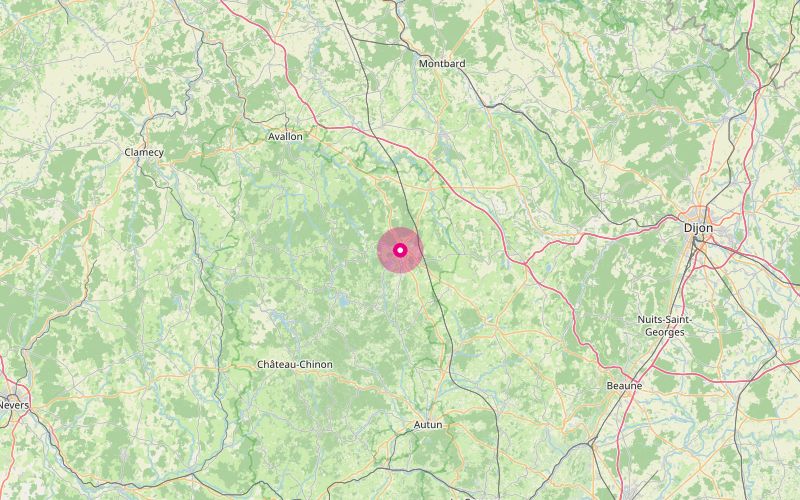
## Bourgogne mousseux in brief Bourgogne mousseux is a regional appellation for sparkling wines produced within the Burgundy area, alongside other better-known designations such as Crémant de Bourgogne. It is an appellation d’origine contrôlée embedded within the structure of Burgundy’s AOCs, with confidential production on a regional scale. The wines may be made as white or rosé, with profiles ranging from taut brut styles to more vinous expressions depending on the blend and élevage. This category remains little seen in the marketplace, but it sheds useful light on the history of Burgundy’s bubbles beyond crémant alone.
The term “Bourgogne mousseux” refers to a family of sparkling wines with pressure higher than that of merely lightly sparkling wines. In Burgundy, this tradition long coexisted with that of still wines, without ever reaching the commercial renown of the great appellations of Champagne nor, more recently, that of Crémant de Bourgogne. Its interest lies less in volume than in its heritage and technical place within the regional vineyard. It is an appellation that reminds us Burgundy mastered second fermentation in bottle well before the contemporary era of marketing-driven sparkling wine specialization.
## Terroir and geology The production area falls within the broad Burgundian winegrowing landscape, from the sectors of Yonne to the Mâconnais, with a historic presence also in Côte d’Or and Côte Chalonnaise. As is often the case in Burgundy, the appellation cannot be reduced to a single homogeneous landscape, but rather to a mosaic of sites, exposures, and substrata. This diversity explains the range of expressions observed depending on grape origin and the choices made by houses or estates. The common denominator remains a high proportion of limestone or marl-limestone soils, particularly well suited to the production of lively, structured base wines.
Jurassic formations dominate a large part of the Burgundian vineyard and provide a geological framework favorable to acid finesse and clarity in the wines. Hard limestones, marls, and marl-limestone alternations affect water retention, ripening kinetics, and the sensation of tension in the finished wines. For sparkling wines, these parameters are decisive, since they determine the ability to retain freshness while reaching sufficient ripeness. In warmer or more clay-rich areas, the wines gain breadth and fruit, while the most limestone-rich sectors favor verticality.
Bourgogne mousseux therefore does not rest on a single terroir in the sense of one precisely delimited cru. It should instead be understood as a sparkling interpretation of Burgundy’s major balances: natural acidity, precision of ripeness, and the ability of local grape varieties to convey the soil without heaviness. This geological foundation makes possible wines in which the bubble does not erase origin, especially when yields are kept in check and lees ageing is handled with care. The best results come from a balance between technical neutrality and expression of place.
## Climate Burgundy’s climate is semi-continental, with cold winters, springs exposed to frost risk, and summers that can be warm, though generally less uniform than in more southerly regions. This variability has direct consequences for the quality of sparkling wines, as it shapes acidity levels, harvest dates, and the degree of aromatic ripeness. Cool years are often well suited to sparkling bases, preserving the energy and restraint sought for the prise de mousse. Sunnier vintages require greater precision in harvest timing and final dosage.
In Burgundy, relative altitude, slope exposure, and ventilation all play an important role in preserving acidity. The earliest-ripening sectors can produce broader base wines, while later or higher sites retain a more incisive profile. For wines made by the traditional method, the challenge is to obtain a base wine that is neither thin nor excessively ripe, and that can gain complexity during lees ageing. Burgundy’s climate, when properly interpreted, makes precisely this articulation possible between initial tension and gradual texture development.
Climate change, however, is altering historical benchmarks. Earlier harvests and the steady rise in ripeness can reduce the stylistic gap between sparkling and still wine if vineyard management and picking dates are not adapted. This explains the increased attention paid to preserving acidity, parcel selection, and press management. In this context, Bourgogne mousseux benefits from asserting clear, digestible profiles that are not marked by excess richness.
## Grape varieties Chardonnay and Pinot noir form the natural backbone of Burgundy’s sparkling wines, such is their long-standing adaptation to limestone soils and the regional climate. Chardonnay generally brings length, perceived finesse of mousse, notes of citrus, white flowers, and sometimes chalk or fresh apple. Pinot noir contributes structure, mid-palate volume, and, in rosés, a more vinous expression of red fruit. Depending on grape origin and fermentation choices, the pair can produce wines that are very linear or, on the contrary, more enveloping.
Other Burgundian grape varieties may also play a role according to the appellation rules and the region’s historical practices. Aligoté retains real technical interest thanks to its naturally high acidity and citrus-driven profile, particularly useful in blends aimed at freshness. Gamay can contribute to certain rosés or more immediate wines, with a register of small berries and supple structure. In some cases, accessory varieties historically accepted in the Burgundian landscape complete the range, but contemporary qualitative logic remains clearly dominated by Chardonnay and Pinot noir.
For the reader, it is important to distinguish Burgundian ampelographic reality from certain reflexes imported from other sparkling regions. Pinot meunier is not a structuring grape variety in sparkling Burgundy as it may be farther north. The singularity of Bourgogne mousseux lies precisely in the fact that it relies first and foremost on Burgundy’s varietal identity. This fidelity to regional grape varieties strengthens the coherence between the appellation and its territorial roots.
## Wine styles Bourgogne mousseux exists mainly in white and rosé, with expressions ranging from lively, dry, slender styles to fuller-bodied cuvées, even slightly mellowed by ageing. The traditional method, with second fermentation in bottle, is the expected quality benchmark for this type of wine. Lees ageing adds dimension, refines texture, and introduces notes of light brioche, hazelnut, or bread dough when sufficiently long. Dosage, if measured, should support balance without masking the wine’s natural tension.
White wines made predominantly from Chardonnay tend toward profiles of white fruit, lemon, flowers, and chalk, with a drawn-out palate and a mouthwatering finish. Cuvées incorporating more Pinot noir gain flesh, structure, and sometimes hints of yellow fruit or red berries in the background. Rosés generally favor a register of raspberry, redcurrant, and fresh cherry, with bubbles that should remain fine rather than showy. In the best examples, the substance remains precise and avoids the twin pitfalls of rusticity and mere easy charm.
In terms of labeling, one most often encounters dosage indications such as brut, extra-brut, or, more rarely, drier or more heavily dosed versions depending on the positioning of the cuvée. Ageing potential depends greatly on the level of the base wine, the quality of lees ageing, and the proportion of grape varieties. The simplest cuvées are best enjoyed for the freshness of their fruit and mousse. The best versions, especially when built on a well-born Chardonnay base and careful ageing, can gain complexity for several years after disgorgement.
Lastly, it should be emphasized that Bourgogne mousseux does not occupy exactly the same space as Crémant de Bourgogne, which is now far more visible. The former retains a more discreet and sometimes more heterogeneous reading, linked to its history and limited commercial weight. The latter has largely structured the modern regional sparkling wine offering. For the enthusiast, this difference makes careful reading of the label—and above all the producer’s name—essential.
## Producers to follow - Louis Bouillot: a key Beaune house for understanding Burgundy’s sparkling culture, with solid work on élevage and blending. - Veuve Ambal: a major player in Burgundy bubbles, recognized for technical mastery and consistency across its cuvées. - Bailly-Lapierre: an Auxerrois benchmark for Burgundy sparkling wines, with a clear reading of regional grape varieties and lees ageing. - Caves de Lugny: a leading cooperative in the Mâconnais, useful for grasping the contribution of southern Burgundy Chardonnay to sparkling wines. - Parigot & Richard: a historic house in Savigny-lès-Beaune, appreciated for characterful cuvées and a serious approach to the traditional method. - Vitteaut-Alberti: a respected producer from Rully, offering precise wines that illustrate the finesse Burgundy bubbles can achieve.
## Food and wine pairings Bourgogne mousseux works very well as an aperitif, but it gains by being served at the table with dishes where its freshness and mousse perform a real gastronomic function. A brut blanc pairs accurately with gougères bourguignonnes, as the choux pastry and cheese are lightened by the wine’s acidity. With oysters, whelks, or simply dressed shrimp, it highlights iodine notes without overpowering them. With jambon persillé, it creates an effective contrast between saline lift, gelatinous texture, and the precision of the bubble.
More vinous versions based on Pinot noir pair well with smoked trout, salmon gravlax, or cold poultry in a light sauce. A dry rosé can accompany tuna tataki, a mildly seasoned country terrine, or stuffed tomatoes served lukewarm. For cheeses, it is better to favor mild soft cheeses or fresh goat’s cheese rather than overly assertive aged examples. At the end of the meal, only cuvées with noticeable dosage will naturally find their place alongside a red fruit dessert or a lightly sweet tart.
## FAQ ### Bourgogne mousseux and Crémant de Bourgogne: are they the same thing? No. Both belong to the family of Burgundian sparkling wines, but they fall under distinct appellation frameworks and do not occupy the same place in the market. Crémant de Bourgogne is now much more widely distributed and better identified by consumers.
### Is Bourgogne mousseux made according to the traditional method? Yes. That is the expected principle for a sparkling wine of this ambition in Burgundy. The second fermentation takes place in bottle, followed by lees ageing that contributes to complexity and mousse quality.
### Which grape varieties dominate the appellation? Chardonnay and Pinot noir form the most logical qualitative core. Depending on the cuvée, Aligoté or Gamay may also play a role, notably to support freshness or shape the wine’s style.
### Can Bourgogne mousseux be cellared? Yes, but it depends greatly on the producer and the cuvée. Entry-level wines are often best young, while more ambitious versions, aged longer on lees, can evolve favorably for a few years.
### At what temperature should it be served? A serving temperature of around 8 to 10°C suits most cases. Too cold, the wine loses aromatic expression and texture; too warm, the mousse seems heavier and the balance less precise.