Bourg, the Bordeaux Right Bank in Precise Focus
In Bourg, the estuary, limestone slopes, and the Bordeaux grape mix come together to produce wines with clear structure. A discreet appellation, useful for reading the Right Bank without the distortions of fashion.
geoVINUM · 2026-06-12
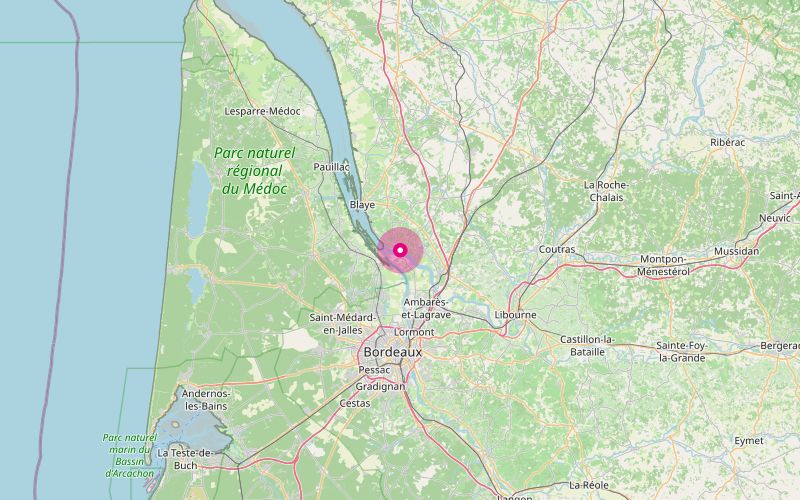
## Bourg in brief Bourg is a communal appellation on the Right Bank of Bordeaux, anchored by the small historic town of Bourg-sur-Gironde, on the Dordogne near its confluence with the Garonne in the Gironde estuary. It now belongs to the administrative and winegrowing ensemble of the Côtes de Bourg area, but the controlled designation of origin "Bourg" remains as a specific denomination for dry white wines. The vineyard is modest in size and its production remains confidential on the scale of Bordeaux, which explains its limited visibility beyond the regional market. This discretion should not obscure its technical interest: Bourg makes it possible to observe, within a small territory, the meeting point of limestone slopes, estuarine influence, and Bordeaux white grape varieties.
The current picture partly confuses the communal appellation "Bourg" with the broader appellation "Côtes de Bourg," which is mainly devoted to reds. One essential point therefore needs correcting: when speaking strictly of the Bourg appellation, one is speaking above all of still dry white wines. Reds and rosés in this sector now fall under the Côtes de Bourg appellation, not Bourg in the narrow sense. This legal clarification is essential for understanding labels and avoiding approximations about the hierarchy of appellations.
## Terroir and geology The Bourg sector lies on slopes and plateaus overlooking the valley, with varied exposures and a topography far more articulated than the often uniform image attached to Bordeaux. Relief matters in managing ripeness and drainage, especially for whites in which the goal is structuring tension rather than demonstrative density. The best sites combine good air circulation, measured water reserves, and an ability to preserve grape freshness. This combination explains the poise of the dry wines, even in sunny vintages.
The geology is based largely on clay-limestone and limestone formations, complemented depending on the site by marly, gravelly, or sandy-clay elements. The idea of a simply alluvial vineyard needs qualifying: the proximity of the estuary does play a climatic role, but the identity of the wines comes first from the slopes and the sedimentary substratum. Limestone generally favors direct expressions, sometimes slightly chalky, while clay brings more volume and palate hold. This diversity, compressed into a small area, allows for more varied profiles than is often imagined.
Parcel work is therefore important, even in an appellation of limited surface area. Producers who vinify several lieux-dits or micro-parcels separately can modulate their blends between tension, flesh, and aromatic expression. On cooler, more calcareous soils, sauvignon blanc tends to retain a register of citrus, white flowers, and fine herbs. On somewhat richer substrates, sémillon gains breadth and muscadelle can bring a more marked floral accent.
## Climate The climate is oceanic, with the usual moderating influence of the Atlantic across the Bordeaux region. Winters are generally mild, summers warm without constant excess, and rainfall distribution requires regular sanitary vigilance in the vineyard. The proximity of the estuary partly softens temperature swings and limits certain variations, which matters in a sector exposed to wind and humidity. This regulation does not eliminate risks, but it contributes to more regular ripening than farther inland.
For the white varieties, the main climatic challenge lies in arbitrating between aromatic ripeness and the preservation of acidity. Harvests that come too early produce thin, vegetal wines; too late, and they lead to broader balances that are sometimes less readable. The most precise producers therefore aim for a fairly narrow picking window, especially for sauvignon blanc. Sémillon, later-ripening and more supple, often serves as the pivot in the blend to soften the angles and bring texture.
Recent warmer vintages have reinforced the need for fine vineyard management: protecting leaf surface area, monitoring water stress, and adjusting harvest dates parcel by parcel. In this context, limestone terroirs and certain cooler exposures become particularly useful. They make it possible to maintain a straighter reading of the whites without tipping into dilution. Bourg finds a strong argument here: the local geography still offers natural levers for moderation.
## Grape varieties The Bordeaux white grape mix naturally structures the appellation. Sauvignon blanc and sémillon form its most common foundation, with complementary roles well established in regional tradition. The former brings acidic drive, aromatic brightness, and often the most nervous finish; the latter provides substance, a more enveloping feel, and better aptitude for certain élevages. Muscadelle, more minor, acts as a supporting variety for its floral nuances and suppleness.
Depending on the estate and the vintage, the blend may lean toward a tauter style dominated by sauvignon blanc or toward a broader definition in which sémillon plays a structuring role. Bordeaux appellation rules govern the use of authorized grape varieties, but in practice the guiding logic remains the final balance of the wine. In cool years, sémillon sometimes prevents an overly incisive reading; in warm years, sauvignon blanc becomes central to preserving clarity. When well judged, muscadelle does not weigh down the profile and adds discreet relief rather than an invasive perfume.
Some producers also make measured use of oak or lees depending on the variety. Sauvignon tolerates overly visible élevage markers poorly in this type of terroir, whereas sémillon can absorb more texture without losing its identity. This technical difference guides vinification more than it changes the wines' DNA. The aim is not to make demonstrative whites, but to achieve blends that are readable and coherent.
## Wine styles The Bourg appellation produces still dry whites. The most convincing style combines a frank attack, a mid-palate without heaviness, and a clean finish, sometimes slightly saline or chalky depending on the soils. Aromatically, one often finds citrus, fresh pear, apple, white flowers, and sometimes a touch of fennel, boxwood, or dried herbs depending on the proportion of sauvignon. These are not wines of power, but wines of definition.
Élevage is carried out mostly in tank to preserve brightness, or by combining tank and lees aging to bring volume. Some estates use oak, often partially and cautiously, more for texture than for aroma. When this practice is mastered, it broadens the palate without masking the wine's origin. When overdone, it instead blurs the reading of the terroir, which works against an appellation founded on precision more than effect.
Aging potential exists, but it should be presented with restraint. Most Bourg whites show their best in youth or after a few years, when the élevage has integrated and the palate has gained cohesion. The best examples, especially in balanced vintages and on the basis of well-ripened sémillon, can evolve toward notes of fine wax, light dried fruits, and faded flowers without losing their framework. The interest of aging then lies more in textural complexity than in spectacular aromatic transformation.
There is no stylistic designation here comparable to those that structure other French regions. Reading the wine therefore depends on the producer, the vintage, the blend, and élevage choices. For the informed buyer, this means knowing estate signatures rather than relying on detailed official internal segmentation. This absence of detailed hierarchy is not a weakness; it simply makes the analysis more dependent on the grower's work.
## Producers to watch - Château Roc de Cambes: an emblematic estate of the Bourg sector, above all famous for its reds in Côtes de Bourg, but essential for understanding local qualitative ambition. - Château de la Grave: a historic Côtes de Bourg property, consistent, useful for reading the classic expression of the zone's slopes. - Château Falfas: a serious benchmark in the sector, committed to attentive viticulture, with wines that are often clean and structured. - Château Tayac: a well-identified name in the Bourg area, interesting for grasping the traditional style of the estuarine Right Bank. - Château Gros Moulin: a recognized Côtes de Bourg estate, representative of a precise Bordeaux approach without a search for effect. - Clos du Notaire: a producer followed for the consistency of its wines and its careful reading of hillside terroirs.
## Food and wine pairings A dry white Bourg works well with oysters au gratin or simply opened, especially if the wine favors sauvignon and a taut finish. The pairing relies on freshness, salinity, and the absence of intrusive oak. The shellfish's texture calls for a direct wine, not a weighty one.
With grilled sardines, baked mackerel, or simply roasted sea bream, the wine benefits from offering a little flesh thanks to sémillon. The fish's slight oiliness is then balanced by acidity, while citrus notes refresh the palate. This use at the table is a reminder that these whites are first and foremost food wines.
Poultry with a light cream sauce, such as a chicken supreme with button mushrooms or a lightly reduced blanquette de veau, suits cuvées aged on lees. The wine does not need to be opulent; above all it must have sufficient mid-palate to meet the sauce. Any oak, if present, should remain discreet.
Aged goat cheeses, young ewe's milk cheese, or certain uncooked pressed cheeses offer useful pairings with the livelier versions. The wine's acidity cleanses the fat and the herbaceous notes of sauvignon respond well to the caprine register. With more powerful cheeses, a broader white is preferable, or a change of wine family.
Finally, vegetable-based cuisine gives very good results. White asparagus with a light mousseline sauce, carefully dressed leeks vinaigrette, braised fennel, or a thin zucchini tart all find a precise partner in Bourg. The wine should then remain restrained, clean, and little marked by élevage.
## FAQ ### Are Bourg and Côtes de Bourg the same thing? No. "Bourg" designates a specific communal appellation reserved for dry white wines, while "Côtes de Bourg" is the broader appellation of the sector, best known for reds.
### Does the Bourg appellation produce reds? Strictly speaking under the current appellation, no in the usual market sense. Reds from the sector are marketed under the Côtes de Bourg appellation.
### What is the profile of a Bourg blanc? It is a Bordeaux dry white generally based on sauvignon blanc, sémillon, and sometimes muscadelle. It seeks a balance of freshness, texture, and clarity rather than aromatic power.
### Can a Bourg blanc be cellared? Yes, for a few years without difficulty for good bottles. The best-constructed cuvées then gain integration and textural complexity, but this is not an appellation primarily designed for very long aging.
### At what temperature should a Bourg blanc be served? Around 10 to 12 °C, depending on the style and élevage. Too cold, the wine closes up and hardens; too warm, it loses relief and precision.
### Why is the appellation little known? Its area is small, its production confidential, and commercial attention has long focused on the reds of Côtes de Bourg or on other more heavily publicized parts of Bordeaux. This does nothing to diminish its pedagogical and gastronomic interest.