Bouches-du-Rhône, a Provençal IGP of latitude and practical use
Between Crau, Alpilles, Étang de Berre and Camargue, the IGP Bouches-du-Rhône provides a flexible framework for wines that are predominantly rosé, red and white from western Provence.
geoVINUM · 2026-06-12
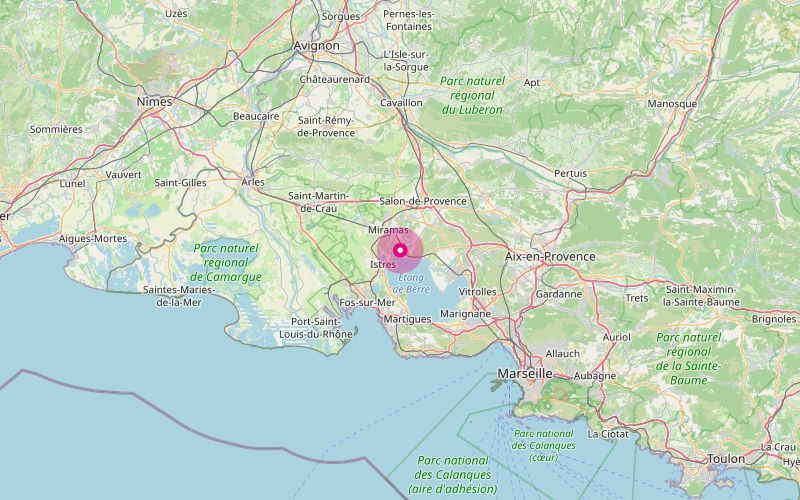
## Bouches-du-Rhône at a glance The IGP Bouches-du-Rhône is a protected geographical indication covering the department of the same name, at the heart of western Provence, between the southern Rhône Valley, Alpilles, Crau, Étang de Berre and the edges of Camargue. It belongs to the IGP category, a regulatory framework more flexible than that of AOC, and is part of the family of geographical indication wines from the Mediterranean southeast. The wines may be produced as white, rosé and red, with ample room given to Mediterranean grape varieties, but also to certain adaptive or complementary varieties. Precise figures for vineyard area and volumes change from one vintage to another; they should therefore be handled with caution when not sourced from the ODG or the INAO.
## Terroir and geology The boundaries of Bouches-du-Rhône are not those of a single terroir, but of a highly contrasted departmental ensemble. This diversity is its essential characteristic: the IGP overlays wine landscapes ranging from alluvial plains to limestone slopes, with, in between, stony terraces, pebble soils, silts and sands. The resulting wine therefore depends less on a uniform geological signature than on a mosaic of situations.
To the north and northwest, around Arles and toward the margins of the Crau, ancient alluvial formations appear, often poor, stony and free-draining. These soils favor measured water supply to the vine, provided rooting is sufficient. In sectors closer to the delta or low-lying areas, textures become finer, sometimes silty or sandy-silty, with very different behavior depending on depth and available water reserve. The proximity of wetlands then requires viticulture attentive to vigor and sanitary condition.
Around Alpilles and in several secondary reliefs of the department, limestone dominates, often accompanied by marl, scree or colluvium. These substrata give whites tenser expressions and structure reds with a ripeness less heavy than in the hot plains alone. In both the western and eastern parts of the department, there are also stony terraces that accumulate daytime heat and release it at night, accelerating grape ripening. This thermal inertia can be an asset for reds, but it requires preserving freshness in rosés and whites.
The salinity of Mediterranean landscapes is sometimes invoked to excess. In Bouches-du-Rhône, maritime influence exists, especially near Camargue, Étang de Berre and the coast, but it does not automatically imprint a saline taste on the wine. Its effect is primarily climatic: relative moderation of temperature swings, air circulation, and different pressure on harvest dates. Reading the terroir must therefore combine soil type, exposure, wind and distance from the sea.
## Climate The climate is Mediterranean, with hot, dry summers, high sunshine levels and rainfall concentrated outside the summer period. This general pattern places grape ripening in a favorable setting, often regular from one year to the next, but without erasing local contrasts. The more continental sectors, farther from the sea, may experience more pronounced temperature ranges. Coastal or near-coastal areas, by contrast, benefit from a clearer regulating effect.
Wind plays a major role, particularly the mistral. It dries the vineyard after rain, limits part of the fungal disease pressure and contributes to better sanitary quality in the harvest. In return, it can increase evapotranspiration, slow certain vegetative cycles and cause significant water stress on shallow soils. In the driest years, canopy management therefore becomes central.
Today’s climate issue cannot be reduced to average heat alone. In the department, the combination of high temperatures, recurrent droughts and more concentrated rainfall events puts balances under strain. Harvest dates have tended to move earlier, while the search for natural acidity, moderate alcohol levels and clean aromas becomes more delicate. The value of the IGP lies precisely in allowing technical and varietal responses more flexible than in a more prescriptive AOC framework.
## Grape varieties The IGP Bouches-du-Rhône allows a broad range of grape varieties, in keeping with the logic of vins de pays and then IGPs in southern France. Mediterranean varieties quite logically play the leading role here: grenache noir, syrah, cinsault, mourvèdre, carignan and cabernet-sauvignon for reds and rosés; vermentino, ugni blanc, sauvignon blanc, chardonnay, grenache blanc, clairette and viognier for whites, depending on the sector and producers’ choices. This pluralism makes it possible to think in terms of tradition, market and climate adaptation at the same time.
Grenache remains a structuring grape variety for many rosés and reds, thanks to its flesh, fruit character and good adaptation to dry conditions. Syrah brings color, spice and tannic grip, while cinsault often contributes suppleness and aromatic brightness. Mourvèdre and carignan more readily act as grapes of relief, giving depth or nerviness depending on soils and yields. In some blends, cabernet-sauvignon retains a place as a technical tool, useful for structure or stylistic consistency.
For whites, vermentino is often sought for its balance between aromatic expression, volume and relative freshness. Ugni blanc remains relevant in hot sectors when the aim is to preserve tension and moderate alcohol. Chardonnay and sauvignon blanc can fit more immediately legible commercial profiles, while clairette, grenache blanc and viognier steer the wine more toward a Provençal or Rhône-like register. Blending rules vary according to the specifications applicable to the IGP; they are clearly less restrictive than in the neighboring AOCs.
The idea of an official specialization in new sparkling whites does not correspond to the most useful reality of this IGP. The core of production is first and foremost still wines, even if the IGP framework may allow various categories depending on current regulations. One should therefore avoid assigning to the whole indication an identity of fast-drinking sparkling wine. Its true identity lies in the latitude of grape varieties and expression.
## Wine styles Rosés occupy a natural place in this territory of Mediterranean consumption, with styles ranging from pale, light and floral wines to fuller-bodied rosés built for the table. The best examples avoid mere technological neutrality: they retain sufficient substance, clean fruit and a dry finish. Cellaring is generally short, one to two years, since the interest lies in the freshness of the fruit rather than in evolution.
Whites offer a broader spectrum than is often thought. Some are designed for simple, direct expression, with citrus, white-fleshed fruit or fine herbs, vinified in tank and bottled quickly. Others gain density on lees, or even through measured oak ageing, especially when chardonnay, viognier or certain vermentino-based blends lend themselves to it. Their ageing potential generally remains modest, but the more serious cuvées can evolve over a few years.
Reds range from supple, fruity profiles, almost crunchy, to more concentrated versions based on syrah, grenache or mourvèdre. Ageing takes place mostly in tank or neutral vessels to preserve fruit, although some estate cuvées use foudre, barrel or demi-muids. At their best, these wines offer a convincing balance between fruit ripeness, structure and accessibility. Ageing capacities vary greatly, but rarely go beyond the medium term except for ambitious cuvées from well-situated sites.
The main interest of the IGP lies in this stylistic freedom. It allows for straightforward, well-executed entry-level wines, but also for more assertive site-specific or varietal cuvées. This flexibility is not synonymous with looser quality standards; on the contrary, it can encourage precise responses to vintage conditions. In a department as heterogeneous as this one, that is a real advantage.
## Producers to follow - Château Calissanne: a vast estate between Aix and Étang de Berre, recognized for cuvées in IGP and AOP, with serious work on whites, rosés and reds. - Château de Beaupré: a historic property on the Aix plateau, consistent in clean, precise Provençal styles, including beyond its AOP cuvées. - Mas de Valériole: a Camargue benchmark, an important organic estate for understanding expressions of deltaic soils and maritime influences. - Domaine de Sulauze: near Miramas, a committed organic and biodynamic approach, with wines often free-spirited yet rooted in the local landscape. - Château Romanin: in Alpilles, a reputed estate that clearly illustrates the sector’s ability to produce wines of character on limestone foundations. - Domaine de la Vallongue: another useful name in Alpilles, for carefully made cuvées that show the value of Provençal relief in a warm context.
## Food and wine pairings - Dry Bouches-du-Rhône rosé and bourride de lotte: the texture of the dish calls for a rosé with a broader palate than a standard apéritif wine. - Vermentino-based white and tellines à l’ail et au persil: the tension and citrus notes extend the briny register without weighing it down. - Supple grenache-syrah red and daube provençale: ripe fruit and moderate tannins work well with the reduced sauce. - Lees-aged white and volaille rôtie aux herbes: the wine’s substance matches the flesh without dominating the seasoning. - Fuller-bodied rosé and tian de légumes: the pairing works through confit tomato, dried herbs and the slight bitterness of grilled vegetables. - More structured red and agneau des Alpilles: the dish’s garrigue notes naturally converse with southern grape varieties.
## FAQ ### Where exactly is the IGP Bouches-du-Rhône located? It covers the Bouches-du-Rhône department in western Provence. Its area includes very different zones, from Crau to Alpilles, and from the surroundings of Arles to areas closer to Aix and Étang de Berre.
### Is Bouches-du-Rhône an AOC? No. It is an IGP, meaning a protected geographical indication offering a more flexible framework than appellations d’origine contrôlée. This flexibility mainly concerns grape varieties, blends and certain technical choices.
### What are the most common wine styles? It mainly produces still red, rosé and white wines. Rosés and whites intended for relatively early drinking are common, but there are also more structured reds and gastronomic whites.
### Which grape varieties are most commonly found there? Mediterranean grape varieties dominate, with grenache, syrah, cinsault and mourvèdre for colored wines, as well as vermentino, ugni blanc, clairette or chardonnay for whites. The strength of the IGP lies precisely in this varied palette.
### Can you find very good wines there despite the IGP status? Yes. IGP status is not, in itself, an indicator of lower quality; it first of all designates a different regulatory framework. In Bouches-du-Rhône, some producers use this freedom to craft precise, coherent wines that are well suited both to their terroir and to today’s climate.