Bordeaux Supérieur, the Other Face of Regional Bordeaux
A cross-cutting appellation of the Gironde, Bordeaux Supérieur primarily governs reds that are riper and more structured than generic Bordeaux. Its interest lies in a more demanding set of specifications and a broad reading of Bordeaux terroirs.
geoVINUM · 2026-06-12
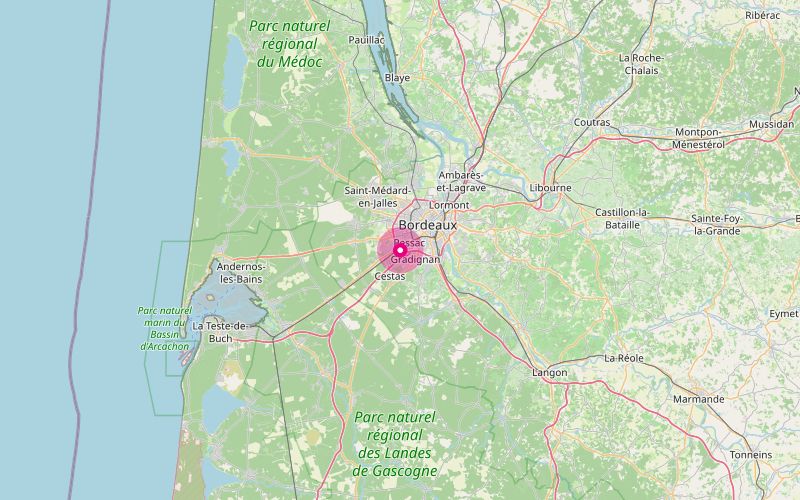
## Bordeaux Supérieur at a glance Bordeaux Supérieur is a regional protected designation of origin within the Bordeaux vineyard, officially recognized as early as 1944 within the Bordeaux appellation framework. It may produce red wines across a large part of the Gironde department, as well as dry white wines; in practice, the appellation is overwhelmingly red. Its area covers communes spread across several wine-growing zones, from the left bank to Entre-deux-Mers, extending to Libournais and Blayais-Bourgeais. Bordeaux Supérieur stands apart from the Bordeaux appellation through a more demanding set of specifications, particularly in terms of ripeness and structure, making it an intermediate level between the basic regional appellation and communal appellations.
## Terroir and geology One of the particularities of Bordeaux Supérieur is that it does not correspond to a single terroir, but rather to a more qualitative selection within the broader Bordeaux area. The appellation can therefore arise from very different situations, which explains the heterogeneity of its profiles. Its unity is not geological; it lies instead in a production requirement and a stylistic positioning.
The soils encountered are those of winegrowing Gironde in all its diversity. They include gravels of varying depth, gravelly sands, clays, limestone with asteries, molasse, and clay-limestone formations on slopes. This variety gives producers a broad palette of expressions, from supple, early-drinking wines to more solidly built reds capable of aging for a few years.
On the left bank, gravel rises favor drainage and steady ripening of the classic Bordeaux grape varieties. In Entre-deux-Mers and certain parts of Libournais, clay-limestone soils provide greater water reserves and support firmer structures. Sandy soils, poorer and more free-draining, often produce more approachable wines, provided yields are kept in check.
This geographic spread explains an essential point: Bordeaux Supérieur is not the expression of a specific cru, but of a regulatory hierarchy within the Bordeaux vineyard. The appellation thus serves as a framework for estates located outside the boundaries of communal appellations, or for properties that choose this status for part of their production. For the reader as for the buyer, the name therefore calls for close attention to the producer, any communal origin, and the desired style.
## Climate The climate is temperate oceanic, under the influence of the Atlantic, the Gironde estuary, the Garonne, and the Dordogne. Winters are generally mild, springs can be wet, and summers alternate between hot periods and more Atlantic episodes. This climatic moderation is a major feature of Bordeaux, even if vintage variation remains structurally important.
Rainfall distribution and the risk of fungal disease pressure play a central role in vineyard management. Downy mildew and grey rot can complicate the season, especially in the wettest sectors or in years of heavy rainfall. Conversely, dry and warm years encourage fuller ripening, with denser reds and more enveloped tannins.
Climate change is gradually altering the balances of the appellation. Harvest dates have moved earlier, potential alcohol levels are rising more regularly, and soil water management is becoming an important issue depending on the area. In this context, the ripeness requirement associated with Bordeaux Supérieur can be an asset, provided freshness, alcohol-acidity balance, and varietal clarity are preserved.
For dry whites, the harvest window remains particularly sensitive. The aim is to preserve aromatics and tension without tipping into overly ripe expressions. For reds, the challenge is often to achieve satisfactory phenolic ripeness while retaining a Bordeaux profile, meaning clear structure rather than mere overconcentration.
## Grape varieties For reds, Bordeaux Supérieur is based on Bordeaux’s classic grape varieties. Merlot generally takes first place, especially on clay and clay-limestone soils where it gains flesh and volume. Cabernet sauvignon brings tannic backbone, aging capacity, and notes of blackcurrant or cedar; cabernet franc adds freshness, length, and floral or spicy complexity.
Accessory grape varieties may also enter the blend, according to the general rules of the Bordeaux area. Petit verdot is used in small proportions to reinforce color, tension, and spicy character in years when it reaches ripeness. Malbec, historically present in Bordeaux, survives more marginally; carménère remains rare.
For Bordeaux Supérieur dry whites, the backbone rests on sauvignon blanc and sémillon. Sauvignon provides aromatic drive, notes of citrus, blackcurrant bud, or white fruit, as well as sharper acidity. Sémillon brings volume, broader texture, and an interesting aptitude for lees aging or wood aging.
Muscadelle may complete the blend as a supporting variety, with a more floral and sometimes slightly musky touch. Depending on recent practices permitted in the Bordeaux vineyard, other adaptation-oriented grape varieties may exist at the margins, but they do not define the appellation’s usual profile. In all cases, Bordeaux Supérieur remains a blended appellation, where the balance between fruit, structure, and freshness takes precedence over single-varietal expression.
## Wine styles In practice, Bordeaux Supérieur is above all a red wine appellation. The desired style differs from generic Bordeaux through often fuller substance, more complete ripeness, and a higher degree of backbone. Tannins are generally present without seeking the demonstrative power of crus classés or certain renowned communal appellations.
The reds most often show notes of ripe black or red fruit, plum, blackcurrant, sometimes licorice, cedar, or sweet spices. Aging may take place in tank, large cask, or barrel depending on the estate’s ambitions, with highly variable use of oak. The best examples seek less extraction than textural accuracy and clear fruit definition.
The Bordeaux Supérieur specifications impose stricter conditions on reds than those of Bordeaux, particularly regarding minimum ripeness and aging before release. This requirement contributes to wines that are a little more substantial and often better suited to bottle development. The category therefore includes reds for relatively early drinking, but also cuvées capable of holding for several years.
Bordeaux Supérieur dry whites are much less common and remain little identified by the market. They may nevertheless offer an interesting profile, often a little denser or more ambitious than certain immediately accessible Bordeaux blancs. Depending on cellar choices, one finds versions focused on freshness and citrus, but also whites aged on lees, partially fermented or aged in barrel, with a broader palate and moderate aging potential.
The appellation should not be confused with Bordeaux sweet wines, which fall under other regional or local denominations. Bordeaux Supérieur is also not a prestige label equivalent to a communal appellation; it is a level of requirement within regional Bordeaux. Its appeal lies precisely in this function: offering, when the producer is serious, a convincing balance between production discipline, stylistic clarity, and often moderate prices.
## Producers to watch - Château Reignac: an Entre-deux-Mers property often cited for its Bordeaux Supérieur reds with a dense, polished, and consistent profile. - Château de Piote: an estate known for precise interpretations in red and white, with a contemporary reading of regional Bordeaux. - Château Pierrail: a property in eastern Gironde producing reliable Bordeaux Supérieurs that are structured and approachable in youth. - Château Penin: an Entre-deux-Mers reference, attentive to fruit purity and balance, including in its regional cuvées. - Château Sainte-Marie: a consistent estate whose wines clearly illustrate the appellation’s ability to offer complete reds without excess oak. - Château Marjosse: a property recognized for the precision of its regional wines, useful for understanding the qualitative potential of Bordeaux’s broad appellations.
## Food and wine pairings Bordeaux Supérieur reds pair well with pink duck breast, served with a red wine reduction or a few root vegetables. The wine’s tannic structure matches the duck’s flesh without requiring the power of a more severe appellation. A supple vintage can also work very well with herb-roasted poultry.
For more everyday fare, the appellation pairs effectively with grilled rib steak, lamb chops, or a well-seasoned hachis parmentier. The fruitier, lightly oaked versions also match characterful charcuterie, terrines, or a beef burger. Serving slightly cool can improve the clarity of the fruit.
Bordeaux Supérieur dry whites find their place with fish in sauce, chicken in cream sauce, or mushroom ravioli. When lees aging or wood aging is marked, they benefit from being paired with more enveloping textures rather than very iodine-driven preparations. An aged goat’s cheese or a mildly flavored pressed cheese often works very well.
Among the simple and reliable pairings, one may note: - duck breast with cherries or figs; - grilled rib steak and sautéed potatoes; - roast shoulder of lamb with thyme; - free-range chicken with cream and morels; - roasted cod, lemon butter, spring vegetables; - tomme de brebis or aged goat’s cheese.
## FAQ ### Is Bordeaux Supérieur a red wine or a white wine appellation? Both exist, but the appellation is overwhelmingly known for its reds. Bordeaux Supérieur dry whites are permitted, but remain far more confidential on the market.
### What is the difference between Bordeaux and Bordeaux Supérieur? Bordeaux Supérieur corresponds to a more demanding set of specifications than that of the Bordeaux appellation. The difference lies mainly in ripeness, expected structure, and, for reds, aging conditions aimed at slightly more substantial wines.
### Is Bordeaux Supérieur a great wine for aging? Not necessarily, because the appellation covers very different levels of ambition. The best bottles can evolve for several years, but the majority of wines are designed to be drunk relatively young, once their fruit and tannins have harmonized.
### Does the word “Supérieur” indicate a specific terroir? No. It does not designate a particular geological or communal area, but rather a regulatory level within Bordeaux’s regional appellations. Actual quality therefore depends greatly on the producer, the exact terroir, and the vintage.
### Should Bordeaux Supérieur be decanted? For a young, structured red, decanting can be useful to soften the tannins and open the bouquet. For simpler or already evolved cuvées, simply opening the bottle in advance is often enough, so as not to tire the wine.