Bonnes-Mares, a Pivotal Grand Cru of the Côte de Nuits
Between Chambolle-Musigny and Morey-Saint-Denis, Bonnes-Mares brings together power, tannic relief, and deep ageing potential. A grand cru of Pinot Noir with a distinctly earthy personality.
geoVINUM · 2026-06-12
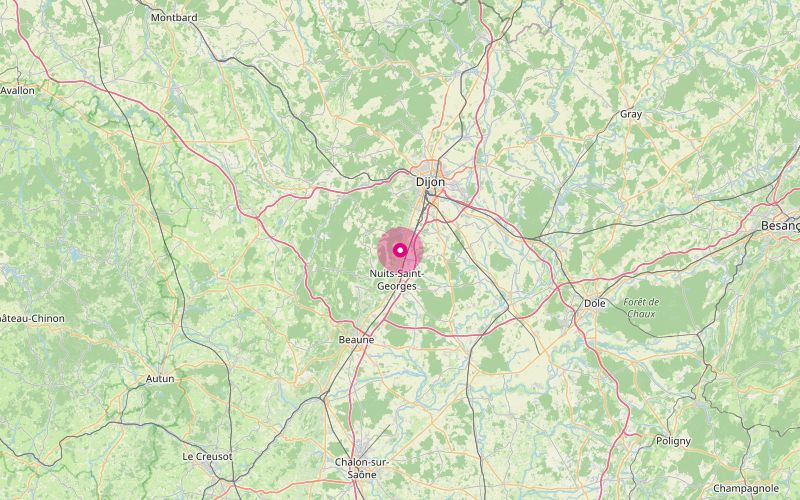
## Bonnes-Mares at a Glance Bonnes-Mares is a grand cru of the Côte de Nuits, shared between the communes of Chambolle-Musigny and Morey-Saint-Denis, in Côte-d’Or. The controlled designation of origin was recognized as early as 1936, as part of the first core group of Burgundian grands crus established by the INAO. It produces only red wines from Pinot Noir, with the Burgundian regulatory allowances for a few accessory grape varieties, now marginal. The planted area covers a little over 15 hectares, placing Bonnes-Mares among the more modestly sized grands crus, with naturally limited production.
## Terroir and Geology Bonnes-Mares occupies a singular position at the junction of two villages whose styles often serve as reference points in the Côte de Nuits. Chambolle-Musigny is readily associated with more airy textures, Morey-Saint-Denis with more earthy and firmer structures; Bonnes-Mares brings together part of both of these registers. This stylized reading does not replace observation of the soils, but it helps explain why the cru often appears as one of the most complete in the Côte.
The vineyard stretches across a mid-slope hillside, with marked soil variations from one sector to another. Burgundian literature classically distinguishes redder, clay-rich, iron-bearing soils in certain parts, and paler, rockier, more limestone-rich soils in others. This mosaic encourages differing ripening patterns and explains part of the stylistic differences between estates, and even between parcels within the same estate. The name Bonnes-Mares is often linked to former cleared lands or medieval holdings, but its exact etymology remains debated.
The subsoil belongs to the great Jurassic ensemble of the Côte d’Or, with a significant presence of limestone associated with marl and clay. At the surface, soil depth varies considerably, affecting the vine’s water supply and vigor. Where clay is more present, the wine tends to gain density on the palate and a firmer tannic base. Where limestone and stony elements dominate, the impression can become tenser, more vibrant, and sometimes more floral.
The topography also contributes to the cru’s personality. Bonnes-Mares is not a flatland or terrace terroir; it works with a real slope, useful air circulation, and an exposure favorable to steady ripening. The most accurate reading of the cru therefore lies less in a simple formula than in the balance between mass, energy, and aromatic detail. In the best cases, depth never crushes momentum.
## Climate Like the whole of the Côte de Nuits, Bonnes-Mares experiences a semi-continental climate with a marked Burgundian influence. Winters are cold, spring can expose the vines to frost, and summers alternate heat, storm episodes, and temperature swings that help preserve acidity. The success of the vintage depends greatly on the regularity of flowering, control of fungal disease pressure, and a harvest date precise enough to preserve both phenolic ripeness and freshness.
The cru’s exposure is generally east to southeast depending on the sector, favoring morning sunlight and a good start to the vegetative day. This orientation limits certain excesses of late-afternoon heat while ensuring serious ripening of Pinot Noir. On this terroir, the challenge is not only to achieve concentration; it is above all to avoid heaviness, because Bonnes-Mares quickly loses its distinction if alcohol and extraction take over.
Climate change has increased the frequency of rapid ripening and early harvests. For producers, this requires finer management of picking dates, the proportion of whole clusters, fermentation temperature, and the use of new oak. The cru can handle substance, but it does not forgive winemaking that freezes the tannins or erases floral and spicy nuances. Its nobility lies in disciplined density, not in showmanship.
## Grape Varieties The appellation is dedicated to red wines and is based almost exclusively on Pinot Noir. As in several Burgundian red appellations, the specifications historically authorize very small proportions of accessory varieties such as Pinot Blanc, Pinot Gris, and Chardonnay, provided they are interplanted and remain minor. In practice, these varieties now play a negligible role, and Bonnes-Mares expresses itself as a grand cru of Pinot Noir.
This grape variety finds a particularly structured expression here. On soils combining limestone, marl, and clay, it develops skins capable of delivering color, tannin, and depth without giving up aromatic finesse. Vineyard work generally aims for moderate yields, good aeration in the fruiting zone, and full stem ripeness if whole-cluster fermentation is being considered. Viticultural precision strongly determines the wine’s final texture.
Blending decisions at Bonnes-Mares mainly concern the management of the different parcels held by each estate. Some producers seek a balance between more clay-rich zones and more limestone-dominant sectors; others vinify separately before blending during élevage. This is not a blend of grape varieties, but an internal composition within the cru. This practice explains why two Bonnes-Mares can diverge significantly while remaining perfectly faithful to the appellation.
## Wine Styles Bonnes-Mares produces reds of deep color for Burgundy, often more profound in youth than a Chambolle-Musigny premier cru or even certain other neighboring grands crus. The nose frequently combines black cherry, ripe raspberry, blackberry, faded rose, violet, dark spices, and a touch of fresh earth. Depending on the sector and cellar choices, one may also find graphite, black tea, light game, and bramble notes. The aromatic palette is broad, but rarely demonstrative.
On the palate, the cru stands out for its firm architecture, low center of gravity, and often impressive length. The tannins are abundant but are not meant to be massive; they should shape the wine more than harden it. In balanced years, the substance combines with real tension, avoiding any sense of blockiness. The best definition of Bonnes-Mares may lie in this alliance of flesh and framework.
Élevage is most often carried out in oak barrels, with a proportion of new wood that varies according to estate and vintage. The most attentive producers seek to integrate the oak without masking the cru’s natural relief. Whole clusters can play an important role for some, bringing energy, floral complexity, and a different tannic grain. Here again, balance is decisive: too much stem can make the wine green, too much extraction can make it rigid.
The ageing potential is high. In a proper cellar, a well-born Bonnes-Mares will readily evolve over fifteen to twenty years, often longer in great vintages and with the best producers. With time, notes of undergrowth, fine leather, truffle, dry leaf, and sometimes noble game emerge, without the fruit disappearing completely. It is not always an immediately charming wine in youth; it is often a wine of slow construction.
## Producers to Watch - Domaine Georges Roumier: a major reference for the cru, sought after for its intensity of texture and its ability to combine power and precision. - Domaine Comte Georges de Vogüé: a historic player in Chambolle-Musigny whose Bonnes-Mares often expresses great depth and top-tier ageing potential. - Domaine Robert Groffier Père & Fils: wines often seductive earlier than others, without losing the structure expected of the grand cru. - Domaine Dujac: an interpretation marked by finesse of extraction and controlled use of whole clusters, yielding highly nuanced Bonnes-Mares. - Domaine de la Pousse d’Or: a precise and polished style, where élevage supports the substance without freezing it. - Domaine Bruno Clair: a solid and consistent interpretation, underpinned by rigorous vineyard work and a structured palate profile.
## Food and Wine Pairings Bonnes-Mares calls for dishes with texture and aromatic depth, without excessive sweetness or dominant spices. In its youth, it appreciates roasted or braised meats that respond to its structure. With age, it benefits from meeting more earthy preparations, centered on mushrooms, reduced jus, and fine yet flavorful meats.
- Roast pigeon, short jus, and beetroot.
- Saddle of venison, lightly marked sauce grand veneur and black berries.
- Veal chop with morels.
- Roast duck, tart cherries, and reduced jus.
- Beef fillet Rossini, if the vintage has sufficient breadth.
- Aged Époisses or truffled Brillat-Savarin, with caution regarding the cheese’s intensity.
## FAQ ### Is Bonnes-Mares in Chambolle-Musigny or in Morey-Saint-Denis? In both communes. It is one of the Burgundian grands crus whose area extends across two villages, which contributes to its intermediate personality between grace and structure.
### Does Bonnes-Mares produce white wines? No. The appellation applies only to red wines, made almost exclusively from Pinot Noir.
### What is the style of Bonnes-Mares compared with Musigny? Musigny is often described as more airy, more silky, and more immediately harmonious in its most accomplished form. Bonnes-Mares generally appears more earthy, more built, and more supported by tannin, with a more direct impression of power.
### Should you wait a long time before opening a bottle? Yes, in the majority of cases. Many bottles clearly benefit from ageing for at least eight to twelve years, and the best examples often show more fully after fifteen years or more.
### Why are Bonnes-Mares prices high? The area is small, production limited, and global demand strong. Added to this are its grand cru classification, the renown of highly sought-after estates, and its ageing potential, which attracts enthusiasts and collectors.