Blaye, Bordeaux’s Estuarine Right Bank
Opposite the Médoc, Blaye is rooted in clay-limestone hillsides and a temperate estuarine climate. The appellation produces mostly straightforward reds, approachable in youth yet capable of developing over time.
geoVINUM · 2026-06-12
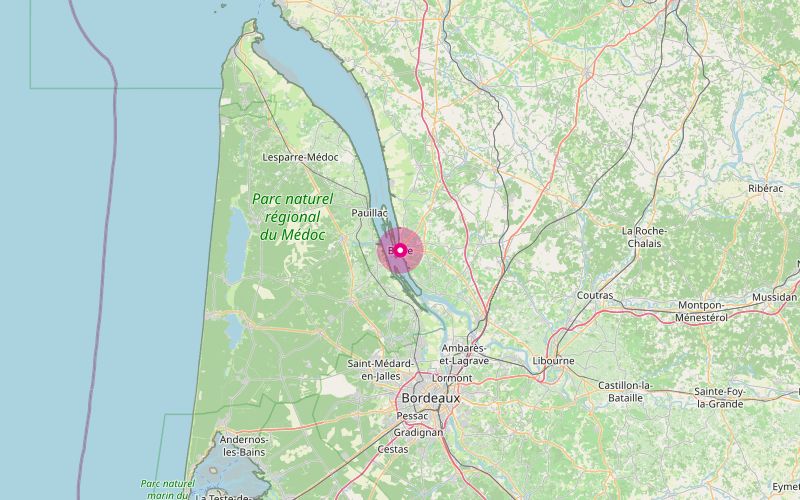
## Blaye at a Glance Blaye is a communal appellation in the Bordeaux vineyard area, located on the right bank of the Gironde estuary, north of the city of Bordeaux, around Blaye and the neighboring communes of the Blayais. Since the 2009 reform, the wines have been marketed under the Blaye Côtes de Bordeaux appellation, which replaced the former Premières Côtes de Blaye designation; in common usage, however, people still speak of Blaye to refer to this winegrowing area. The appellation produces mainly red wines, with a more limited share of dry whites. The vineyard covers several thousand hectares, making it one of the significant components of the Côtes de Bordeaux family, with a broad offering ranging from immediately enjoyable cuvées to cellar-worthy selections.
## Terroir and Geology Blaye’s vineyard landscape is shaped by a succession of hillsides, plateaus, and gentle rises overlooking the estuary. This topography creates varied exposures and encourages faster or slower drainage depending on soil depth and clay content. The moderate elevation is nothing dramatic, but it is enough to clearly differentiate water behavior and ripening rhythms.
The geological substratum belongs to the broad limestone and marl-limestone ensemble that characterizes part of Bordeaux’s right bank. One finds astéries limestone, clay-limestone formations, as well as more silty or sandy-gravelly zones depending on the area. This mosaic explains a broader diversity of wine profiles than the appellation name alone might suggest.
Clay-limestone soils are particularly important to Blaye’s identity. The clay provides water reserves and supports the vine during dry summers, while the limestone encourages more even ripening and often a straighter expression of fruit. In the reds, this combination frequently translates into dense textures without heaviness, with a firm tannic frame and a freshness that serves balance.
The more gravelly or sandy sectors generally produce softer, earlier-drinking wines. They are well suited to cuvées centered on fruit and on an immediate reading of the vintage. By contrast, limestone hillsides and deep clay parcels often yield the most structured wines and those best suited to evolving for a few years in bottle.
The estuary also plays a major scenic and agronomic role. Its proximity shaped Blaye’s commercial history, which long moved to the rhythm of river and maritime trade. Even today, it contributes to the image of an open, well-ventilated right-bank vineyard intimately linked to the Gironde.
## Climate Blaye has a temperate oceanic climate, like the rest of Bordeaux, but its estuarine frontage gives it a character of its own. The body of water of the Gironde acts as a relative thermal regulator, limiting certain heat extremes in summer and partly softening the sharpest cold spells. This influence does not eliminate hazards, but it contributes to a certain regularity in vine behavior.
Winds play an important role in this open sector. Air circulation helps parcels dry out after rain and can reduce pressure from certain fungal diseases, provided vineyard practices are properly adapted. In an Atlantic context where humidity remains a central factor, this ventilation is no minor detail.
Rainfall is spread throughout the year, with the usual risks of spring rain and precipitation during the harvest period. The success of a vintage therefore depends greatly on the soils’ ability to manage water and on the choice of picking dates. In recent warm years, limestone and clay terroirs have sometimes held an advantage, being better able to preserve freshness and water supply.
Climate change is gradually altering historic balances. Phenolic ripeness is easier to achieve than before in some parcels, while preserving acidity and managing alcohol levels are becoming more visible technical concerns. In this context, Blaye has real assets thanks to its soils and the tempering effect of the estuary, but varietal and viticultural adaptation remains at the heart of long-term strategies.
## Grape Varieties Red overwhelmingly dominates plantings in Blaye. As in much of Bordeaux’s right bank, Merlot holds a central place here thanks to its affinity with clay and clay-limestone soils. It brings flesh, ripe black or red fruit, mid-palate volume, and an ability to make wines approachable relatively early.
Cabernet Sauvignon and Cabernet Franc play a complementary structural role. The former brings tannic backbone, staying power, and sometimes a graphite or cedar note in restrained oak aging; the latter often contributes aromatic freshness, tension, and a more floral or spicy definition. Depending on the terroir and the estate’s signature, one or the other may weigh more heavily in the blend.
The accessory grape varieties permitted in Bordeaux, notably Malbec and Petit Verdot, may also enter into certain cuvées, even if they remain minor players. Their presence generally aims to reinforce color, spice, or structure. In practice, the identity of red Blaye rests above all on the balance between Merlot and the Cabernets.
For dry whites, the classic Bordeaux blend mainly combines Sauvignon Blanc, Sémillon, and, more secondarily, Muscadelle. Sauvignon provides aromatic brightness, citrus or herbaceous tension, and clarity of expression. Sémillon brings volume, roundness, and sometimes additional complexity, particularly when lees aging is sought.
As in other Bordeaux appellations, rules on grape varieties, yields, and ripeness are governed by the AOP specifications. Blending remains the norm, far more than a single-variety logic. This culture of blending is essential to understanding Blaye’s style, which seeks balance more than varietal display.
## Wine Styles Blaye’s reds form the core of production and generally offer a clear Bordeaux reading. They combine fruit often centered on plum, black cherry, or blackcurrant with a tannic structure that is present but rarely austere when the grapes are fully ripe. The style can range from supple, immediate wines aged in tank to more ambitious cuvées raised in barrel with greater extraction and depth.
New oak is not a stylistic obligation. In the best contemporary expressions of the appellation, aging is primarily intended to organize the material, polish the tannins, and preserve the character of the terroir. The most precise producers avoid excessive aromatic makeup that would standardize the wines behind vanilla or toast.
Young, the reds often offer welcome accessibility and a good balance between density and drinkability. After a few years, serious cuvées can develop notes of underbrush, blond tobacco, cedar, and sometimes light truffle depending on the vintage and the proportion of Merlot. Aging potential varies according to terroir and production ambition, but the best wines commonly hold for several years with interest.
Blaye’s dry whites remain less visible on the market, but they deserve attention. They generally emphasize freshness, citrus, white-fleshed fruit, and sometimes a floral or saline nuance, especially when Sauvignon dominates. Versions aged on lees, or even partly in oak, can gain breadth without losing their acidic backbone.
In terms of labeling, consumers will mostly encounter château cuvées, parcel selections, and sometimes second wines. The qualitative challenge lies less in multiplying signatures than in achieving coherence between terroir, ripeness, and élevage. At their best, Blaye’s wines stand out less for power than for a kind of earthy directness, firmly rooted in their origin.
## Producers to Watch - Château les Jonqueyres: a reliable name in the Blayais, consistent in reds and attentive to the balance between fruit, structure, and terroir legibility. - Château Monconseil-Gazin: an estate known for serious wines, often well defined, with a classic expression of the estuarine right bank. - Château Haut-Macô: a property appreciated for its straightforward and accessible style, representative of a generous yet structured Blaye. - Château Chêne Liège: a producer worth following for clean, coherent cuvées, with careful work both in the vineyard and in the cellar. - Château Peybonhomme-les-Tours: an important player in the area, long committed to demanding viticulture and a precise expression of the Blaye hillsides. - Château Pinet La Roquette: a reliable address for understanding a Blaye profile that is at once classic, balanced, and well positioned in price.
## Food Pairings - Vine-shoot grilled rib steak: the body of the red and its tannins naturally match the proteins and smoky notes of the meat. - Roast duck breast, reduced jus: the Merlot-dominant profile absorbs the richness of the dish well, while the Cabernets maintain tension. - Herb-roasted Pauillac lamb: a coherent regional pairing, where the wine’s structure responds to the texture of the lamb without overpowering it. - Sautéed cèpes and roast poultry: a few-years-old red Blaye pairs well with earthy tones and roasting juices. - Baked oysters or fish with beurre blanc sauce: a dry white Blaye, especially Sauvignon-led, brings the necessary acidic contrast. - Uncooked pressed cheeses: with a lightly oaked red, the combination works thanks to already softened tannins and sufficient acidity.
## FAQ ### Are Blaye and Blaye Côtes de Bordeaux the same thing? Yes. In current usage, the relevant winegrowing area falls under the Blaye Côtes de Bordeaux appellation. The simple name “Blaye” often serves as a geographic or editorial reference, but the modern regulatory designation is the one integrated into the Côtes de Bordeaux since 2009.
### Are Blaye wines mostly reds? Yes, production is overwhelmingly focused on red wine. Dry whites also exist, but they represent a smaller share of the offering and remain less well known to the general public.
### What is the typical profile of a red Blaye? One generally expects a right-bank wine built on Merlot, supported by the Cabernets, with clear fruit, present tannins, and preserved freshness. The best examples combine flesh, structure, and a more earthy than demonstrative expression.
### Can a Blaye be cellared? Yes, but it all depends on the level of the cuvée, the terroir, and the vintage. Entry-level wines often drink well in their youth, while more ambitious cuvées from good hillsides and aged with restraint benefit from several years of cellaring.
### Does Blaye offer good value for money? This is one of the most consistent arguments in favor of the appellation. Without benefiting from the notoriety premium of Bordeaux’s most famous growths, Blaye offers access to structured, distinctive, and often seriously made wines at still-reasonable price levels.