Bienvenues-Bâtard-Montrachet, a grand cru of nuance
Small in surface area yet major in rank, Bienvenues-Bâtard-Montrachet delivers one of the finest expressions of chardonnay in the Côte de Beaune.
geoVINUM · 2026-11-03
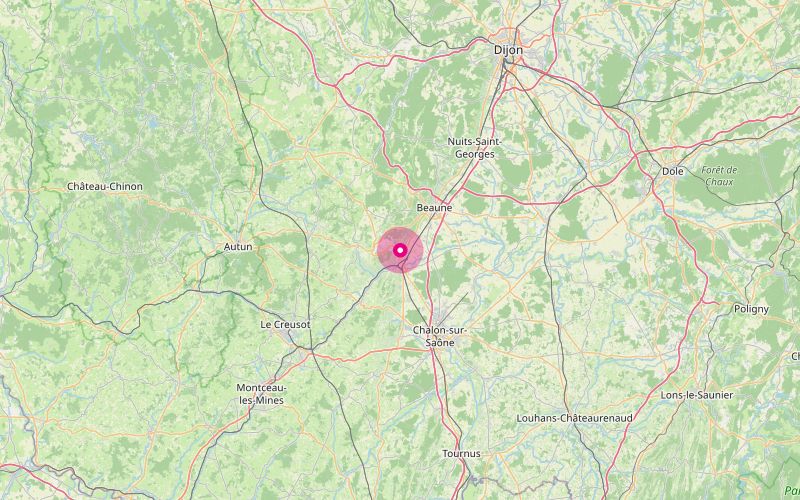
Bienvenues-Bâtard-Montrachet at a glance
Bienvenues-Bâtard-Montrachet is a controlled designation of origin in the Côte de Beaune, located in the commune of Puligny-Montrachet, in Côte-d’Or. It is a Burgundy grand cru reserved exclusively for white wines made from chardonnay. The appellation was recognized as a grand cru by the decree of July 31, 1937, which corrects a frequent confusion with more recent regulatory texts that merely updated the specifications.
The Bienvenues-Bâtard-Montrachet climat lies immediately south of Bâtard-Montrachet and northwest of Criots-Bâtard-Montrachet, continuing along the slope of Puligny. Its surface area is extremely small, just under 4 hectares, making it one of Burgundy’s most confidential grands crus. Production therefore remains limited, with volumes varying significantly from one vintage to another.
In the Burgundian hierarchy, Bienvenues-Bâtard-Montrachet belongs to the most prestigious core of the Côte de Beaune’s great white wines. Its identity is often described as more slender and more floral than that of Bâtard-Montrachet, while retaining the density expected of a grand cru. The name has no established link to the welcoming of pilgrims by the monks of Cluny, a claim sometimes repeated without solid historical basis.
Terroir and geology
Bienvenues-Bâtard-Montrachet occupies a mid-slope position on the eastern side of Puligny-Montrachet. This location encourages effective natural drainage and generally moderate water supply, two valuable conditions for chardonnay. The relief is moderate, but sufficient to clearly distinguish this climat from neighboring parcels that are nonetheless very close by.
The soils combine clay-limestone formations with a notable proportion of pebbles and stony elements. Overall, the topsoil is deeper than that of Montrachet proper, but the limestone subsoil remains decisive in the wines’ signature. This combination helps produce whites that are both fleshy and taut, where substance does not blur definition.
As is often the case in Burgundy, the most relevant scale of interpretation is that of the climat rather than simple general exposure. Within just a few meters, soil composition, available water reserves, and vine vigor can change. Bienvenues-Bâtard-Montrachet thus stands out for a profile often considered more approachable in youth than some of its neighbors, without losing any of its ability to age.
The relative finesse of this grand cru should not be confused with lesser concentration. On this terroir, chardonnay ripeness can express itself in a register of white fruit, ripe citrus, flowers, and sweet spices, with a saline relief that emerges over time. The best examples combine volume, tactile precision, and a chalky length.
Climate
The climate is the semi-continental Burgundian type, with cold winters, springs exposed to frost risk, and summers that can alternate between outright heat and stormy episodes. Vintage success depends greatly on the consistency of the growing season. In a grand cru this small, a few days of rain or wind at the wrong moment can significantly alter the balance.
Exposure generally faces east to southeast, ensuring good morning sunshine and partly limiting excessive late-day heat. This orientation favors gradual ripening, particularly useful for chardonnay when the goal is to preserve tension without blocking richness. The vines thus benefit from a sought-after balance between sugar accumulation and the preservation of acidity.
Climate change is, however, shifting historical reference points. Harvest dates have generally moved earlier, and managing phenolic ripeness, potential alcohol, and acidity has become more delicate. In this context, decisions on picking dates, canopy protection, and yield limitation play an increasing role in maintaining the cru’s style.
Grape varieties
The appellation is dedicated to still white wines made from chardonnay. In practice, Bienvenues-Bâtard-Montrachet is planted and vinified solely with chardonnay. It is this grape variety that enabled Puligny-Montrachet to build its global reputation on whites of uncommon precision.
The specifications for Burgundy’s white grands crus classically authorize chardonnay B and, incidentally, pinot blanc B. In reality, the use of pinot blanc is marginal to nonexistent in this appellation, and the cru’s identity rests entirely on chardonnay. Readers should therefore understand that a Bienvenues-Bâtard-Montrachet is, in the contemporary reality of the vineyard, a great white chardonnay.
Vine management aims to control vigor in order to obtain concentrated grapes without heaviness. Pruning, bud thinning, ventilation of the fruiting zone, and harvest date directly determine quality. On a terroir this prestigious, the challenge is not merely to reach ripeness, but to reach the right ripeness.
Wine styles
Bienvenues-Bâtard-Montrachet produces exclusively dry white wines. Their style generally combines a broad attack, a dense mid-palate, and a straighter finish than their initial richness might suggest. This duality between generosity and restraint is part of the appellation’s particular charm.
In youth, the wines often express ripe lemon, pear, white peach, hawthorn, acacia, and sometimes a note of fresh almond. With élevage and then bottle age, nuances of fine butter, hazelnut, light honey, almond paste, sweet spices, and warmed stone appear. The famous “gunflint” note is neither systematic nor a criterion of quality in itself.
Barrel élevage, common in the cru, requires great precision in its use. Too marked, it weighs down the reading of the terroir; well integrated, it supports the wine, refines texture, and extends persistence. The best producers seek less a woody effect than the shaping of the wine through lees aging, slow fermentation, and controlled oxygenation.
The aging potential is high. Depending on the estate, the vintage, and the winemaking style, the wines may already offer pleasure after a few years, then gain in complexity over a decade or more. The most accomplished bottles develop over time a more satiny texture and aromatic depth in which salinity often takes over from fruit.
Producers to watch
- Domaine Leflaive: a leading reference in Puligny-Montrachet, known for interpretations of great poise, combining energy, depth, and precise élevage.
- Domaine Paul Pernot et ses Fils: a classic village style, often clear and consistent, with wines that articulate fruit richness and Burgundian balance.
- Domaine Etienne Sauzet: a refined reading of the cru, marked by aromatic purity, palate tension, and careful oak management.
- Domaine Olivier Leflaive: an important Puligny house, offering cuvées closely followed by the market and representative of a generous yet calibrated style.
- Château de Puligny-Montrachet: a historic estate producing the cru with an approach aimed at clear terroir expression and a certain restraint in élevage.
- Maison Louis Jadot: a major player in Burgundy, whose grands crus provide a useful benchmark for tracking variations in vintage and style.
Food and wine pairings
Bienvenues-Bâtard-Montrachet calls for cuisine of texture more than power. Its breadth can support noble preparations, but its finesse calls for measured seasoning. The success of the pairing often depends on the right place for fat, salt, and sauces.
- Roasted lobster with lemon butter: the dense, delicate flesh of the crustacean answers the wine’s volume, while the acidity revives the finish.
- Pan-seared scallops, celery mousseline: the pairing works through tactile delicacy and an aromatic profile that remains in the white and lightly sweet register.
- Bresse chicken with cream and morels: a Burgundian classic in which the wine’s substance embraces the sauce without losing its tension.
- Line-caught sea bass with beurre blanc sauce: the cru’s structure supports the butter’s richness, and the saline finish pairs well with the fish’s discreet iodine notes.
- Risotto with noble mushrooms: with a wine that has already evolved somewhat, notes of hazelnut and light undergrowth create a natural continuity.
- Aged but not overly powerful Comté: the cheese highlights the wine’s breadth on the palate without overwhelming its finest nuances.
FAQ
Where exactly is Bienvenues-Bâtard-Montrachet located?
The appellation is located in Puligny-Montrachet, in the Côte de Beaune, on a very small sector classified as grand cru. It occupies a position next to Bâtard-Montrachet, within one of Burgundy’s most renowned groups of white-wine vineyards.
Does Bienvenues-Bâtard-Montrachet produce red wines?
No. The appellation is exclusively reserved for still white wines. In practice, they are made from chardonnay.
What is the difference from Bâtard-Montrachet?
Bienvenues-Bâtard-Montrachet is often perceived as finer, more floral, and a little more immediately legible. Bâtard-Montrachet tends to show more power and breadth, although the exact style always depends on the producer and the vintage.
When can a bottle be drunk?
An initial drinking window can appear relatively early, especially in sunny vintages and with restrained élevage. For a fuller expression of the cru, a few years of cellaring are generally beneficial, and the great vintages can then evolve favorably well beyond that.
Why are the bottles so rare and so expensive?
The rarity stems first from the grand cru’s very small surface area. Added to that are the appellation’s historical prestige, international demand for Burgundy’s great white wines, and yields that naturally remain limited in the pursuit of quality.