Bellet, the Nice vineyard between sea, hills, and memory
Above Nice, Bellet forms a rare, urban, and ancient appellation. Its reds, rosés, and whites express a terroir of poudingues, light, and winds.
geoVINUM · 2026-11-03
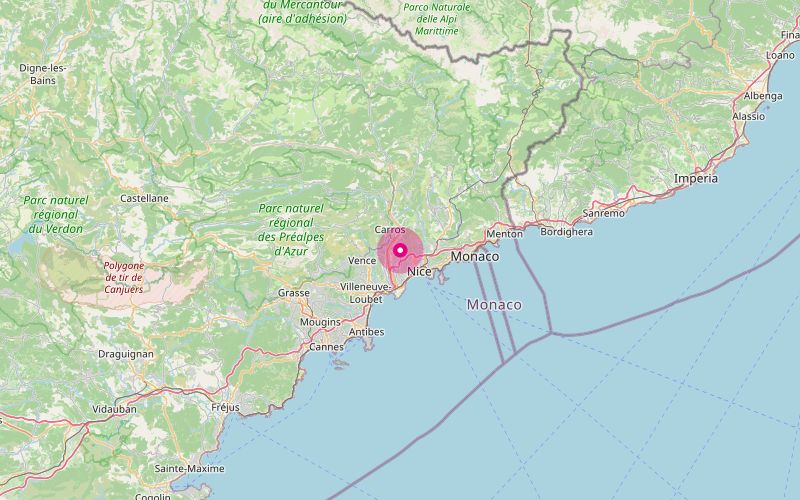
## Bellet in brief Bellet is an appellation located on the hills west of Nice, in the Alpes-Maritimes, within the Provence wine region, yet apart because of its history and geography. The appellation was recognized as an AOC in 1941, then incorporated into the European AOP framework. It produces white, rosé, and red wines over a very small area, making it one of the most confidential in France. This peri-urban vineyard, clinging to the heights overlooking the Baie des Anges, retains a strong identity despite the real-estate pressure of the Nice metropolitan area.
## Terroir and geology The Bellet vineyard extends mainly over hills located west of Nice, in a landscape of terraces, small valleys, and level stretches facing the sea. The altitude here is moderate rather than extreme, most often between around 200 and 300 meters, which is already enough to temper the effects of the coastal Mediterranean climate. The fragmented topography imposes hillside viticulture with limited mechanization, where every plot matters. This fragmentation contributes to the diversity of expressions within an appellation that is nonetheless very small.
Bellet’s geological foundation rests on distinctive formations, dominated by the famous Nice poudingues. These conglomerates of rounded pebbles bound together, mixed with sands and marls, ensure rapid drainage and naturally limit vine vigor. The roots must go deep to find a steady water supply, which favors moderate yields and a certain concentration. This type of soil often gives the wines a firm framework, a sense of relief, and, in the whites, an expression that is less demonstrative than elongated.
The immediate proximity of the city should not obscure the site’s agricultural logic. The best plots occupy airy, well-exposed positions, where the circulation of winds partly limits disease pressure. Urbanization has reduced the historic vineyard, but it has also made Bellet’s singularity more visible: here, the vine survives in a space where other crops have often disappeared. This tension between inhabited landscape and winegrowing terroir is an integral part of the local identity.
## Climate Bellet has a Mediterranean climate marked by sunshine, but this is continually modulated by the sea and the nearby relief. The Baie des Anges acts as a thermal regulator, tempering the intense summer heat and limiting excessive winter cold. Sea breezes play a perceptible role, notably in preserving the sanitary condition of the grapes. This maritime influence sets Bellet apart from many more continental or torrid Mediterranean vineyards.
The relief introduces a second key factor. The hills around Nice create varied exposures and significant differences in ripening from one plot to another, which requires careful thinking about harvest dates. Temperature swings between day and night can help preserve acid balance, an essential point for whites as well as rosés. This combination of southern light and relative freshness explains the wines’ poise more surely than any simple question of altitude.
Wind, in this part of the Alpes-Maritimes, is a major agricultural parameter. It keeps the vegetation healthy, reduces stagnant humidity, and can slow certain ripenings when conditions are cooler. In return, episodes of summer drought require soils capable of regulating water stress without excess. Bellet is therefore defined less by uniform solar power than by a delicate balance between radiation, ventilation, and proximity to the sea.
## Grape varieties Bellet is based on an original grape composition, clearly distinct from that of many other Provençal appellations. In white, the emblematic grape variety is rolle, the Provençal name for vermentino, to which are added in particular clairette, bourboulenc, and chardonnay depending on the estates and authorized practices. Rolle plays a central role here thanks to its ability to combine aromatic ripeness, acid backbone, and texture. In the best examples, it does not produce merely varietal whites, but wines of place.
In red and rosé, the historic trio above all combines braquet, folle noire, and cinsault. Braquet, a rare local grape variety, brings aromatic finesse, supple texture, and a recognizable floral or spicy signature. Folle noire, another heritage variety, provides more structure, color, and depth, while retaining a southern identity without systematic heaviness. Cinsault often acts as a balancing variety, for freshness of fruit and fluidity on the palate.
Bellet’s ampelographic interest lies precisely in this preservation of old varieties in a tiny vineyard. Where other areas have simplified their plantings, Bellet has kept grapes that tell a local story and an old adaptation to the Nice environment. Blending rules vary by color, but in practice estates generally work from fairly tight combinations, designed to preserve the appellation’s signature rather than seek an international expression. This fidelity to the cru’s grape varieties constitutes one of Bellet’s main quality arguments.
## Wine styles Bellet’s whites are often the most immediately singular for an outside taster. They show a linear substance, saline more in sensation than in aroma, with notes of citrus, white-fleshed fruit, fine herbs, and sometimes fresh almond. Depending on the level of ripeness and élevage, they can gain breadth without losing tension. Tank-raised versions favor brightness and precision, while some lees ageing or discreet wood ageing brings a more gastronomic dimension.
Bellet’s rosés do not belong solely to the light, technical register that dominates elsewhere. Braquet often plays a decisive role here, giving rosés with delicate aromas of flowers, citrus, small red berries, and sometimes sweet spices. On the palate, the aim is finesse and length rather than immediate varietal effect. These are table rosés in the noblest sense, capable of accompanying a full meal rather than being limited to the aperitif.
The reds deserve particular attention, because they upset the expected image of a massive Mediterranean red. With braquet and folle noire, Bellet produces wines of medium structure, with tannins that are often tight but fine, showing notes of cherry, raspberry, light garrigue, pepper, and sometimes undergrowth with age. Ageing in barrel, when it exists, must remain measured so as not to erase the wine’s floral character and natural relief. The best reds benefit from being drunk after a few years in bottle, when the aromatics unfold and the texture melds.
The ageing potential therefore varies according to color and estate style. Serious whites can evolve favorably over several years, especially when rolle is harvested at good ripeness and raised with care. Rosés are enjoyed mostly in their youth, even if some hold better than the regional average. Reds, finally, possess a genuine aptitude for medium-term ageing, based more on harmony than on power.
## Producers to watch - Château de Bellet: historic estate of the appellation, a structuring reference for understanding the three colors and the identity of the cru. - Domaine de Toasc: a solid property on the hills around Nice, known for clean, consistent wines faithful to the local style. - Clos Saint-Vincent: a major player in Bellet, often cited for the precision of its whites and the poise of its reds. - Domaine Saint Jean: a recognized small production, attentive to plot expression and traditional grape varieties. - Domaine de Vinceline: a noted address for its serious work with local plantings and wines of fine readability.
## Food and wine pairings - A Bellet white with sea urchins or a platter of shellfish highlights its tension and Mediterranean character. - A discreetly raised white pairs well with sea bream with fennel or roasted sea bass with herbs. - A braquet rosé pairs with an elaborate salade niçoise, where the wine supports the anchovy, tuna, and vegetables alike. - A gastronomic rosé works with petits farcis niçois, thanks to its aromatic finesse and measured body. - A Bellet red suits rabbit with olives, a dish where its moderate tannins and spicy notes find a natural setting. - A slightly evolved red pairs accurately with a light daube provençale or herb-roasted pigeon.
## FAQ ### Where exactly is the Bellet appellation located? Bellet is found on the hills west of Nice, in the Alpes-Maritimes. It is a vineyard in close urban proximity, overlooking the Mediterranean while remaining set within a hillside landscape.
### Is Bellet part of winegrowing Provence? Yes, Bellet belongs administratively and viticulturally to the Provençal ensemble, but its profile is very distinct. Its grape composition, geology, and history clearly set it apart from the broader Provençal appellations.
### What are Bellet’s most typical grape varieties? Rolle dominates the whites, while braquet and folle noire strongly mark the reds and rosés. These local or traditionally established grapes give Bellet a personality found scarcely anywhere else.
### What style of wine should one expect from Bellet? The whites generally combine freshness, length, and measured texture. The rosés emphasize finesse more than neutrality, and the reds seek balance, with a supple to structured framework depending on the proportion of folle noire.
### Why is Bellet a rare appellation? The appellation is rare because its surface area is very small and the vineyard was historically reduced by the urbanization of Nice. This rarity also stems from the preservation of specific grape varieties and high cultivation costs on fragmented hillsides.