Bâtard-Montrachet, the density of a great white grand cru
A grand cru shared between Puligny-Montrachet and Chassagne-Montrachet, Bâtard-Montrachet yields broad, deep whites with enduring structure.
geoVINUM · 2026-11-03
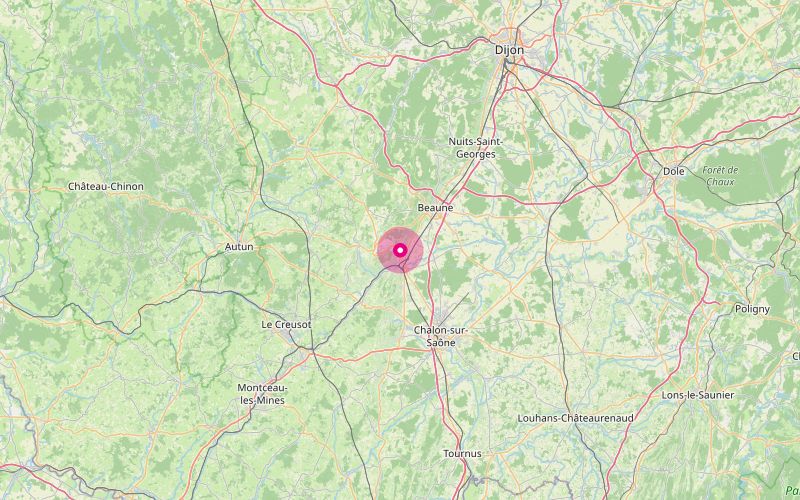
## Bâtard-Montrachet at a glance Bâtard-Montrachet is a grand cru appellation in the Côte de Beaune, in Burgundy, located in the communes of Puligny-Montrachet and Chassagne-Montrachet. The appellation was officially recognized as early as 1937 and produces only white wines made from chardonnay. Its surface area is about 11.86 hectares, making it a modestly sized grand cru by Burgundian standards. The name may be completed by the commune of origin, in the form Bâtard-Montrachet or Bâtard-Montrachet grand cru, with mention of Puligny-Montrachet or Chassagne-Montrachet as applicable.
## Terroir and geology Bâtard-Montrachet occupies the lower to միջ-slope section of the Montrachet grand cru hillside, immediately below Montrachet, between Puligny to the north and Chassagne to the south. This position is far from incidental: it helps explain an expression that is often broader and fleshier than that of Chevalier-Montrachet, higher up the slope, while retaining the tension characteristic of the great limestone terroirs of the Côte de Beaune. The relief remains moderate, with a regular gradient that encourages water drainage and limits water stagnation.
The soils combine marl and brown limestone, with a more pronounced clay content than in the highest parts of the slope. This composition generally gives wines that are denser, fuller and more textured than those from thinner, rockier terroirs. The clay provides a useful water reserve in dry vintages, while the limestone supports length, freshness and saline persistence.
Soil depth, which varies from parcel to parcel, also contributes to the style of the cru. Where the soil is more generous, the wine gains breadth and richness on the palate; where the limestone base lies closer to the surface, the mineral energy becomes more incisive. This internal mosaic explains the noticeable diversity of interpretations among domaines, without calling the identity of the cru into question.
Bâtard-Montrachet is therefore not merely a distinguished neighbor of Montrachet. It has a signature of its own, often described as a balance of power, density and radiance. In the best examples, the substance never feels heavy: it is carried by a precise acidic framework and a chalky imprint that extends the wine well beyond its initial volume.
## Climate The climate is Burgundian semi-continental, with cold winters, springs exposed to the hazards of frost, and summers that may alternate between pronounced heat and stormy episodes. As elsewhere in the Côte de Beaune, the vegetative cycle of chardonnay depends heavily on flowering conditions and the summer’s water balance. The cru’s small size heightens the impact of vintages, because every climatic variation is clearly legible in the wines.
The exposure is generally east to southeast, favoring regular morning sunlight and gradual ripening. This orientation limits excessive late-day heat while ensuring good photosynthesis throughout the season. In balanced vintages, it allows full ripeness to be achieved without excessive loss of acidity, an essential condition for the harmony of great ageworthy whites.
The intermediate position on the slope also plays a climatic role. The cru benefits from good air circulation, useful against certain disease pressures, while also enjoying relative protection from the build-up of humidity in lower-lying areas. Warm years often accentuate its broad and generous character; cooler years bring out more of its saline, floral and taut dimension.
Climate change is gradually altering the cru’s historic balances. Earlier harvests and rapid ripening require increased vigilance over picking dates in order to preserve chardonnay’s acidic drive and aromatic definition. In this context, viticultural practices, canopy management and yield control become decisive in maintaining the appellation’s classical style.
## Grape varieties The Bâtard-Montrachet appellation is reserved exclusively for white wines produced from chardonnay. In Burgundy, this grape finds here one of its most complete expressions, capable of combining concentration, mineral precision and outstanding aging potential. Pinot blanc, though sometimes mentioned historically in certain Burgundian contexts, is not part of the usual and current definition of the cru.
This single-variety identity reinforces the legibility of the terroir. Any variation in texture, tension, grain or aromatic intensity comes first and foremost from the place, the vintage, and choices in viticulture and élevage. The single grape variety does not homogenize the wines; on the contrary, it acts as a revealer of nuances in soil and exposure.
In practice, domaines seek a balance between physiological ripeness and the preservation of freshness. Chardonnay in Bâtard-Montrachet can quickly accumulate richness and concentration, especially in warm years. The harvest date, pressing, lees management and proportion of new oak then have a decisive influence on the wine’s final profile.
## Wine styles Bâtard-Montrachet produces only dry white wines. Their classical style rests on an alliance of volume, density and depth, with an aromatic register that may combine ripe citrus, white-fleshed fruit, white flowers, fresh butter, hazelnut, struck stone, and sometimes a smoky or spicy nuance from élevage. In youth, the wine can seem compact, almost restrained, such is the concentration of its substance.
The palate often sets Bâtard-Montrachet apart from its neighbors. Where Bienvenues-Bâtard-Montrachet often appears more airy, and Chevalier-Montrachet more vertical, Bâtard-Montrachet asserts a broader, more powerful and more tactile build. This amplitude does not exclude precision: the great examples unfold with an inner energy that avoids any heaviness.
Oak élevage is the norm for most producers, with fermentation and maturation in barrels, generally for 12 to 18 months depending on the house and the vintage. The share of new oak varies significantly, but the best domaines ensure that it supports the structure without masking the cru. Lees aging, sometimes prolonged, contributes to texture and complexity, provided it is handled with restraint.
The aging potential is high. Under good storage conditions, the best Bâtard-Montrachet evolve favorably over 10 to 20 years, sometimes longer in great vintages. With time, youthful notes give way to nuances of fine honey, dried fruit, brioche, noble mushroom, wax and damp stone, while the palate gains integration without losing its backbone.
The label may bear only the mention Bâtard-Montrachet, but some producers also specify the commune in which the parcel is located when relevant. This indication does not establish any official hierarchy; rather, it informs the reader of the cadastral origin within a shared cru. For the enthusiast, it can be a useful marker for following the personality of a domaine or a parcel across vintages.
## Producers to watch - Domaine Leflaive: a leading reference in Puligny-Montrachet, with Bâtard-Montrachet wines that are dense, straight and very persistent. - Domaine Ramonet: a deep and complete style, marked by precision on the palate and great aging capacity. - Domaine Jean-Claude Bachelet: a very fine reading of the cru, often energetic, saline and particularly detailed in texture. - Domaine Faiveley: a structured and consistent interpretation, supported by well-managed élevage and good terroir definition. - Domaine de la Romanée-Conti: with holdings in Montrachet and Bâtard-Montrachet, a rare, intense and highly sought-after signature. - Louis Jadot: a historic player capable of delivering classical, ample and reliable versions, followed with consistency.
## Food and wine pairings Bâtard-Montrachet calls for pairings of equal stature, where the substance of the wine meets clear culinary texture rather than aromatic excess. Its density and persistence suit noble ingredients, precise cooking and sauces held together by well-judged acidity or reduction.
- Roast turbot, beurre blanc and samphire: the wine matches the firm flesh of the fish and answers its vegetal salinity.
- Roast lobster, shellfish jus lightly enriched with cream: the power of the cru supports the dish’s concentration without dissolving into it.
- Bresse chicken with cream and morels: a classic Burgundian pairing, built on continuity between texture, élevage and umami.
- Golden sweetbreads, short jus and celery purée: the wine’s density accompanies the softness of the offal without losing precision.
- Lightly seared scallops, lemon emulsion: a young vintage will then highlight the dish’s tension and citrus notes.
- Aged Comté or truffled brillat-savarin: with a more evolved wine, the pairing gains depth and aromatic complexity.
## FAQ ### Where exactly is Bâtard-Montrachet located? Bâtard-Montrachet is in the Côte de Beaune, between the villages of Puligny-Montrachet and Chassagne-Montrachet. The grand cru is shared between the two communes, in continuity with the other prestigious climats of Montrachet.
### Does Bâtard-Montrachet produce red wine? No, the appellation produces only white wines. The authorized grape variety is chardonnay, in accordance with the definition of the grand cru.
### What is the difference between Bâtard-Montrachet and Montrachet? Montrachet is generally associated with a more sovereign, more complete and even rarer expression. Bâtard-Montrachet often stands out for broader, more earthy substance, with marked power, without losing the nobility of its origin.
### At what age should you drink a Bâtard-Montrachet? A well-born example can already offer a great deal after a few years in bottle, especially in an approachable vintage. However, the cru often reveals greater complexity between 8 and 15 years of age, or even more in great years and from benchmark producers.
### Why are the prices so high? Prices reflect a combination of structural factors: a very limited surface area, grand cru status, strong international demand and high production costs. Added to this is the historic reputation of the great white wines of the Côte de Beaune, which has become a major marker of the global fine wine market.