Banyuls Grand Cru, the Oxidative Depth of Roussillon
A great vin doux naturel from Roussillon, Banyuls Grand Cru combines schist soils, a dominant share of Grenache noir, and long aging to produce ageworthy wines with a pronounced oxidative style.
geoVINUM · 2026-11-03
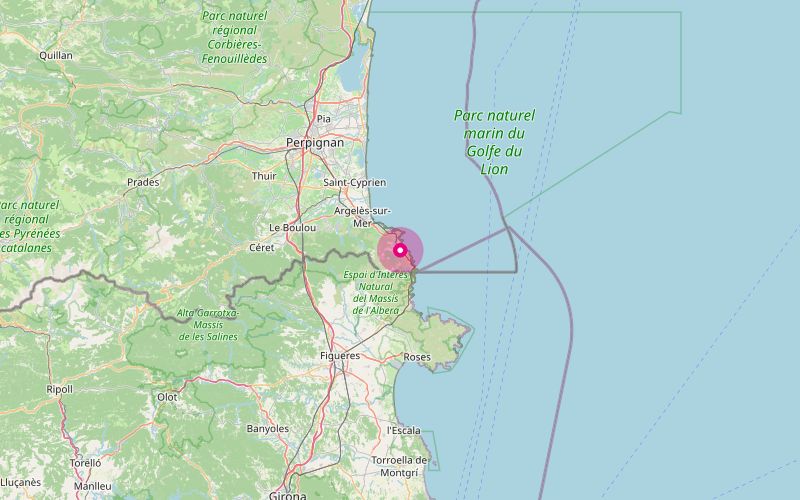
## Banyuls Grand Cru at a glance Banyuls Grand Cru is a vin doux naturel appellation produced on the Côte Vermeille, in the Pyrénées-Orientales, around Banyuls-sur-Mer, Collioure, Port-Vendres, and Cerbère. The appellation is recognized within the Banyuls family and corresponds to a more strictly defined category, based on grape composition and aging. It applies only to red wines, made with a strong majority of Grenache noir, then aged for a long period before release. Production remains limited to a vineyard of narrow, terraced slopes, where viticulture is costly and largely manual.
## Terroir and geology The landscape of Banyuls Grand Cru is one of the most rugged in the French vineyard. The vines occupy steep hillsides descending toward the Mediterranean, structured by an old network of terraces and dry-stone walls. This terrain requires almost entirely manual work and partly explains the relative rarity of the best lots. Here, the vine is less a scenic feature than a system for holding soils against erosion.
The geological bedrock is based mainly on brown schists, derived from ancient metamorphic formations. These schists split into thin layers, encourage deep rooting, and provide poor, draining soils with little natural vigor. Water reserves are low, which naturally limits yields and concentrates the berries. The notion of minerality should be handled with caution, but the saline tension and dry finish found in some wines have a credible foundation here.
The multiple exposures play a decisive role in the profile of the grapes. Parcels facing east and south capture intense sunlight, while higher or more ventilated zones sometimes retain a little more relative freshness. Altitude remains modest, but the topographical contrasts are enough to create a mosaic of ripeness levels. This diversity allows growers to blend sunnier lots with slightly more vibrant components.
The vineyard is also marked by long-term human intervention. The terraces, locally called feixes, and the rainwater drainage channels, the peus de gall, bear witness to a centuries-old adaptation to a harsh environment. Without these structures, storm episodes would quickly carry the soils away. The terroir of Banyuls Grand Cru is therefore understood not only through geology, but also through the continuity of rural engineering.
## Climate The climate is typically Mediterranean, with hot, dry, bright summers and generally mild winters. High sunshine levels encourage the accumulation of sugars in the grapes, an essential condition for making vins doux naturels. Summer drought limits fungal disease pressure, but intensifies water stress on already poor soils. Fruit concentration often results with striking clarity.
The Tramontane is a major climatic factor. This northwesterly wind keeps the crop healthy, reduces humidity, and can temper some excess heat in the vineyard. Its mechanical action is not neutral, as it can also limit vigor and thicken the skins. In a vineyard intended for structured wines, this effect becomes a useful element of the final balance.
The Mediterranean locally moderates temperature swings without erasing the harshness of the climate. Rainfall episodes, when they occur, can be brief and violent, especially in autumn. Viticulture must therefore deal with a double constraint: prolonged lack of water during the growing season and the risk of erosion during heavy rains. This context explains the wines' character as both sun-filled and firm.
For Banyuls Grand Cru, the search for ripeness is not limited to achieving high sugar levels. It is also necessary to preserve a certain acid backbone, tannin quality, and sound fruit condition compatible with long aging. The best producers therefore harvest for full ripeness without heaviness. The final style then depends as much on the year's climate as on the conduct of the aging.
## Grape varieties The central grape variety of Banyuls Grand Cru is Grenache noir. The specifications require it to account for at least 75% of the blend, clearly distinguishing the appellation from Banyuls in its broader sense. This dominance of Grenache noir gives the wine its body, potential alcoholic richness, and its framework of black fruit, fig, and spice. It is also the variety best able to withstand advanced ripeness and prolonged oxidative aging.
Around this core, several grape varieties from southern Roussillon may be included. These notably include Grenache gris and Grenache blanc, Mourvèdre, Syrah, Carignan, and Cinsaut, depending on estate practices and the margins allowed by regulation. Their role is not to change the nature of the wine, but to fine-tune its structure, tannic relief, or certain aromatic registers. In practice, many recognized cuvées remain overwhelmingly dominated by Grenache noir.
A common confusion with other local appellations should be corrected. Muscats and Tourbat are not part of the definition of Banyuls Grand Cru, which does not concern white wines or aromatic muscat-style wines. Macabeu, important in other wines of Roussillon, is not central to this red appellation. Banyuls Grand Cru is therefore a precise expression of the vineyard, not a summary of all the grape varieties grown on the Côte Vermeille.
Blending takes place after mutage and often after an initial aging phase, depending on the practices of houses and estates. Its aim is to reconcile natural richness, sugar balance, future oxidative depth, and tannic equilibrium. An overly demonstrative Grenache may gain length from a touch of Mourvèdre or Syrah, when permitted and available. Conversely, some signatures seek the purity of an almost standalone Grenache, carried solely by the interplay of parcels and aging.
## Wine styles Banyuls Grand Cru is exclusively red. Like any vin doux naturel, it is made with mutage, meaning the addition of grape spirit during fermentation to preserve part of the grape's natural sugars. This process stops the action of the yeasts and fixes a singular balance between sweetness, alcohol, and phenolic matter. The initial color is often deep, but aging evolves the wine toward tawny, mahogany, or browning garnet hues.
The appellation's specificity lies in its mandatory aging, longer than for a standard Banyuls. Banyuls Grand Cru must be aged for at least 30 months, part of it in an oxidative environment according to the producer's choices. This aging may take place in large oak vats, barrels, partially filled tanks, sometimes in demijohns or in containers exposed to thermal variations, according to local traditions. The aim is not to imprint a woody taste, but to guide a slow maturation toward rancio notes.
The expected aromatic profile then evolves from stewed black fruit toward more complex registers. Cocoa, walnut, dried fig, coffee, orange zest, prune, blond tobacco, and sweet spices are frequently found. The best wines retain a structured palate rather than reducing themselves to sweetness alone. Balance rests on salinity, noble bitterness, tannic framework, and persistence more than on a simple impression of sweetness.
Certain aging indications may add to the information available to the consumer. The term hors d'âge exists in the world of vins doux naturels and signals extended aging, but it is not synonymous with the Banyuls Grand Cru appellation itself. Not all Banyuls Grand Cru are therefore necessarily marketed under this indication, even if their style may approach it. The useful hierarchy to remember is simple: Banyuls Grand Cru designates a red appellation framework based on a dominant share of Grenache noir and long aging.
The aging potential is high, especially for cuvées from good terroirs and well-managed élevage. A well-stored bottle can evolve favorably for many years, sometimes several decades, gaining aromatic complexity. After opening, stability is generally greater than that of still wines, due to mutage and the oxidative style. It is nevertheless preferable to keep it cool and drink it within a reasonable time in order to preserve its energy.
## Producers to watch - Domaine de la Rectorie : a benchmark estate in Banyuls-sur-Mer, recognized for precise, profound wines faithful to the schist-driven personality of the area. - Domaine Vial-Magnères : a consistent signature of the Côte Vermeille, attentive to the balance between fruit, structure, and oxidative development. - Maison Parcé Frères : a family house associated with a demanding reading of Banyuls terroirs, with characterful, ageworthy cuvées. - Domaine de la Tour Vieille : an important producer of Collioure and Banyuls, serious in parcel work as well as in the conduct of aging. - Terres des Templiers : a major cooperative player in the appellation, essential to understanding the historical and commercial scale of Banyuls. - Mas Blanc, docteur Parcé : a historic property whose old Banyuls and Banyuls Grand Cru have contributed to the appellation's gastronomic reputation.
## Food and wine pairings Banyuls Grand Cru calls for pairings built on intensity, salt, or bitterness rather than sweetness alone. Its oxidative register and structure allow it to go beyond the dessert category. Served slightly chilled, it gains precision and length at the table. A few pairings work particularly well.
- Dark chocolate with little sugar : the pairing works if cocoa dominates and the dessert avoids excess sugar.
- Walnut or fig tart : the dried fruit and caramelized pastry extend the rancio notes.
- Bleu des Causses or Stilton : the salt and richness of the cheese balance the wine's sweetness.
- Duck breast with cherries or prunes : a relevant match thanks to the dialogue between ripe fruit, reduced juices, and softened tannins.
- Catalan cuisine with confit onions and sweet spices : the wine pairs well with caramelized flavors and slow cooking.
- Chocolate, coffee, and hazelnut cigar : a bitter, textured dessert is better suited than a very sweet creamy pastry.
## FAQ ### Is Banyuls Grand Cru always red? Yes. Unlike the Banyuls appellation in the broad sense, which can exist in several colors and styles, Banyuls Grand Cru applies only to red wines. This limitation is part of its regulatory identity.
### What is the difference between Banyuls and Banyuls Grand Cru? Banyuls Grand Cru follows stricter rules, notably a minimum of 75% Grenache noir and longer aging. The style therefore tends toward greater structure, depth, and oxidative complexity.
### Is the wine necessarily oxidative? Aging generally leads to a marked or at least noticeable oxidative profile. Depending on the producer, this dimension may remain nuanced or, on the contrary, assert itself clearly through notes of walnut, cocoa, and rancio.
### At what temperature should Banyuls Grand Cru be served? A temperature around 12 to 14°C works well in most cases. Too warm, the wine appears more alcoholic and sweeter; slightly chilled, it gains definition and balance.
### Can it be kept for a long time in the cellar? Yes, especially for serious cuvées from good élevage. The combination of mutage, extractive richness, and long aging gives Banyuls Grand Cru excellent cellaring potential.