Anjou Villages Brissac, Anjou’s Most Structured Red
South of Angers, Anjou Villages Brissac is a red-wine appellation centered on Cabernet franc. It combines relief, schist soils, and more complete ripening than in many parts of Anjou.
geoVINUM · 2026-11-03
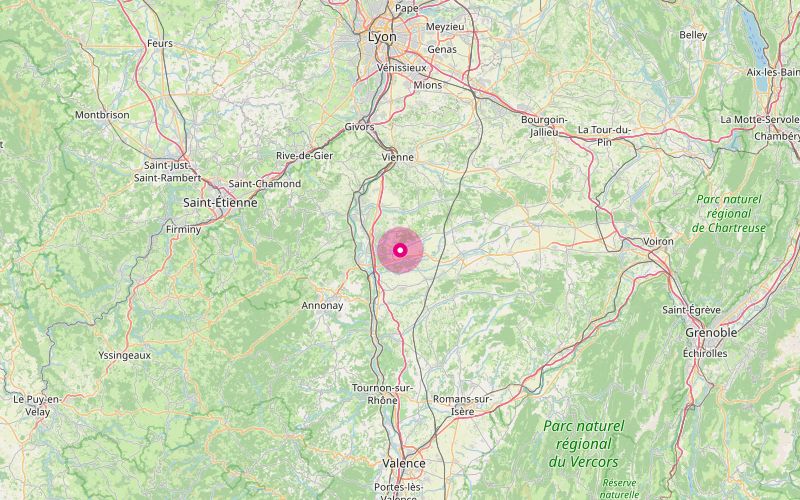
## Anjou Villages Brissac at a glance Anjou Villages Brissac is a communal appellation of Anjou noir, located south of Angers around Brissac-Quincé, now incorporated into Brissac Loire Aubance. It applies exclusively to red wines and belongs to the family of Anjou appellations built around the Cabernets. The name first circulated as a geographical denomination within Anjou-Villages before attaining the status of appellation d’origine contrôlée in 1998, then protected designation of origin under the European framework. The area covers a handful of communes on the left bank of the Loire, in a sector known for producing reds that are more full-bodied and more consistent than in much of Anjou.
The appellation remains modest in size on the Loire scale, with confidential production compared with the major Loire AOPs. This relative discretion partly explains its still uneven renown, even though it holds a clear place in the Anjou hierarchy of red wines. In spirit, it aims for more concentrated wines, from controlled yields and more reliably achieved ripeness. It is therefore one of the most serious reference points for understanding the potential of Cabernet franc in Anjou.
## Terroir and geology The heart of the appellation lies in what is known as Anjou noir, a geological ensemble marked by the ancient formations of the Armorican Massif. The soils rest largely on schist, sometimes weathered into stony, free-draining material, with variations of sandstone, phtanite, and locally some more clay-silt influences. This bedrock encourages deep rooting and generally moderate water supply, useful for the regularity of the vine’s vegetative cycle. It also contributes to the poise of the Cabernets, grape varieties that appreciate soils capable of limiting vigor without blocking ripening.
The relief is more pronounced than one often imagines in Anjou. The vineyards occupy hillsides, well-exposed terraces, and slopes often facing toward the Aubance valley or the undulations of the western Saumurois. This topography improves the drainage of cold air and reduces certain risks of stagnant humidity. Above all, it makes it possible to select sites favorable to phenolic ripeness, a decisive point for structured Loire reds.
The idea of a terroir mixing schist and limestone must be handled precisely. In the Anjou Villages Brissac area, the dominant feature remains clearly schist, even if peripheral sectors may show sedimentary nuances or various surface coverings. The style of the wines arises less from a simple duality between hard rock and limestone than from a combination of ancient substrate, soil depth, exposure, and vineyard management. This complexity explains the diversity of expression between more floral cuvées and wines that are more earthy, spicier, or more graphite-like.
## Climate The climate is temperate oceanic, but already modified by a slight continental influence that increases seasonal contrasts and favors the ripening of red wines. Anjou benefits from relative overall mildness, with springs that can be early and autumns often favorable for harvesting the Cabernets. The Brissac sector and the neighboring slopes are among the areas of Anjou where the vine can more regularly reach full ripeness. This does not eliminate the risk of cool vintages or the need for rigorous sorting, but it provides a more reliable framework than in more northerly or more humid zones.
The Loire and its tributaries play a moderating role, while the local relief creates microclimates useful for precision viticulture. The best parcels are often those that combine sunny exposure, air circulation, and soils with little hydromorphism. In cooler years, this equation helps preserve fruit while avoiding overly vegetal tannins. In warm years, it allows a level of freshness compatible with Loire identity to be maintained.
The debate over the vegetal character of the Cabernets is central here. When suffered, it reflects incomplete ripeness and gives marked notes of stem, leaf, or green bell pepper. When integrated, it takes the form of aromatic freshness, a black-fruit register lifted by spice, and a straight frame. The best Anjou Villages Brissac sit precisely in this zone of balance.
## Grape varieties The permitted grape varieties are Cabernet franc and Cabernet Sauvignon. The former has historically held the primary place and provides the appellation’s identity core, with a profile that may be floral, spicy, blackcurrant, black cherry, or ripe raspberry depending on the soils and vintages. The latter most often appears as a blending complement, bringing color, tannic density, and length in well-ripened years. In practice, many cuvées remain overwhelmingly based on Cabernet franc.
The specifications require a majority share of Cabernet franc, which clearly distinguishes the appellation from other Loire reds that are more open in composition. This rule is not incidental: it steers the style toward wines that are more elongated than massive, even when élevage or concentration increase. Cabernet Sauvignon must remain a support rather than a dominant marker. When it takes up too much space, regional balance is lost in favor of a more uniform profile.
Vineyard work matters as much as the variety itself. Yields are regulated, vigor control is sought, and leaf thinning as well as harvest date are decisive in obtaining ripe tannins. In Anjou Villages Brissac, Cabernet franc is not merely a grape of suppleness; it can gain depth and ageworthiness provided the crop load remains reasonable. It is this ambitious reading of the grape that underpins the specificity of the appellation.
## Wine styles Anjou Villages Brissac produces only dry red wines. In their most classic version, they show a deep color, a nose of ripe black and red fruits, violet, licorice, pepper, and sometimes graphite or warm stone. The palate combines a firmer substance than in many generic Anjou reds, structuring acidity, and present tannins that are expected to melt with a few years in bottle. The finest register is neither greenness nor overripeness, but clear ripeness carried by a fresh frame.
Élevage may take place in tank, large cask, demi-muid, or barrel depending on the ambition of the cuvée. New oak is not necessary for success and may even weigh down wines whose interest lies first in their straightness. The most convincing producers generally seek to preserve the fruit, smooth the texture without disguising origin, and avoid excessive extraction. The result can range from an approachable red after two or three years to a cellar-worthy cuvée that easily exceeds eight to ten years in good vintages.
Particular mentions do not structure the appellation as they do in other regions, but certain single-parcel or old-vine cuvées deserve attention. They show that the area is capable not only of producing honest gastronomic reds, but also fairly precise terroir wines. The most accomplished profiles develop over time notes of undergrowth, blond tobacco, sweet spices, and sometimes pencil lead. They nevertheless retain a tension that keeps them in a Loire rather than solar register.
## Producers to follow - Château de Plaisance: a benchmark estate in Chaume, now closely followed for the precision of its wines and its demanding approach to Anjou terroirs. - Domaine de Montgilet: a historic Aubance property, strong on Cabernet reds with a serious, readable, and consistent style. - Château Princé: an estate located in the heart of the Brissac sector, known for structured reds that embrace local identity. - Domaine de Bablut: based in Brissac, it works with Anjou reds with a focus on just ripeness and fruit definition. - Domaine des Rochelles: a dependable name in the Soulaines-sur-Aubance sector, reliable with the Cabernets and attentive to soil expression. - Château Soucherie: better known for its whites, but also worth following for its reds when the cuvées come from the good Anjou slopes.
## Food and wine pairings Anjou Villages Brissac calls for cuisine of texture more than brute power. Its tannic freshness works well with flavorful meats, reduced juices, and moderately herbaceous or spicy seasonings. A few particularly relevant pairings are worth noting.
- Roast rack of lamb, thyme jus, and root vegetables.
- Warm rillauds d’Anjou served with sautéed potatoes and bitter salad.
- Pink duck breast with shallot reduction.
- Free-range guinea fowl with mushrooms and creamy polenta.
- Braised beef with carrots, in a version that is not too sweet and not too tomato-driven.
- Aged ewe’s milk tomme or curé nantais, if the wine already has a few years on it.
## FAQ ### Where exactly is the Anjou Villages Brissac appellation located? It lies south of Angers, around Brissac and several neighboring communes of Anjou noir. The area belongs to the left bank of the Loire, within a set of slopes and secondary valleys favorable to Cabernet reds.
### Is Anjou Villages Brissac different from Anjou-Villages? Yes. Anjou-Villages is a broader red appellation, whereas Anjou Villages Brissac corresponds to a more limited communal area with a specific qualitative ambition. In practice, Brissac aims for wines that are more structured and more clearly identified by their origin.
### Which grape varieties go into the blend? The appellation is based on Cabernet franc, in the majority, with Cabernet Sauvignon as a complement. This hierarchy matters greatly, because it preserves a Loire style built on freshness, aromatic finesse, and structure without heaviness.
### Should these wines be aged before drinking? The simpler cuvées can be enjoyed relatively young, after brief aeration or two to three years in bottle. The more ambitious versions gain cohesion with time and can evolve favorably for several years.
### What aromatic style should be expected from a good vintage? One looks for ripe black or red fruits, a floral dimension, spices, and sometimes a graphite touch. The vegetal element must not dominate; if it appears, it should remain in the register of freshness rather than immaturity.