Anjou-Coteaux de la Loire, Chenin on the Hillsides
On the hillsides of Anjou, Chenin blanc yields taut, nuanced whites built for aging. This Loire appellation brings together relief, schist, and valley freshness.
geoVINUM · 2026-11-03
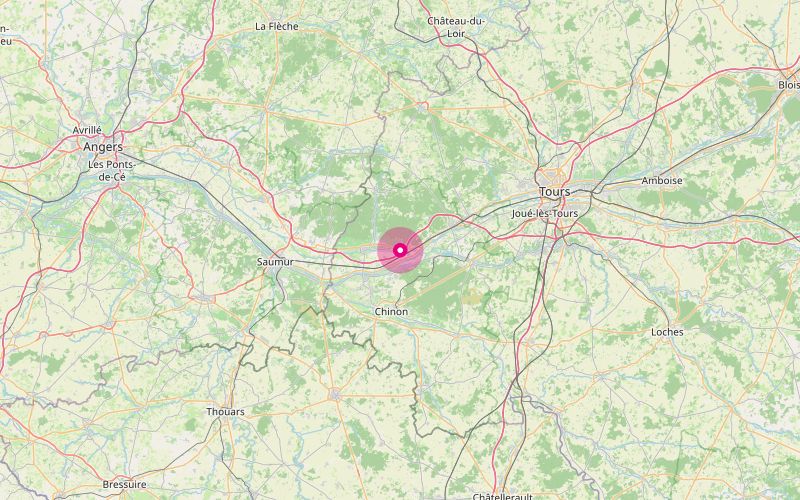
## Anjou-Coteaux de la Loire at a glance Anjou-Coteaux de la Loire is a complementary geographical designation within the Anjou appellation, located in the Anjou vineyard area, at the heart of the Loire Valley. It applies exclusively to still white wines made from Chenin blanc, produced on well-exposed hillsides overlooking or following the Loire valleys and their tributaries. The current regulatory framework falls under the Anjou AOP with its geographical designation, in line with the European revisions to labeling and appellation hierarchy introduced during the 2010s. Volumes remain modest and production is still confidential on the scale of the Loire, which explains the low visibility of this name compared with more established neighbors such as Savennières, Coteaux du Layon, or Bonnezeaux.
## Terroir and geology The name says almost everything: these are Anjou hillsides linked to the Loire basin. Topography plays a central role, as slopes encourage water runoff, limit vigor, and often provide exposures favorable to the ripening of Chenin. This combination of drainage and sunlight makes it possible to seek full ripeness without losing the acidic tension that underpins the balance of great Loire whites. The relief is therefore not mere scenery, but one of the appellation’s precision tools.
The geology reflects the great Anjou duality between the Armorican Massif bedrock and the sedimentary influences of the Paris Basin. Schist overwhelmingly dominates in many sectors of Anjou noir, with its ability to fracture, drain, and radiate heat back. Depending on the site, it may be accompanied by sandstone, phtanite, spilite, or more clay-rich formations. Limestone is not the main matrix of this designation, even though geological transitions do exist across greater Anjou.
On schist, Chenin often develops taut, saline, or slightly smoky palate profiles, with a texture that is more stretched than opulent. Shallow soils constrain the vine, which can reduce yields and concentrate the berries. In sectors where clay is more present, the wines sometimes gain breadth and tactile softness. Reading the terroir therefore depends less on a single rock type than on the adjustment between slope, soil depth, and water reserve.
As is often the case in the Loire, the vineyard landscape is fragmented. Parcels alternate with crops, hedgerows, woodland, and villages, creating sensitive mesoclimates and requiring precise viticultural choices. This fragmentation also explains why the identity of Anjou-Coteaux de la Loire is more discreet than that of appellations tightly centered around a historic core. It is no less coherent once one considers the common thread of Anjou hillsides well suited to Chenin blanc.
## Climate The climate is temperate oceanic, with a moderate continental influence that becomes more noticeable as one moves away from the Atlantic. The Loire and its adjacent valleys exert a regulating effect, partly limiting the sharpest temperature swings. Autumns can be long enough to allow Chenin to reach satisfactory aromatic and phenolic ripeness. This relative slowness of ripening is an asset for a grape variety that excels when acidity remains structurally important.
Morning mists, often mentioned in the Loire Valley, do not automatically lead here to a sweet wine style. They may encourage certain developments of noble rot in suitable vintages, but the identity of Anjou-Coteaux de la Loire is not to be confused with that of appellations specialized in sweet wines. The main challenge remains the balance between potential richness and preserved freshness. South to southeast exposures are sought to secure ripeness, especially in later years.
Climate risk is multifaceted. Spring frost can compromise the harvest, as in much of the Loire Valley. Late-season rain episodes require close monitoring of sanitary conditions, since Chenin, with its relatively thin skins, calls for precise picking. Conversely, the hot, dry summers of recent years have led some estates to rethink canopy management, harvest timing, and soil protection in order to preserve stylistic finesse.
## Grape varieties Chenin blanc is the reference grape variety and the identity-defining core of the designation. It is an old Loire Valley variety, known for its rare combination of high acidity, capacity for concentration, and great transparency to terroir. Well handled, it can produce wines of remarkable precision, with aromas of apple, quince, citrus, white flowers, wax, and sometimes fennel or herbal infusion. With age, it evolves toward fine honey, wool, dried fruit, and smoky nuances.
In the context of Anjou-Coteaux de la Loire, it is more appropriate to speak of a Chenin white than of a blending ground. The precise rules may evolve over time within the regulatory framework of the parent appellation, but established practice and expected typicity rest on Chenin blanc as the sole or very largely dominant grape variety. This centrality is not an abstract constraint: it guarantees the stylistic coherence of the designation. It also links these wines to the great family of ageworthy Loire whites.
Chenin is demanding both in the vineyard and in the cellar. Its early budbreak exposes it to frost, while its late ripening requires stable late seasons. In the cellar, it can handle both tank vinification to preserve brightness and measured wood aging to gain dimension. The whole art lies in not masking its natural nervousness, but accompanying it.
## Wine styles Anjou-Coteaux de la Loire produces still white wines. The most convincing style generally falls within a dry to gently mellow register, where fruit ripeness is expressed without erasing the acidic framework. The aim here is less demonstrative effect than accuracy: mid-palate volume, saline length, clean finish. These are wines whose readability often improves after a few years in bottle.
In their youth, the wines readily show notes of lemon, fresh pear, ripe apple, acacia blossom, and warmed stone. Depending on the aging, one may find nuances of fine lees, hazelnut, or discreet wood, but balance depends on restraint. Aging in tank, foudre, or used barrel can all work, provided it does not dominate the fruit and texture. Malolactic fermentation is not systematically sought, since tension forms an essential part of the style.
The aging potential is real in the best examples. Chenin, when it combines acidity, substance, and low sensitivity to premature oxidation, evolves slowly and gains in complexity. After a few years, the palate softens, tertiary aromas unfold, and the mineral dimension becomes easier to read. The most ambitious cuvées can accompany a decade of aging, sometimes more depending on the vintage and élevage.
Finally, this designation should be distinguished from several neighboring Anjou names. It is not intended to compete with Savennières in the image of the most austere great dry whites, nor with Coteaux du Layon in the realm of botrytized sweet wines. Its register lies in an Anjou middle ground: hillside whites of serious structure, with an expression that is often more confidential than spectacular. It is precisely this discretion that may appeal to lovers of non-standardized Chenin.
## Producers to watch - Domaine FL: based in Rochefort-sur-Loire, the estate works with Chenin precisely and provides a solid benchmark for understanding the Anjou nuances of soils and élevage. - Château de Plaisance: in Rablay-sur-Layon, this organically and biodynamically farmed estate produces chiseled Chenins, with a clear reading of schist terroirs. - Domaine des Forges: a historic Anjou property, recognized for the consistency of its whites and for a classic expression of Chenin. - Château Soucherie: in Beaulieu-sur-Layon, the property crafts carefully made Anjou whites, where mastery of ripeness and élevage deserves attention. - Domaine Belargus: best known for its very high-level Anjou hillsides, it powerfully illustrates Chenin’s ability to translate schistous slopes. - Domaine Ogereau: based in Saint-Lambert-du-Lattay, it signs precise, nervy Loire whites that rank among Anjou’s contemporary benchmarks.
## Food and wine pairings A young, taut Anjou-Coteaux de la Loire works very well with warm oysters with seaweed butter, as the iodine and texture answer the wine’s salinity. Chenin’s freshness avoids any heaviness and extends the maritime flavor.
With pike in beurre blanc or zander in a light sauce, the wine finds natural ground. The acidity supports the fish’s texture and cleanses the richness of the sauce without hardening it.
With Bresse chicken with cream and morels, a broader cuvée is needed, ideally with a few years in bottle. Notes of wax, dried fruit, and persistent tension create a pairing of continuity rather than contrast.
Aged goat’s cheese, notably a crottin or a Sainte-Maure, remains a classic and accurate match. Chenin meets both the lactic acidity, the salt, and the caprine aromas, especially if the wine retains a straight finish.
With vegetable-driven cuisine such as white asparagus with lemon mousseline or a fennel risotto, the pairing becomes very clear. The possible aniseed and floral markers of the grape variety echo the flavors of the dish without creating excessive bitterness.
Finally, some more evolved cuvées pair well with aged Comté or a dry ewe’s milk tomme. The density of the cheese then calls for a wine of texture, not just freshness.
## FAQ ### Is Anjou-Coteaux de la Loire an autonomous appellation? It is a complementary geographical designation attached to the Anjou appellation. In practice, this means a specific production framework within the parent AOP, with an identity linked to hillsides and Chenin blanc.
### Is only white wine produced under this designation? Yes, the designation applies to still white wines. It covers neither reds, nor rosés, nor sparkling wines.
### Is the style dry or sweet? The expected profile is that of a balanced white in which freshness remains central. Depending on the vintage and the producer’s choices, the sensation may range from firmly dry to lightly mellow, without making this designation a territory of luscious sweet wines in the strict sense.
### What is the difference compared with Savennières? Both are based on Chenin blanc and Anjou hillsides, but Savennières benefits from historic renown and a more tightly defined geographical core. Anjou-Coteaux de la Loire refers to a more discreet expression, often more diverse in its readings of terroir.
### Should they be drunk young or cellared? The simpler cuvées can be enjoyed young for their brightness and tension. The best, however, benefit from a few years of patience, giving Chenin time to move from a fruity register toward a more complex, more textured profile with a clearer finish.