Alsace Grand Cru, the hierarchy of places
Alsace Grand Cru recognizes delimited lieux-dits for their ability to produce terroir-driven white wines. The appellation is based on strict rules, yet each cru retains its own personality.
geoVINUM · 2026-11-03
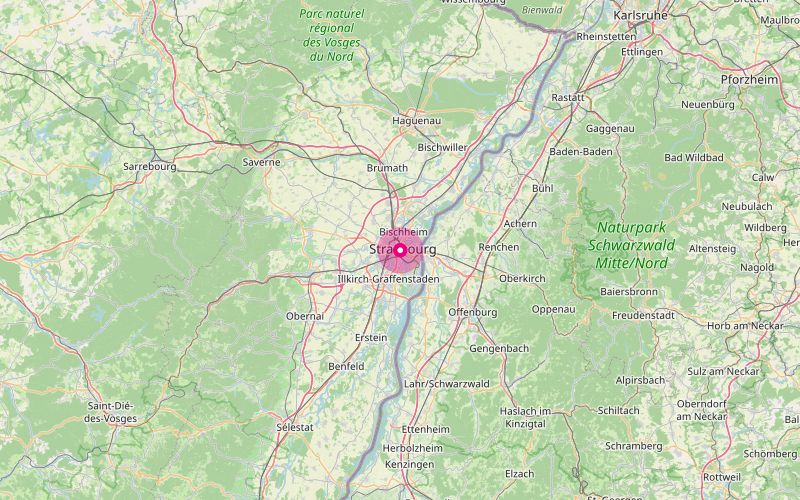
## Alsace Grand Cru in brief The Alsace Grand Cru appellation designates, in Alsace, precisely delimited lieux-dits recognized for their ability to produce wines of high expression. The legal framework was built in stages: an initial recognition of the grands crus came in the 1970s and 1980s, before a major harmonization of the system in 2011. The appellation applies almost exclusively to still white wines from parcels located on the best-exposed slopes of the Alsatian vineyard.
The production area extends from Bas-Rhin to Haut-Rhin, along the Vosges foothills, where the vine benefits from a rare combination of slopes, exposures, and highly differentiated soils. The vineyard includes 51 lieux-dits classified as grand cru, each bearing its own name on the label. Production remains modest on the scale of the Alsatian vineyard, due both to the limited surface area of the crus and to regulated yields that are lower than for the Alsace appellation.
The central idea is not that of a uniform prestige label, but of a hierarchy based on place. In Alsace, grand cru refers first and foremost to a parcel-specific origin and a historically recognized aptitude, more than to a single style. This logic explains both the coherence of the whole and the strong diversity of expression from one cru to another.
## Terroir and geology The Alsatian vineyard is one of the most legible in France in geological terms. The Rhine fault, the collapse of the Rhine Graben, and the erosion of the Vosges massif have juxtaposed, across a relatively narrow strip, very diverse formations: granite, gneiss, schist, sandstone, limestone, marl, conglomerates, volcanic terrain, and ancient alluvial deposits. This complexity largely explains the relevance of the grand cru concept in the region.
The grands crus most often occupy well-exposed slopes, generally facing east to south, sometimes southwest depending on local morphology. The slopes ensure effective drainage, limit vigor, and favor steady ripening. The shallow depth of certain soils, unlike more fertile sectors of the plain, contributes to naturally more moderate yields and a clearer concentration of the grapes.
Each grand cru forms a particular case. A cru on granite will readily produce wines that are tenser, with fine bitterness and a straighter expression; a cru on marl or marl-limestone may yield broader, denser, or spicier profiles. Limestone soils often encourage precision and length, while certain sandstone or volcanic substrates can accentuate aromatic clarity and structure.
The example of Altenberg de Bergheim illustrates this logic well. This grand cru, located north of Ribeauvillé, combines a marl-limestone substrate with a long viticultural history documented since the Middle Ages. It is also one of the crus that has retained specific practices regarding grape varieties and blending, a reminder that in Alsace, the identity of a terroir cannot be reduced to a geological fact sheet: it also includes a cultural memory.
Finally, it should be emphasized that the word terroir here is not an abstract formula. It refers to the interaction between soil, subsoil, topography, exposure, water supply, and human practices adapted to the site. It is this articulation that gives certain grands crus an immediately recognizable expression, even when the grape variety remains the same.
## Climate Alsace benefits from a semi-continental climate and is among the driest wine regions in France. The Vosges massif plays a decisive role by partially shielding the vineyard from oceanic influences coming from the west. This situation creates a rain-shadow effect that limits precipitation and favors beautiful luminosity during the growing season.
This relative dryness is a major asset for the ripening of white grape varieties. It reduces the pressure of certain fungal diseases and allows for more serene harvests, especially on well-ventilated slopes. In the best vintages, it makes advanced ripeness possible without a systematic loss of tension, which explains the ability of certain grands crus to produce both dry wines of great density and remarkable late-harvest wines.
Temperature swings between day and night also play an important role, especially at the end of the season. They help preserve acid balance and fix aromatic profiles, particularly in riesling and muscat. The risk, in the earliest-ripening sectors or on the warmest soils, is to reach high levels of richness quickly; hence the importance of harvest dates and ripeness management.
Climate change is now altering the classic reading of the vineyard. Ripeness is often earlier, heat episodes more pronounced, and the question of alcohol-acidity balance becomes more sensitive depending on the cru. This evolution does not call into question the relevance of the hierarchy of places, but it reinforces the role of the grower in the accurate interpretation of terroir.
## Grape varieties The historical foundation of Alsace Grand Cru rests on four so-called noble grape varieties: riesling, gewurztraminer, pinot gris, and muscat. Each has a particular ability to convey site nuances while achieving, on these slopes, sufficient ripeness for complete wines. Riesling often finds its most precise expression here; gewurztraminer, its spicy depth; pinot gris, its texture and power; muscat, its varietal frankness combined with real structure.
Within the general framework of the appellation, the wines are most often made from a single one of these grape varieties and marketed under its name, together with the grand cru designation. This readability is part of Alsatian culture, which combines identification of the grape variety with that of the place. It makes it possible to compare more finely the effect of terroir on well-known varietal matrices.
There are, however, notable exceptions. The grand cru Zotzenberg is authorized for sylvaner, which is an emblematic case of recognition of an old local practice. Altenberg de Bergheim and Kaefferkopf allow blends of several grape varieties according to specific rules inherited from local tradition and framed by the specifications.
These derogations do not contradict the philosophy of the appellation; they illuminate it. They remind us that Alsace Grand Cru is not a rigid doctrinal system, but a construction in which the history of practices matters as much as the hierarchy of soils. What matters is less the uniformity of rules than fidelity to a demonstrated aptitude of the place.
## Wine styles Alsace Grand Cru wines are first and foremost still white wines, mostly dry or off-dry depending on the grape variety, the cru, and the producer’s choice. Riesling often dominates the image of the appellation with wines that are straight, elongated, saline, or stony, capable of gaining in complexity over time. Gewurztraminer produces broader profiles, often marked by rose, sweet spices, and exotic fruit, with a more generous palate.
Pinot gris produces fuller-bodied wines, frequently structured by a richness of substance that can range from powerful dry styles to softer expressions. Muscat, rarer in grand cru, can offer particularly expressive dry wines that are both aromatic and firm. In every case, the best reading of a grand cru is not only aromatic: it is also judged by palate presence, length, and the wine’s ability to go beyond the simple varietal register.
Élevage varies greatly from one estate to another. Some favor stainless steel or neutral tanks to preserve the clarity of the fruit and the obviousness of the site; others use traditional large foudres, which allow slow oxygenation without excessive oak marking. The use of new barrels generally remains secondary, as it could mask the readability of the terroir.
The appellation can also give rise to wines of great ripeness, notably under the mentions vendanges tardives and sélection de grains nobles when conditions allow and regulations are respected. These versions mainly concern gewurztraminer, pinot gris, and sometimes riesling. They should not be seen as the norm of grand cru, but as one of its possible expressions.
The aging potential is a major trait of the best examples. Solid grand cru rieslings often evolve gracefully over a decade or more, developing notes of hydrocarbon, wax, candied citrus, and wet stone. Great gewurztraminers and pinot gris, when they retain true balance, gain in spicy depth, texture, and tertiary complexity.
## Producers to watch - Domaine Zind-Humbrecht: a major reference for reading Alsace’s great terroirs, with dense, precise wines often built for aging. - Domaine Weinbach: a refined and rigorous style, particularly convincing on the grands crus around Kaysersberg. - Trimbach: a historic house whose certain cuvées from renowned sites illustrate a straight, dry, and structured vision of terroir-driven Alsace. - Domaine Albert Mann: careful work in the vineyard and cellar, with grands crus combining fruit intensity and clarity of definition. - Domaine Marcel Deiss: an important player in thinking about terroir in Alsace, particularly around the idea of complantation and site identity. - Domaine Ostertag: a precise and contemporary interpretation of Alsatian slopes, with strong attention paid to balance and the expression of soils.
## Food and wine pairings A dry Alsace Grand Cru riesling pairs beautifully with pike-perch in beurre blanc or sole meunière. The wine’s acidity and tension support the texture of the fish without weighing down the whole.
A grand cru gewurztraminer finds a convincing match with lightly spiced cuisine, for example a mild chicken curry or prawns in coconut milk. The wine’s aromatic richness answers the spices, provided the heat is kept in check.
A grand cru pinot gris, dry to gently soft, works well with porcini risotto, roast poultry with cream, or pan-seared foie gras depending on the level of sweetness. Its substance allows for more textural pairings than riesling.
A dry grand cru muscat can be surprising with asparagus, an herb salad, or steamed spring vegetables. Its vegetal and floral aromatic register suits these delicate flavors better than many other wines.
Versions with marked sweetness pair well with blue-veined cheeses, aged munster, or certain lightly sweet desserts based on yellow fruits. The match works when salt, fat, or bitterness create a counterpoint to the wine’s richness.
## FAQ ### What is an Alsace Grand Cru? It is an appellation that identifies a delimited lieu-dit, recognized for the quality of its terroir and its ability to produce wines of strong personality. The name of the cru appears on the label and is generally added to that of the grape variety.
### How many grands crus are there in Alsace? Alsace has 51 lieux-dits classified as grand cru. Each has its own delimitation, history, and often a distinct geological profile.
### Are Alsace Grand Cru wines always dry? No. Many wines are dry, especially riesling and muscat, but some may show perceptible sweetness, particularly gewurztraminer or pinot gris. The mentions vendanges tardives and sélection de grains nobles also govern sweeter styles.
### Can red wine be made in Alsace Grand Cru? No, the appellation is essentially dedicated to still white wines. Pinot noir, despite its qualitative progress in Alsace, does not fall within the current framework of Alsace Grand Cru.
### Why do some grands crus allow exceptions for grape varieties? Because the Alsatian system has incorporated local historical practices deemed relevant. Zotzenberg for sylvaner, as well as Altenberg de Bergheim and Kaefferkopf for certain blends, illustrate this consideration of tradition within a precise regulatory framework.