Ajaccio, the Corsican AOC where sciaccarellu sets the tone
Around the Gulf of Ajaccio lies an island AOC shaped by granite, wind, and sciaccarellu. A modest-sized vineyard, yet one with a very clear identity, spanning spicy reds, refined rosés, and taut whites.
geoVINUM · 2026-11-03
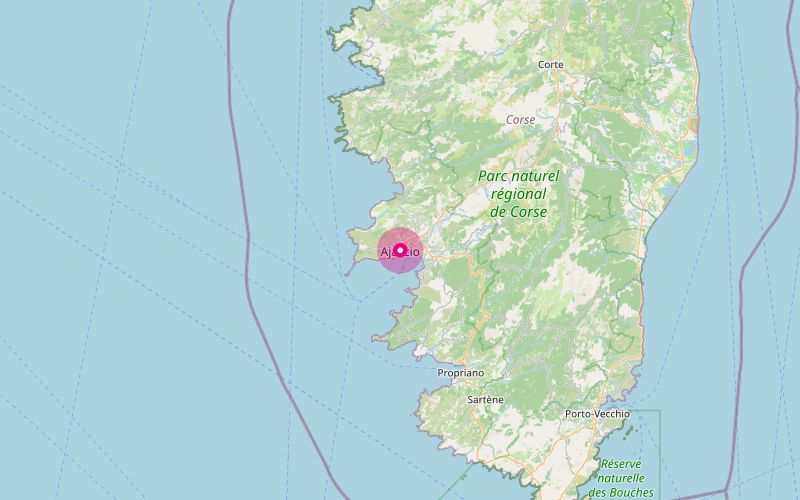
## Ajaccio at a glance The Ajaccio appellation lies on the northern shore and inland hillsides of the Gulf of Ajaccio, in southwestern Corsica, around the city of the same name and neighboring communes such as Alata, Appietto, Bastelicaccia, Peri, Sarrola-Carcopino, Tavaco, and Valle-di-Mezzana. It was recognized as an appellation d’origine contrôlée in 1984, after long falling within the broader framework of vins de Corse. The AOC produces red, rosé, and white wines, with an identity especially tied to sciaccarellu for reds and rosés, and to vermentinu for whites. The vineyard remains modest in size by French standards, which reinforces the clarity of a local style strongly shaped by the terrain and maritime proximity.
## Terroir and geology The Ajaccio vineyard is set within a topography of hillsides and small valleys that rise gradually inland from the gulf. Vines occupy a range of positions, often between the coastal plain and the foothills, on parcels broken up by the relief. This fragmentation encourages nuanced expressions depending on altitude, exposure, and soil depth.
The local geology belongs largely to crystalline Corsica. Granite dominates in many sectors, in the form of granitic sands, sandy to stony soils, and weathered formations with rapid drainage. These soils, poor in organic matter and often shallow, naturally limit vine vigor, helping to keep yields in check and concentrate ripeness without seeking excessive density.
One widespread idea needs correcting: Ajaccio is not primarily a schist appellation. The granitic bedrock is decisive here, far more so than in other parts of the island more clearly marked by schistous formations. This granitic dominance matters in the texture of the wines, which are often more taut, spicier, and more streamlined than massive.
The best parcels combine moderate slope, good air circulation, and limited but sufficient water reserves to avoid ripening blockages during dry summers. Exposures are varied, and not only east-facing. Depending on the commune and the terraces, one finds south-, southeast-, or west-facing sites, with noticeable effects on earliness, sun exposure, and acid retention.
The plant landscape matters as much as the subsoil. Maquis, pines, olive trees, and dry herbs frame the parcels and contribute to the sensory identity often associated with Ajaccio wines. Without slipping into aromatic determinism, notes of pepper, Mediterranean shrubs, immortelle, or red berries are frequently found in the reds and rosés, in dialogue with this environment.
## Climate Ajaccio has a distinctly Mediterranean climate, tempered by the sea and shaped by the relief. Sunshine levels are high, summers are dry, and day-night temperature swings can be preserved in higher sectors. This combination allows for steady ripening while retaining a degree of freshness, especially when harvest dates are adjusted with precision.
The proximity of the gulf plays an important moderating role. Sea breezes partly limit thermal extremes and help keep the vegetation healthy after the heat of the day. In an island context where summer water stress can become severe, this ventilation helps maintain a favorable sanitary balance.
Wind is a central player in the Corsican wine landscape, and Ajaccio is no exception. Beyond the sea air alone, air flows coming from offshore or from inland valleys shape the microclimate of the parcels. They reduce stagnant humidity, sometimes thicken grape skins, and indirectly help define aromatic and tannic profiles.
Rainfall is concentrated mainly outside summer, with sometimes marked episodes in autumn. Water management therefore becomes a major agronomic issue, especially on free-draining soils. Growers seek deep rooting, careful cover-crop management, and vineyard practices capable of softening the contrasts from one vintage to the next.
## Grape varieties Ajaccio’s emblematic grape variety is sciaccarellu, sometimes spelled sciacarello in everyday French. It forms the main axis of the appellation’s reds and rosés, to the point of representing its most obvious signature. This Corsican variety generally produces lightly colored wines with a pale ruby hue, marked by spice, pepper, red fruits, a supple frame, and more freshness than their latitude might suggest.
In the red vineyard mix, niellucciu may complement sciaccarellu, along with other varieties authorized under the appellation’s regulations. In practice, the best Ajaccio reds highlight sciaccarellu, either as a clear majority or in near-single-varietal form when the producer seeks the clearest reading of place. Niellucciu then brings more foundation, color, and tannic grip, without erasing the spicy, airy character of the main variety.
For whites, vermentinu, the Corsican name for vermentino, holds center stage. In Ajaccio it produces dry, precise, often saline wines, with notes of citrus, white flowers, fresh stone fruit, and sometimes fennel or maquis herbs. Far from an exuberant register, it seeks here a form of clarity and tension, even when ripeness is generous.
It is also worth correcting the idea that varieties such as biancu gentile, codivarta, or genovese play a determining role in Ajaccio white blends. These varieties do exist within Corsica’s heritage, and some are enjoying renewed interest, but they do not define the regulatory and stylistic core of the Ajaccio appellation as it is officially recognized. In practice, the identity of the whites rests above all on vermentinu.
Work with local grape varieties is not limited to blend composition. It also involves choices of rootstocks, planting density, vigor management, and harvest dates, all particularly sensitive in a hot and windy setting. In Ajaccio, precision is often decided within a matter of days, especially to preserve sciaccarellu’s aromatic brightness and vermentinu’s backbone.
## Wine styles Ajaccio reds stand out more for a spicy expression than for sheer structure. They often offer aromas of strawberry, cherry, pomegranate, white or black pepper, and sometimes fine leather and dried herbs with age. Their tannic structure generally remains supple to medium, with a streamlined palate that sets them apart from massive or heavily oaked Mediterranean reds.
Rosés have a natural place in the appellation. Very often made from sciaccarellu, they combine moderate color, clear fruit, notes of red citrus and mild spice, with a dry, digestible finish. These are table rosés in the noblest sense, suited to local cuisine and less showy than some highly technological southern rosés.
Ajaccio whites, based on vermentinu, aim more for straightforwardness than opulence. They show aromas of lemon, grapefruit, fresh pear, hawthorn, and sometimes an aniseed or saline nuance. On the palate, they rely on sufficient body but are held in place by a noble bitterness on the finish, an important element of their gastronomic aptitude.
Aging most often favors neutrality of expression. Stainless steel predominates in order to preserve varietal brightness and the legibility of the terroir, even if some producers occasionally use wood, large vessels, or fine lees to broaden texture. In the most convincing versions, élevage should neither disguise sciaccarellu nor weigh down vermentinu.
There is aging potential, but it should be assessed without exaggeration. Rosés are generally intended for relatively youthful drinking. Whites can gain complexity over a few years, while the best reds evolve favorably toward spicier, more balsamic notes, with worthwhile staying power without aiming for very long cellaring.
## Producers to follow - Domaine Comte Abbatucci: a major reference in Corsican viticulture, known for its work with indigenous grape varieties and highly precise Ajaccio wines. - Clos Ornasca: a historic estate of the appellation, committed to sciaccarellu and to a faithful reading of the Ajaccian hillsides. - Domaine de Vaccelli: very carefully crafted wines, characterful reds and rosés, with an increasingly clear parcel-based approach. - Domaine Peraldi: an important player in the Ajaccio area, consistent across all three colors, with a clean and accessible aesthetic. - Clos Capitoro: a recognized property on the outskirts of Ajaccio, attentive to the balance between Mediterranean ripeness and freshness. - Domaine Jean-Charles Abbatucci: often cited among the island’s essential names, for the coherence between ampelographic heritage, farming, and style.
## Food and wine pairings - An Ajaccio red dominated by sciaccarellu pairs very well with grilled lamb chops with thyme and rosemary. - An Ajaccio rosé works with lightly smoked Corsican charcuterie, especially lonzu or coppa served slightly chilled. - A vermentinu white pairs well with sautéed calamari, grilled sea bass, or simply roasted langoustines. - The finest reds suit stuffed vegetables, confit tomato, or roast poultry with maquis herbs. - The whites find excellent ground with a young Corsican goat cheese or lemony dishes with fresh herbs. - A dry, spicy rosé can also accompany delicately spicy Asian cuisine, provided pronounced sweetness is avoided.
## FAQ ### Is Ajaccio a recent appellation? No. The Ajaccio appellation obtained AOC status in 1984, not in 2011. It belongs to an older winegrowing history within the Corsican vineyard.
### What is Ajaccio’s emblematic grape variety? For reds and rosés, it is sciaccarellu. For whites, the reference variety is vermentinu, which produces dry, taut wines.
### Are Ajaccio wines powerful? Not in the usual sense of the term. The best examples focus first on balance, finesse of tannin, relative freshness, and a very distinctive spicy expression.
### Is Ajaccio’s terroir schist-based? The vineyard rests predominantly on granitic formations. Granite, in the form of granitic sands and free-draining soils, plays a more structuring role than schist in the identity of the appellation.
### Can an Ajaccio be aged for several years? Yes, especially serious reds and some well-made whites. This remains moderate aging, however, intended to gain harmony and complexity rather than to seek very long evolution.